How to Choose a Reliable Honey Label Manufacturer for Premium Packaging Projects
When a customer walks down the grocery aisle or browses a local farmers market, their eyes are immediately drawn to the rich, golden hues of liquid honey. But before they can taste the exquisite floral notes of your harvest, they interact with something else entirely: your packaging.
The label is the silent ambassador of your brand. It communicates quality, tells your unique story, and ensures legal compliance. For beekeepers and honey brands scaling their operations, partnering with the right Honey Label Manufacturer is not just an administrative task—it is a critical business decision that can make or break your product’s shelf appeal.
Whether you are a small apiary looking to upgrade your local market presence or a commercial producer preparing for national retail distribution, understanding the nuances of label production is essential. This comprehensive guide will walk you through everything you need to know to choose a manufacturing partner capable of executing premium packaging projects.
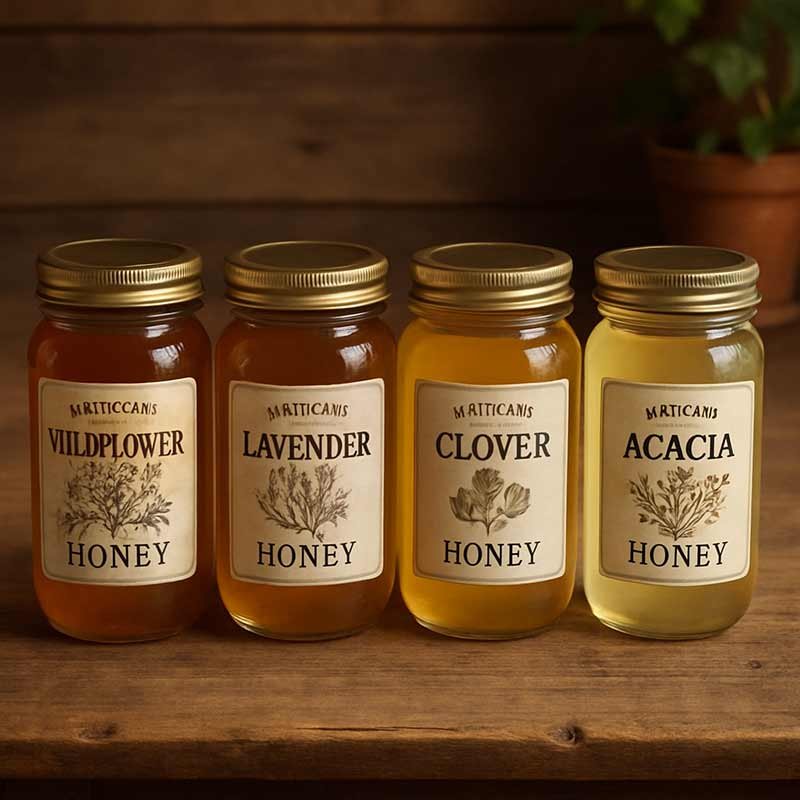
Table of Contents
Why Your Packaging Partner Matters
In the highly competitive food and beverage industry, consumers often equate the quality of the packaging with the quality of the product inside. A poorly printed, peeling, or faded label subconsciously tells the buyer that the honey might also be subpar. Conversely, a beautifully textured, perfectly applied label suggests premium, artisanal quality.
A professional Honey Label Manufacturer does much more than just print stickers. They act as consultants, guiding you through material choices, adhesive science, and regulatory compliance. They help you translate your brand’s vision into a physical, tactile reality.
The Rise of Artisanal Branding
The demand for raw, local, and infused honey has skyrocketed. With this surge comes the need for bespoke branding for artisanal honey producers. Generic, off-the-shelf labels no longer cut it. Today’s consumers want a story. They want to know if the honey is clover, orange blossom, or wildflower. They want to feel connected to the farm.
Your label manufacturer should offer high-end finishing options—such as hot foil stamping, embossing, and spot varnishes—that elevate your brand. When you invest in bespoke branding, you justify a premium price point, transforming a simple jar of honey into a gourmet gift.

Decoding the Rules: Compliance and Regulations
Before you even begin thinking about colors and textures, you must address the legalities of food packaging. The federal government has strict guidelines on how food products, including honey, must be labeled to protect consumers. A minor mistake on your packaging can lead to expensive recalls and damage to your brand’s reputation.
Navigating FDA Requirements
A reliable manufacturing partner will be well-versed in industry regulations and can often act as a secondary set of eyes on your artwork. If you are looking for an FDA honey labeling requirements guide, the foundational rules are straightforward but uncompromising:
Statement of Identity: The common name of the product (e.g., “Honey”) must appear prominently on the principal display panel (PDP). If it comes from a primary floral source, like “Tupelo Honey,” it must be truthful and accurately represented.
Net Weight: This must be displayed in both metric (grams/milliliters) and U.S. Customary System (ounces/pounds) in the bottom third of the front panel.
Name and Address: The label must include the name and address of the manufacturer, packer, or distributor.
Ingredients List: If your product is 100% pure honey, an ingredient list is technically not required. However, if you are selling infused honey (e.g., jalapeño honey or lavender-infused honey), you must list all ingredients in descending order of predominance by weight.
Nutritional Transparency
One area that frequently confuses new producers is nutritional labeling. While some small businesses qualify for exemptions based on low sales volumes, as you grow, you will need to include mandatory nutritional information for retail honey.
Recent updates to FDA guidelines require added sugars to be declared on the Nutrition Facts panel. For single-ingredient products like pure honey, the FDA provides specific guidance so consumers don’t mistakenly think syrup or sugar was added to the jar. Designing a Nutrition Facts panel that complies with exact font size, spacing, and formatting rules is a highly technical task. Your label manufacturer should be capable of printing these panels with absolute crispness and clarity, ensuring they remain legible even on small jars.
Material Selection: Balancing Aesthetics and Functionality
Once compliance is out of the way, the fun begins: choosing your materials. The material (or “stock”) you choose dictates the entire look and feel of your jar. However, honey is a unique product that demands specific material characteristics.
The Great Debate: Clear Film vs. Paper Label Stock
When considering how to design effective honey packaging, one of the first decisions you’ll make is choosing between clear film versus paper label stock.
Paper Label Stock:
The Vibe: Rustic, organic, traditional, and artisanal.
The Pros: Uncoated paper stocks (like Estate #8 or #9) provide a beautiful, tactile texture. They are perfect for vintage branding, craft aesthetics, and emphasizing the “farm-to-table” nature of the product.
The Cons: Standard paper is highly susceptible to moisture and oil. If honey drips down the side of the jar, a standard paper label will stain, ruining the premium look.
The Solution: If you choose paper, your manufacturer must apply a high-quality protective laminate or varnish.
Clear Film (BOPP):
The Vibe: Modern, sleek, clean, and minimalist.
The Pros: Clear Biaxially Oriented Polypropylene (BOPP) creates a “no-label” look. This allows the stunning amber color of the honey to serve as the background for your typography and logo.
The Cons: It can be tricky to design for. You must ensure your manufacturer uses opaque white under-printing so your text remains readable against the dark background of the honey.
Fighting the Elements: Durability is Key
Honey packaging goes through a lot. It is poured in warm facilities, shipped across the country, sits on retail shelves, and eventually lives in a consumer’s kitchen—where it might be subjected to sticky fingers and warm water baths to decrystallize the honey inside.
Because consumers frequently submerge crystallized honey jars in warm water, using waterproof materials for glass jars is non-negotiable. If your labels disintegrate when wet, the consumer’s experience is ruined. Opt for synthetic materials like vinyl or BOPP, or heavily varnished papers that can withstand moisture.
Furthermore, many artisanal beekeepers make the bulk of their early sales at outdoor farmers markets. Jars sitting on folding tables for hours a day are bombarded by direct sunlight. Without protection, bright floral colors and bold logos will quickly fade to a washed-out pastel. To prevent this, ask your manufacturer about utilizing UV resistant ink for outdoor markets. These specialized inks and protective UV laminates ensure that your brand’s colors remain vibrant, no matter how long the jar sits in the sun.

The Science of Adhesives and Application
A beautiful, durable label is useless if it peels off the jar. The physical properties of honey and the containers it is stored in present unique challenges that require expert adhesive solutions.
Choosing the Right Glue
Honey is inherently sticky. During the bottling process, it is almost inevitable that microscopic amounts of honey, or the oils from handling the jars, will end up on the glass. Furthermore, honey is often packaged in a variety of containers—from classic glass muth jars to squeezable plastic bears.
To ensure your branding stays exactly where you put it, you must use pressure sensitive adhesives for sticky containers. Pressure-sensitive labels (PSLs) rely on pressure (rather than heat or solvents) to form a bond with the surface.
When discussing adhesives with a Honey Label Manufacturer, you generally have two main choices:
Acrylic Adhesives: Excellent for glass jars. They offer a strong, long-lasting bond and excellent clarity (vital if you are using clear film labels).
Rubber-Based Adhesives: These offer a highly aggressive initial “tack.” If you are applying labels to squeezable plastic honey bears, rubber-based adhesives are often preferred because they can withstand the constant squeezing and flexing of the plastic without popping off.
Scaling Up: Application Methods
How you apply your labels is just as important as the adhesive itself. When you are starting, applying custom honey bottle stickers by hand is a feasible, albeit time-consuming, rite of passage. But as your apiary scales from hundreds of jars a month to thousands of jars a week, hand application becomes a massive bottleneck.
As you grow, you will transition to semi-automatic or fully automatic labeling machines. This requires a transition in how you order your labels. You can no longer buy labels on flat sheets; you need them on rolls.
When preparing for automatic label application for bottling lines, your manufacturer needs to know your machine’s exact specifications. You must provide them with the specific “unwind direction” (e.g., top-off first, right-side off first). If the unwind direction is wrong, your expensive labeling machine will apply all your labels upside down. A reliable manufacturer will ask for these machine specifications upfront to ensure seamless integration with your production line.

Security and Sustainability: Meeting Consumer Demands
Modern consumers care deeply about the safety of their food and the health of the planet. Your packaging must address both of these concerns to remain competitive.
Protecting Your Product and Your Customers
Honey is a premium food product, and unfortunately, food fraud (such as diluting honey with cheap corn syrup) is a reality in the global market. To build trust with your buyers, you must guarantee that your product has not been opened or altered between your bottling facility and their pantry.
Incorporating tamper evident seals for bee products is the industry standard for product security. There are a few ways your label manufacturer can achieve this:
Shrink Bands: A clear or custom-printed plastic sleeve that is heat-shrunk over the lid and neck of the jar. The consumer must tear it to open the jar.
Integrated Label Seals: The main label features an extended “neck” that stretches over the lid. This strip is perforated. When the lid is twisted, the perforation breaks, indicating the jar has been opened.
Void Labels: Specialized stickers placed over the lid seam that leave behind the word “VOID” on the glass if peeled back.
Tamper-evident features not only protect the consumer but also protect your brand from liability, ensuring the integrity of your honey is maintained.
Eco-Friendly Solutions
Beekeepers are inherently tied to nature. The health of the bees relies on the health of the environment. Therefore, it is no surprise that there is a massive push for sustainable packaging options for apiaries.
Consumers actively look for brands that align with their eco-conscious values. Ask your Honey Label Manufacturer about their green initiatives. Excellent options include:
Post-Consumer Waste (PCW) Papers: Labels made from 100% recycled paper.
Bioplastic Films: Clear labels made from plant-based materials (like corn) rather than petroleum.
Wash-Away Adhesives: If you encourage a jar-return program at your local market, wash-away adhesives allow the label to dissolve completely in warm water, making it incredibly easy to sterilize and reuse the glass jars.
Promoting your sustainable packaging on the label itself is a fantastic way to build brand loyalty with environmentally conscious shoppers.
Designing for Impact: Shapes, Colors, and Customization
Your label is a miniature billboard. In a sea of generic yellow and black bee motifs, how do you make your jar stand out?
Breaking the Mold with Custom Shapes
One of the most effective ways to differentiate your product on the shelf is by moving away from standard squares, rectangles, and circles. Utilizing die cut shapes for unique jar designs allows your packaging to interact with the geometry of the bottle itself.
Imagine a label shaped like a dripping honeycomb that perfectly hugs the curves of a hexagonal glass jar. Or an elegant, sweeping arch that mimics the flight path of a bee. A great manufacturer uses custom dies (or digital laser cutting) to punch out your labels in any shape imaginable.
While custom dies used to be prohibitively expensive, modern manufacturing techniques have made custom shapes highly accessible, even for small batch runs. A unique die-cut shape naturally draws the eye and signals to the consumer that this is a premium, thoughtfully crafted product.
Color Psychology and Typography
When determining how to design effective honey packaging, color and typography are your primary tools.
Color: Honey already provides a stunning backdrop. Use contrasting colors to make your text pop. Deep navy blues, rich emerald greens, and matte blacks offer a striking contrast to the golden liquid. If you want to convey a luxurious feel, incorporate metallic gold or copper foil stamping into your design.
Typography: The font you choose speaks volumes. A sweeping script font suggests elegance and gourmet quality, perfect for a wedding favor or luxury gift. A bold, distressed serif font communicates a rustic, small-batch, farm-fresh feel.
Keep the principal display panel uncluttered. Let the logo and the floral source (e.g., “Raw Orange Blossom”) take center stage, and move the dense regulatory text to the back or sides of the jar.
Printing Technologies and Cost Efficiency
Understanding how your labels are printed is vital to managing your packaging budget. The technology used to print your labels will largely dictate the minimum order quantities, the setup fees, and the final cost per label.
The Battle of the Presses
When consulting with a manufacturer, you will likely encounter a discussion regarding digital versus flexographic printing costs. Understanding the difference is crucial for your bottom line.
Digital Printing:
How it works: Similar to a high-end version of your home office printer, digital presses print directly from a digital file to the material without the need for physical printing plates.
Best for: Small to medium runs, multiple SKUs, and rapid prototyping.
The Cost: Because there are no plate or setup fees, the upfront cost is very low. However, the cost per label remains relatively static, meaning it doesn’t get significantly cheaper as you order more.
The Honey Application: Digital printing is perfect for artisanal producers who have many different types of honey (e.g., 500 labels for Clover, 500 for Buckwheat, 500 for Lavender). You can print them all in one run without incurring setup fees for each design.
Flexographic (Flexo) Printing:
How it works: A traditional printing method that uses flexible physical plates wrapped around rotating cylinders to transfer ink onto the label stock.
Best for: High-volume, commercial production.
The Cost: There are high upfront setup fees because physical plates must be created for every single color in your design. However, once the press is running, the cost per label drops dramatically.
The Honey Application: If you are supplying national grocery chains and need 100,000 identical labels for your standard wildflower honey, flexo is far more cost-effective.
The Strategy of Bulk Ordering
As your business stabilizes, you should look for ways to decrease your cost of goods sold (COGS). Bulk ordering custom jar labels is one of the fastest ways to improve your profit margins.
Label manufacturers offer tiered pricing. Ordering 1,000 labels might cost you $0.50 per label, but ordering 10,000 might drop that price to $0.15 per label. If you have a core product that sells consistently year-round, it is highly advisable to project your inventory needs for the next 6 to 12 months and place one bulk order.
Just ensure that your manufacturer guarantees a long shelf life for the adhesive. Pressure-sensitive adhesives can degrade over time if stored in extremely hot or humid conditions. Keep your bulk label rolls in a climate-controlled environment to ensure they apply smoothly months after you receive them.
Top Questions to Ask a Potential Honey Label Manufacturer
Choosing the right partner requires due diligence. Before you sign a contract or place a large order, treat the consultation like an interview. Here is a checklist of questions to ask potential manufacturers to ensure they can handle your premium packaging projects:
Do you have experience specifically with honey or sticky food products?
Why to ask: You need a manufacturer who understands the specific adhesive and moisture-resistant requirements of honey jars.
Can you provide a portfolio of bespoke branding for artisanal honey producers?
Why to ask: To verify they are capable of high-end finishes like foil stamping, embossing, and spot varnishes.
Will you review my artwork for basic compliance?
Why to ask: While you are ultimately responsible for legal compliance, a great partner will flag obvious omissions, like missing mandatory nutritional information for retail honey or incorrect net weight formatting.
What is your process for testing materials?
Why to ask: You want to know if they will send you blank material samples to test on your specific jars (especially if you use uniquely shaped containers) before committing to a full print run.
What is your minimum order quantity (MOQ)?
Why to ask: To ensure their scale matches your current business size. You don’t want to be forced into buying 10,000 labels if you only need 500.
What are your lead times?
Why to ask: The honey harvest waits for no one. If you extract in August, you need to know your labels will arrive in time for bottling.
Conclusion: Sealing the Deal on Your Brand’s Success
Your honey is the result of countless hours of labor—both yours and the bees’. It is a premium, natural product that deserves to be presented to the world with dignity and style.
Choosing a reliable Honey Label Manufacturer is about finding a collaborative partner who understands the unique intersection of art, science, and compliance required in the food industry. From selecting the perfect waterproof materials and aggressive adhesives to navigating FDA requirements and optimizing printing costs, every detail matters.
By taking the time to design effective honey packaging, utilizing custom shapes, and ensuring your product is secured with tamper-evident seals, you build undeniable trust with your customers. You transition your product from a simple commodity to a coveted, artisanal experience. Invest in your packaging, choose your manufacturer wisely, and watch as your honey flies off the shelves and into the homes of loyal, delighted consumers.