
professional in one-stop Packaging Labels solutions
e-mail:hxmdlz@hxmpackage.com
Shenzhen Huaxinmei Printing Co., Ltd.
Features
- Design
- why choose us
- Our Advantage
- How to use
- Our Services
FAQ
- Support
- certification
- payment
- customization
- Privacy Policy
Pharmaceutical jar sealing labels are directly related to drug storage and medication safety. Their design must prioritise compliance and safety to avoid potential risks:
Regulatory compliance with pharmaceutical packaging standards: Designs must strictly follow the Drug Administration Law of the People’s Republic of China and the Regulations on Pharmaceutical Packaging and Labeling. For health supplements, compliance with the Regulations on Health Food Labeling is required.
All mandatory information must be complete and accurate, with no omissions. Fonts and font sizes must meet legibility requirements, and misleading language or graphics are strictly prohibited. Imported medicines or health supplements must display information in both Chinese and English to ensure cross-border regulatory compliance.
Given the limited space of sealing labels, information hierarchy must be carefully planned so that key information is immediately visible, while secondary information is presented clearly and professionally:
Core information highlighted first, placed at the visual centre of the label. This includes the product name (the generic name must be shown; for traditional Chinese medicine, the brand name may also be included), expiry date (accurate to year/month/day), and production date or batch number.
Sans-serif fonts (such as Arial or similar clean typefaces) are recommended, with a minimum font size of 3 mm to ensure readability for elderly users and those with poor eyesight. The expiry date can be bolded, colour-coded, or paired with an “expiry reminder” icon to draw attention.
Secondary information displayed in a standardised manner, including storage conditions (e.g. “Sealed, store in a cool and dry place” or “Refrigerate at 2–8°C”), dosage and directions for use (brief instructions such as “1 scoop per dose, twice daily,” with detailed instructions provided in the leaflet), ingredients (key ingredients or allergens, such as “Contains licorice and angelica” or “Sugar-free”), manufacturer details (name, address, contact information), and approval numbers (drug registration number for medicines, health food approval number for supplements).
Fonts for secondary information may be slightly smaller but must remain clear, well-organised, and uncluttered.
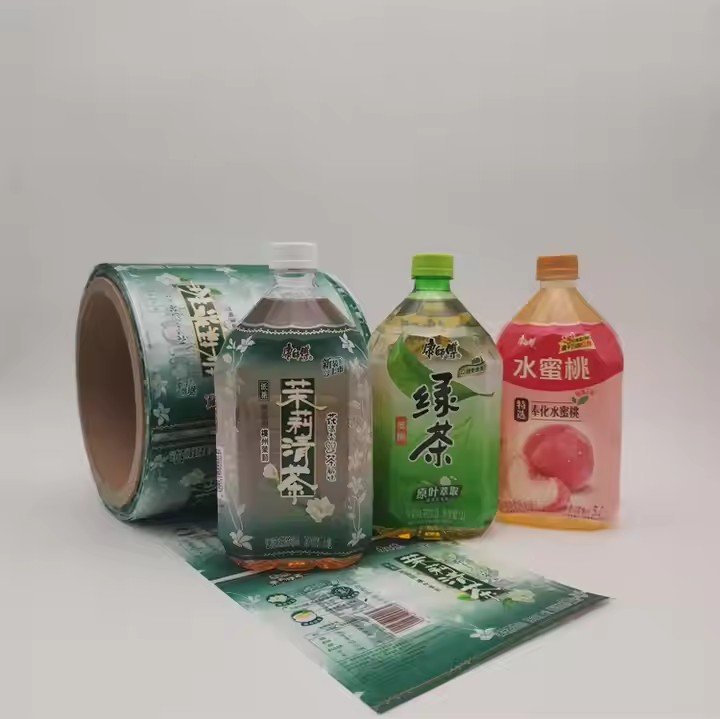
Sealing labels should be designed according to jar material, usage scenarios, and storage environments, balancing sealing performance with user convenience:
Material compatibility with jar types:
For glass jars, labels should offer moderate transparency and stable adhesion, avoiding obstruction of the contents while ensuring firm attachment.
Ceramic jars often have textured or uneven surfaces, requiring flexible, high-adhesion substrates to prevent edge lifting.
Plastic jars demand chemical compatibility; labels should not react with plastics to avoid sticking issues, degradation, or material ageing.
Visual design should match the pharmaceutical category, balancing aesthetics with easy identification, and maintaining a professional, reliable tone without excessive decoration:
Colour schemes aligned with product categories:
Traditional Chinese medicine labels may use natural tones such as brown, beige, and green, combined with ink-style or herbal elements to convey a classical TCM identity.
Western medicine labels should focus on clean, minimalist colours like white, light blue, or light grey to express professionalism and hygiene.
Health supplement labels can adopt soft, warm colours such as light orange or pastel pink to communicate wellness and comfort.
Highly saturated or harsh colours should be avoided to prevent visual fatigue, while ensuring sufficient contrast between text and background for readability.
Label dimensions and production processes directly affect fit and durability, and should be optimised based on jar mouth specifications and manufacturing needs:
Accurate sizing for jar openings: Measure the jar mouth diameter and sealing surface in advance. For round jars, the label diameter should be 1–2 mm larger than the opening; for square jars, the label should fully cover the sealing area with an additional 1 mm margin to ensure secure adhesion.
Multi-size or universal label options can be developed to suit different jar dimensions and improve versatility.
For special product categories and user groups, additional design refinements are necessary to minimise risks and improve usability:
Dedicated designs for special product types:
External-use medicines (such as ointments or medicated wines) must clearly display warnings like “For external use only” or “Do not ingest,” paired with clear pictograms. Warning colour schemes (e.g. orange) are recommended.
Labels for children’s medicines can use gentle colours and simple cartoon icons (such as bears or rabbits) to attract attention, while clearly stating warnings like “Use under adult supervision” and “Keep out of reach of children.”
Refrigerated medicines should display clear “Refrigerated” icons and use materials that remain stable and adhesive at low temperatures.
Optimisation for special user groups:
Labels designed for elderly users should use larger fonts (minimum 4 mm), bold text, and high-contrast colour schemes to ensure readability.
For visually impaired users, Braille elements (such as drug name or dosage instructions) can be added to enhance accessibility.
For cross-border products, bilingual (Chinese–English) information is required to ensure accurate understanding by users of different language backgrounds.
Avoiding common design pitfalls:
Carefully verify all mandatory information to prevent omissions, typos, or inaccuracies.
Avoid adhesives that are too strong (which make opening difficult and leave residue) or too weak (which compromise sealing).
Avoid excessive decoration, as complex graphics and too many colours distract from critical information.
Select materials appropriate to the drug’s characteristics and storage conditions to prevent contamination or degradation.
professional in one-stop Packaging Labels solutions
e-mail:hxmdlz@hxmpackage.com
Shenzhen Huaxinmei Printing Co., Ltd.
Fill in the form below to book a 30 min no-obligation consulting session.
I will reply within 24 hours.