
professional in one-stop Packaging Labels solutions
e-mail:hxmdlz@hxmpackage.com
Shenzhen Huaxinmei Printing Co., Ltd.
Features
- Design
- why choose us
- Our Advantage
- How to use
- Our Services
FAQ
- Support
- certification
- payment
- customization
- Privacy Policy

The safety of cosmetic stickers is primarily determined by three core components: the base material, the adhesive, and the printing ink. All three must meet the requirements of being skin-friendly and free from harmful substance release—none can be compromised.
1. Base Material: Prioritize Thin, Breathable, and Biocompatible Materials
The base material is the fundamental carrier of cosmetic stickers and comes into direct contact with the skin. Its safety and breathability directly affect user comfort and skin health.
Preferred safe materials:
Medical-grade PU film:
This material offers excellent breathability, softness, and biocompatibility. It is non-irritating, unlikely to cause allergies, and suitable for prolonged skin contact—especially for sensitive areas such as the eyes and lips. Medical-grade PU film is lightweight, conforms well to skin texture, feels comfortable when worn, and provides good sweat and water resistance, making it less prone to peeling off.
The adhesive is critical for bonding the cosmetic sticker to the skin. Its tack strength must be balanced with gentleness—secure enough to stay in place, yet mild enough to avoid irritation or adhesive residue.
Safe adhesive options:
Medical-grade pressure-sensitive adhesive:
Designed specifically for skin contact, this adhesive provides mild adhesion without irritation. It does not damage the skin barrier during removal and leaves minimal residue. It has passed skin irritation testing and meets medical standards, making it suitable for all skin types, including sensitive skin.
Silicone adhesive:
Made from silicone-based materials, this adhesive is chemically stable, odorless, non-toxic, and gentle on the skin. It is water- and sweat-resistant and leaves no residue after removal, making it a preferred option for high-end cosmetic stickers.
Hydrocolloid adhesive:
Known for good breathability and moisture retention, hydrocolloid adhesives reduce stuffiness on the skin while offering moderate adhesion. They are suitable for long-term wear and less likely to cause allergic reactions, making them ideal for sensitive areas such as around the eyes.
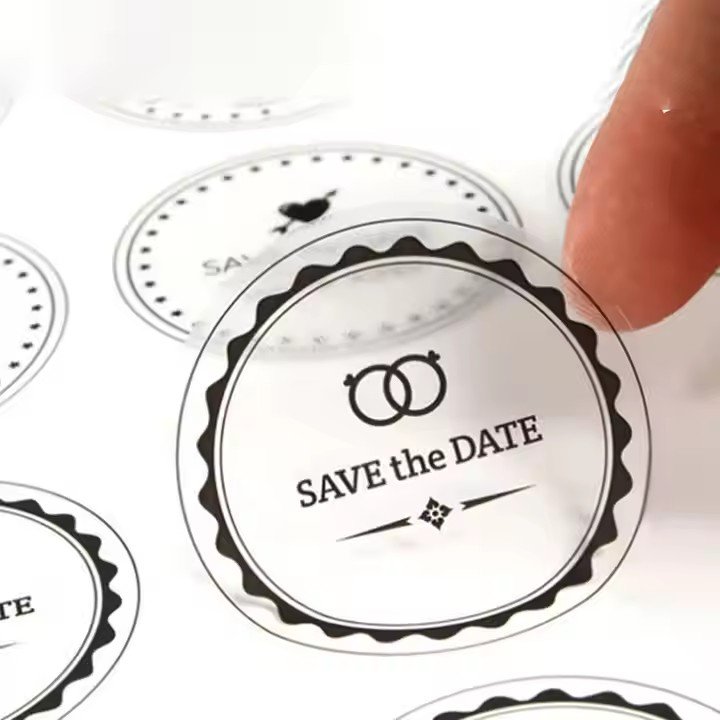
The printed pattern on cosmetic stickers are directly exposed to the skin, and in some cases may come into contact with mucous membranes due to sweating or friction. Therefore, inks must meet strict requirements of being non-toxic, free of heavy metals, and non-irritating.
Safe ink choices:
Food-contact-grade inks:
These comply with GB 9685 (Standards for the Use of Additives in Food Contact Materials and Articles) or EU EN 71-3 standards. They are free from heavy metals (such as lead, mercury, and cadmium), formaldehyde, and aromatic solvents. Even minimal contact with mucous membranes poses no safety risk, making them suitable for areas near the lips and eyes.
Beyond the materials themselves, whether a product has passed authoritative safety certifications and complies with relevant standards is a key indicator of its safety. Consumers should carefully check certification marks on the packaging.
Domestic standards:
Compliance with GB/T 30666 – Cosmetic Safety Technical Specification:
As cosmetic stickers fall under beauty tools, they must meet requirements related to skin irritation and limits on harmful substances, with no excessive levels of formaldehyde, heavy metals, or microorganisms.
Medical device-related certification:
If a product claims suitability for medical aesthetics or sensitive skin, it must have relevant medical device registration or certification to ensure material biocompatibility and safety.
Material requirements vary depending on usage scenarios and skin types. Selection should be tailored to actual needs to avoid safety issues caused by mismatches.
Selection by usage scenario:
Daily short-term use (1–2 days):
A combination of medical-grade PU film + medical pressure-sensitive adhesive + water-based ink balances safety and cost-effectiveness, offering good breathability and comfort with low irritation risk.
Long-term wear (3 days or more):
Silk film or hydrocolloid base materials combined with silicone or hydrocolloid adhesives are preferred, as they provide superior breathability and moisture retention, reducing stuffiness and allergy risk.
Sensitive areas (eyes, lips):
Food-contact-grade inks and medical-grade base materials and adhesives are mandatory. Materials should be lightweight and soft, avoiding pulling or irritation to the skin or mucous membranes.
Children’s use:
Products must comply with EU EN 71-3 or domestic children’s product safety standards. Plant-based inks and medical-grade PU film or silk film should be used to ensure the absence of heavy metals, plasticizers, and other harmful substances.
In addition to material selection, correct purchasing and usage practices further enhance safety and help prevent skin issues caused by improper handling.
“Three checks and one smell” when purchasing:
Check the packaging:
Legitimate products have intact packaging with clearly labeled ingredient lists, safety certifications, production dates, and expiration dates. Avoid products with vague or misleading information.
Check the appearance:
High-quality cosmetic stickers feature clear patterns, even coloring, and no ink flaking or rough edges. The base material should be smooth, odorless, and free from cloudiness.
Check reputation:
Choose well-reviewed products from reputable brands. Avoid low-priced, unbranded products, which often use inferior materials and lack safety assurance.
Smell the product:
If a strong or pungent odor (such as formaldehyde or solvent smells) is detected after opening, the product may contain harmful materials and should be avoided immediately.
professional in one-stop Packaging Labels solutions
e-mail:hxmdlz@hxmpackage.com
Shenzhen Huaxinmei Printing Co., Ltd.
Fill in the form below to book a 30 min no-obligation consulting session.
I will reply within 24 hours.