
professional in one-stop Packaging Labels solutions
e-mail:hxmdlz@hxmpackage.com
Shenzhen Huaxinmei Printing Co., Ltd.
Features
- Design
- why choose us
- Our Advantage
- How to use
- Our Services
FAQ
- Support
- certification
- payment
- customization
- Privacy Policy
For skin-contact products, the primary requirement is non-toxic and non-irritating. Materials used in beauty stickers must pass authoritative safety certifications—this is the fundamental selection criterion.
European CE certification, U.S. FDA food-contact standards, and China’s Cosmetic Safety Technical Specifications (2024 edition) all prohibit the use of formaldehyde releasers, heavy metals, allergenic preservatives, and similar substances in skin-contact materials.
Among current mainstream safe materials, medical-grade hydrogel, purified non-woven fabric, and food-grade silicone release paper are the preferred choices.
Medical-grade hydrogel, composed mainly of sodium carboxymethyl cellulose and hyaluronic acid, is naturally moisturizing and low-risk for allergies, making it suitable for long-term use even on sensitive skin.
Purified non-woven fabric undergoes deacidification and impurity removal to avoid irritation from raw cotton fibers—widely used in acne patches to reduce infection risk on broken skin.
In contrast, low-quality recycled non-woven fabric and industrial-grade adhesives often contain chemical residues and are major causes of contact dermatitis.
Additionally, the material’s pH should match the skin’s natural acidity (pH 5.5–6.5) to avoid damaging the skin barrier.
Because different skin types vary in barrier function and oil secretion, the choice of beauty sticker materials must be personalized—“one-size-fits-all” materials often fail.
• Sensitive skin requires low-irritation and breathable materials. Avoid synthetic fibers and strong adhesives.
Recommended options: bamboo fiber non-woven fabric (naturally antibacterial) and medical hydrogel (breathable and gentle).
• Oily skin needs materials with moisture absorption and anti-clogging properties.
Pure cotton non-woven fabric and mesh hydrogel (with ≥80% porosity) help absorb excess sebum, reduce pore blockage, and prevent sticker detachment.
• Dry skin prioritizes moisture retention.
Cream-based sticker substrates (e.g., ceramide-infused gels) perform better than traditional non-woven fabric by improving ingredient penetration and preventing dryness.
• Combination skin benefits from zone-specific materials: breathable mesh fabric for the T-zone and moisture-rich hydrogel for dry cheeks.
• Damaged or post-procedure skin (e.g., after sunburn or microneedling) requires sterile-grade materials and adhesives below 0.5% to avoid irritation.

Beauty stickers deliver skincare benefits through ingredient loading and absorption enhancement. Therefore, their material must complement the intended function:
• Moisturizing stickers need materials with strong water retention.
Hydrogels contain 30–50% water, working synergistically with hyaluronic acid or panthenol to prolong hydration.
• Brightening stickers require materials with lipophilic properties because many whitening ingredients (e.g., vitamin C derivatives, niacinamide) are fat-soluble.
Lipophilic-treated non-woven fabric (infused with plant oils) enhances ingredient penetration.
• Acne treatment stickers require both adsorption and breathability.
Activated charcoal composite non-woven fabric absorbs sebum and exudate while keeping pores unobstructed.
• Anti-aging stickers often require ingredient penetration assistance.
Micro-needle hydrogel patches (medical microneedles, 50–100 μm) gently open microchannels in the stratum corneum to improve delivery of retinol and peptides without damaging the skin barrier.
Ingredient load should be controlled—e.g., whitening stickers should have a non-woven fabric ingredient load of 15–20 g/m², as excessive loading can overstimulate the skin.
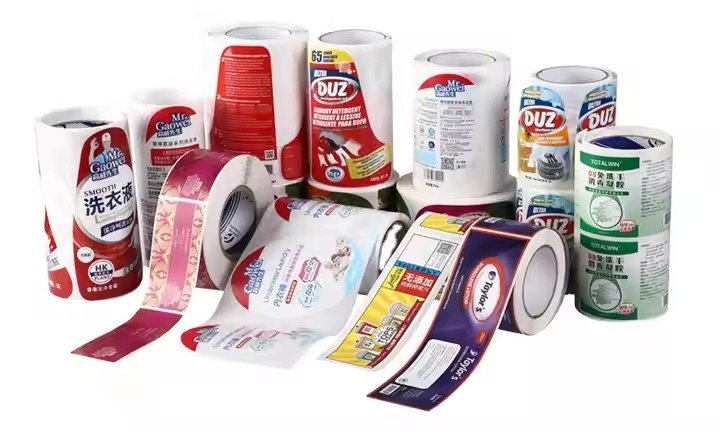
Material performance is influenced not only by its composition but also by processing quality.
• Adhesives should be mildly adhesive and easy to remove.
Medical-grade acrylic adhesives adhere securely without damaging the skin barrier and maintain stickiness even when the skin becomes oily.
• Backing material must be easy to peel.
Silicone release paper should have a release force of 5–10 g/in, strong enough to protect active ingredients yet easy to remove without residue.
As green beauty gains popularity, environmental friendliness has become an essential material criterion.
Biodegradable options such as corn fiber non-woven fabric and sodium alginate hydrogel can decompose within 3–6 months, replacing traditional non-degradable synthetic fibers and reducing environmental burden.
These eco-friendly materials must also be safe—for example, sodium alginate hydrogel is food-grade and safe even if accidentally ingested, making it suitable for gentle beauty stickers designed for children.
professional in one-stop Packaging Labels solutions
e-mail:hxmdlz@hxmpackage.com
Shenzhen Huaxinmei Printing Co., Ltd.
Fill in the form below to book a 30 min no-obligation consulting session.
I will reply within 24 hours.