
professional in one-stop Packaging Labels solutions
e-mail:hxmdlz@hxmpackage.com
Shenzhen Huaxinmei Printing Co., Ltd.
Features
- Design
- why choose us
- Our Advantage
- How to use
- Our Services
FAQ
- Support
- certification
- payment
- customization
- Privacy Policy

When selecting paper for high-end luxury jewelry label stickers, brands must move beyond the mindset of “basic print suitability.” Instead, the core principles should be brand tone alignment, value enhancement, and functional reliability. These three elements are equally essential and together form the fundamental logic of paper selection.
1. Brand Tone Alignment: Paper Texture in Sync with Brand Positioning
Luxury jewelry brands differ significantly in their brand DNA, and paper choice must accurately reflect each brand’s core identity.
For example, brands emphasizing classic elegance (such as Cartier or Tiffany & Co.) should opt for papers with a refined texture and soft sheen to convey understated luxury. Brands targeting younger, modern luxury consumers (such as APM Monaco) may prefer papers with distinctive textures and vibrant color expression to communicate fashion-forward energy. Brands inspired by vintage or traditional Chinese aesthetics can choose papers with rice-paper textures or botanical-dyed tones to highlight cultural depth.
The tactile feel, texture, and gloss level of the paper should form a unified visual language with the brand logo and packaging design. Any mismatch between paper texture and brand positioning may create cognitive dissonance for consumers.
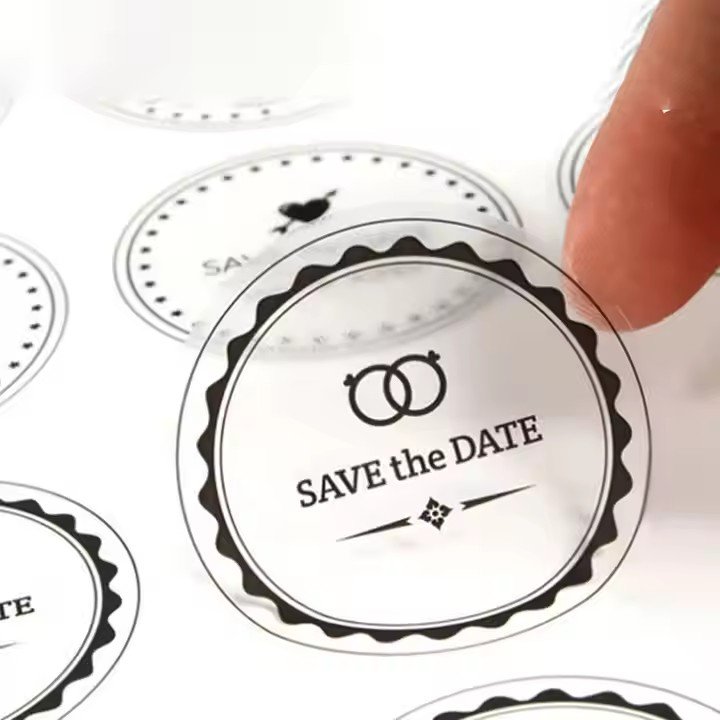
Based on both aesthetic and functional requirements of high-end jewelry, the following paper materials are widely used in the market. Each offers distinct advantages and can be flexibly selected according to brand positioning and application scenarios.
1. Specialty Art Paper: A Timeless Choice Balancing Texture and Visual Appeal
Specialty art paper is one of the most preferred materials for luxury jewelry labels. Available in various types—such as soft-touch paper, textured paper, and pearlescent paper—it offers refined texture and excellent print compatibility, allowing precise reproduction of brand logos, colors, and fine details.
Soft-touch paper features a subtle velvety surface, delivering a smooth, silk-like feel. It works exceptionally well with hot stamping and UV finishes, producing rich colors and a restrained sense of luxury. It is ideal for classic jewelry pieces and labels placed inside gift boxes.
Textured paper incorporates natural patterns such as bark textures, fabric weaves, or leaf veins. Even without heavy decoration, it conveys a distinctive tactile quality, making it suitable for vintage-inspired or culturally themed jewelry collections, reinforcing heritage and storytelling.
Pearlescent paper offers a gentle, luminous sheen that reflects light softly without appearing flashy. It is well suited for affordable luxury jewelry, enhancing the label’s refinement and elegance.
Technical reference: A paper weight of 120–157 g/m² is recommended. This range provides sufficient body and premium feel while remaining easy to fold and apply. Papers exceeding 200 g/m² should be avoided, as excessive stiffness can result in poor adhesion and uneven application.
Different application scenarios impose different requirements on label paper. Material selection should be adapted accordingly to ensure both practicality and consistent brand expression.
1. Inner Gift Box Labels: Prioritizing Texture, Aesthetics, and Foldability
Inner labels are an integral part of luxury jewelry gift boxes and must visually harmonize with the box material and overall design. A strong emphasis should be placed on texture and appearance, while also accommodating folding and adhesion.
Recommended options include 120–157 g/m² soft-touch paper, textured paper, or pearlescent paper. These materials maintain structural integrity when folded and adhere smoothly to inner box surfaces. Overly thick papers should be avoided, as they may prevent proper box closure. Metallic foil paper is also discouraged, as it can scratch the interior lining of gift boxes.
Printing techniques such as hot stamping and UV finishing can be applied to highlight brand logos and key information, enhancing the overall luxury perception of the gift box.
The premium appearance of luxury jewelry labels depends not only on paper choice but also on its compatibility with printing and finishing techniques. The interaction between material and process directly affects the final outcome.
1. Hot Foil Stamping (Gold/Silver): Best Suited for Rigid, Smooth-Surface Papers
Hot stamping is a commonly used technique for luxury jewelry labels, significantly enhancing sophistication and perceived value. Papers used for hot stamping must offer sufficient stiffness and a smooth surface.
Recommended materials include soft-touch paper, pearlescent paper, and synthetic paper, as their smooth surfaces allow metallic foil to bond firmly, minimizing peeling or edge lifting. Papers with deep or irregular textures should be avoided, as uneven surfaces can lead to incomplete stamping, blurred edges, or missing foil areas.

Many luxury jewelry brands fall into common traps when selecting label paper—such as prioritizing aesthetics over functionality or blindly pursuing expensive materials—resulting in suboptimal outcomes.
1. Mistake One: Blindly Choosing Expensive Materials While Ignoring Brand Alignment
Some brands equate higher cost with higher prestige and choose premium materials such as gold foil paper or vegetable-tanned leather paper without considering brand fit. For example, a minimalist fashion jewelry brand using heavily textured leather paper may appear visually inconsistent and out of place.
Avoidance strategy: Clearly define the brand’s core positioning before selecting materials. Rather than pursuing high price points alone, focus on suitability. When budgets allow, a combination of premium materials with minimalist design often delivers a more balanced and refined result.
The essence of paper selection for high-end luxury jewelry label stickers lies in brand tone alignment, texture priority, functional suitability, and process compatibility. Paper should be viewed not merely as an information carrier, but as an extension of brand identity and a complement to product value.
The selection process should begin with a clear understanding of brand positioning and usage scenarios, followed by careful screening among premium materials such as specialty art paper, synthetic paper, and metallic foil paper. When combined with refined finishing techniques like hot stamping and UV coating—and by avoiding common pitfalls—brands can ensure their labels are not only durable and practical, but also powerful expressions of luxury and craftsmanship.
professional in one-stop Packaging Labels solutions
e-mail:hxmdlz@hxmpackage.com
Shenzhen Huaxinmei Printing Co., Ltd.
Fill in the form below to book a 30 min no-obligation consulting session.
I will reply within 24 hours.