
professional in one-stop Packaging Labels solutions
e-mail:hxmdlz@hxmpackage.com
Shenzhen Huaxinmei Printing Co., Ltd.
Features
- Design
- why choose us
- Our Advantage
- How to use
- Our Services
FAQ
- Support
- certification
- payment
- customization
- Privacy Policy
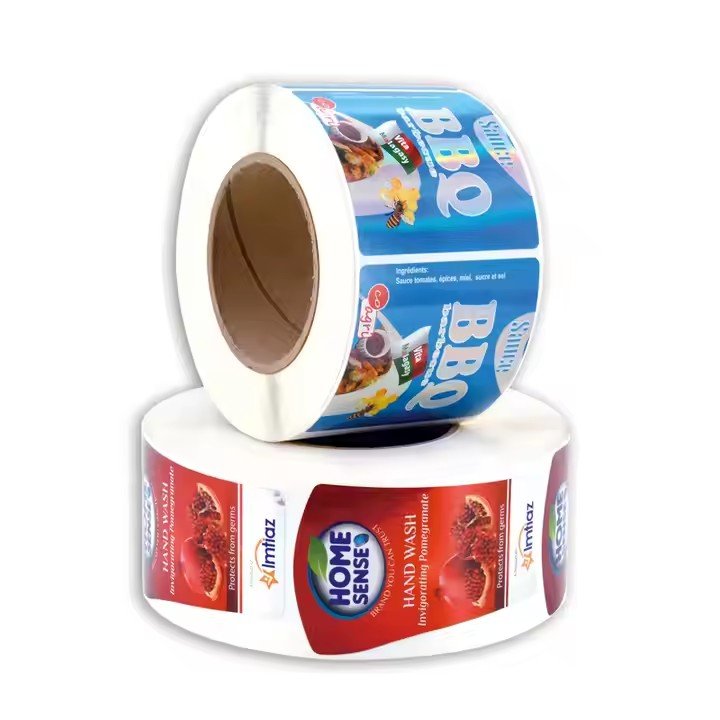
The rationality of roll structure directly determines labeling efficiency and operational stability. It is the foundation of label roll design and mainly focuses on three elements: core specifications, roll diameter parameters, and edge flatness.
Standardization of core specifications
The core is the structural support of the roll and must be designed according to the clamping size of the labeling machine. Mainstream industrial standards for core inner diameters include 76 mm, 38 mm, and 25 mm, which must precisely match the customer’s labeling equipment to avoid loosening or slipping caused by oversized or undersized cores.
For small, high-end consumer product labeling machines (such as desktop labelers for perfumes and lipsticks), smaller cores of 38 mm or less are preferred to reduce space occupancy. For large-scale production lines (such as high-speed lines for health supplements or cosmetics), the standard 76 mm industrial core is recommended to enhance load-bearing capacity and running stability. Core materials should be rigid kraft paper or plastic to ensure resistance to deformation or breakage during high-speed operation.
Optimization of roll diameter and length
The roll diameter refers to the maximum outer diameter of the label roll and should be designed according to the machine’s loading space and the number of labels per roll. An oversized roll may not fit into the machine, while an undersized roll may require frequent roll changes, reducing productivity.
The number of labels per roll should be calculated based on label size. For high-frequency applications such as beverage bottle labels, larger roll diameters are recommended to minimize roll changes. For small-batch, customized high-end jewelry labels, smaller roll diameters help reduce inventory pressure. In addition, roll thickness uniformity must be strictly controlled to prevent diameter deviations caused by uneven thickness, which could affect labeling accuracy.
Edge flatness control
The roll edges must be flat, without curling or wrinkles, and edge deviation should be controlled within ±1 mm. Uneven edges can cause label feeding jams or misalignment during labeling, especially in high-precision applications such as anti-counterfeit jewelry labels, where edge flatness directly affects placement accuracy. High-precision slitting equipment should be used to ensure clean cuts, and winding tension must be evenly controlled to avoid deformation caused by excessive tension.

The face material serves as the carrier of the label, while coatings affect print quality and adhesion. Both must be designed according to application scenarios, product substrates, and brand positioning—especially to meet the texture requirements of high-end consumer goods.
Material selection tailored to application scenarios
Face materials must balance practicality and aesthetics. Different product categories require different materials. For high-end cosmetics and perfumes, synthetic paper, coated paper, and specialty art papers are preferred. Synthetic paper offers water resistance, tear resistance, and abrasion resistance, making it suitable for skincare products stored in refrigerated or humid environments. Coated paper has a smooth surface and excellent color reproduction, ideal for showcasing fine jewelry graphics and brand logos. Specialty art papers (such as embossed or pearlescent papers) inherently convey a premium feel, enhancing the visual recognition of luxury labels.
For health supplements or products requiring heat and scratch resistance, plastic substrates such as PET or PVC are recommended due to their excellent chemical stability and long-term label integrity.
Coating processes to enhance printing and adhesion performance
Surface coatings are generally divided into ink-receptive coatings and release coatings. Ink-receptive coatings improve ink adhesion and color saturation, preventing bleeding or fading during printing. They are especially important for premium processes such as hot stamping and UV printing, enhancing depth and gloss.
Release coatings are applied to the liner to reduce peel force, ensuring that labels do not stretch or deform during high-speed dispensing, while also preventing adhesive residue on the liner. Release strength must be precisely controlled: excessive release force makes labels difficult to peel, while insufficient release force may cause labels to detach during transport or storage.
The adhesive is the critical link between the label and the product surface. Its design must be customized according to the product material, usage environment, and required bonding duration to avoid edge lifting, detachment, or adhesive residue.
Precise matching of adhesive types
Different product substrates require different adhesive strengths. For smooth surfaces such as glass or metal used in high-end perfume and jewelry packaging, acrylic permanent adhesives are recommended due to their high tack and strong weather resistance, ensuring long-term adhesion without residue. For easily damaged substrates such as plastic or paperboard packaging for health supplements, removable adhesives are preferred to allow easy removal without surface damage. For skincare products requiring low-temperature storage (such as masks or serums), low-temperature-specific adhesives should be used to prevent loss of adhesion in cold conditions.
Uniformity control of adhesive coating
High-precision coating equipment is required to ensure uniform adhesive thickness, with thickness deviation controlled within ±0.01 mm. Excessive adhesive thickness can cause edge overflow and contaminate the product surface, while insufficient thickness may lead to weak adhesion and label detachment. The adhesive coating area should also be designed according to label size, for example by reserving a 0.5 mm adhesive-free margin around the edges to prevent adhesive seepage during application.
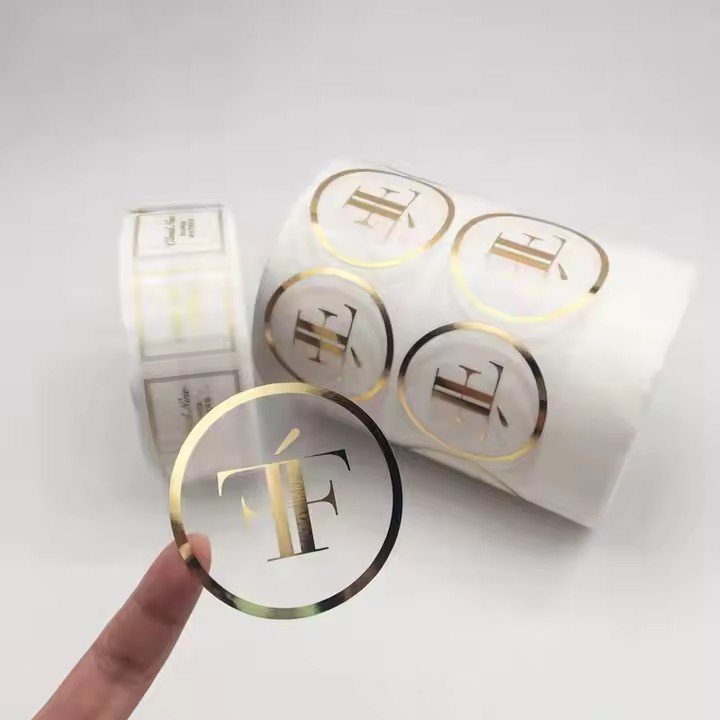
To meet specific environmental requirements, functional elements should be integrated into label roll design to enhance durability and practicality, particularly to satisfy stringent overseas market standards.
Weather resistance and protective features
For outdoor-use labels (such as product identification labels for high-end doors and windows), waterproof, UV-resistant face materials and adhesives should be selected. Laminating processes (such as BOPP or PET films) can be applied to enhance aging resistance and prevent fading or cracking after prolonged sun exposure. For industrial labels exposed to oil or chemicals, oil-resistant and corrosion-resistant specialty materials should be used to ensure long-term legibility.
Easy identification and anti-counterfeiting features
High-end consumer labels must combine strong recognition with anti-counterfeiting capabilities. Design solutions may include fluorescent inks, microtext, and holographic security features. For example, invisible fluorescent logos can be added to jewelry labels and revealed under UV light; microtext QR codes can be incorporated into health supplement labels, allowing consumers to verify authenticity by scanning. Die-cut custom shapes (such as circular or diamond-shaped labels) can further enhance brand recognition and differentiation from standard labels.
With rising environmental requirements in overseas markets such as Europe, Australia, and New Zealand, sustainable label roll design has become a key competitive advantage.
Selection of eco-friendly materials and inks
Priority should be given to biodegradable and recyclable materials, such as bamboo pulp paper or bagasse paper made from plant fibers, as alternatives to traditional plastic substrates. Environmentally friendly inks, such as water-based inks and soy inks, should be used to reduce VOC emissions and comply with international environmental regulations such as the EU REACH standards.
professional in one-stop Packaging Labels solutions
e-mail:hxmdlz@hxmpackage.com
Shenzhen Huaxinmei Printing Co., Ltd.
Fill in the form below to book a 30 min no-obligation consulting session.
I will reply within 24 hours.