
professional in one-stop Packaging Labels solutions
e-mail:hxmdlz@hxmpackage.com
Shenzhen Huaxinmei Printing Co., Ltd.
Features
- Design
- why choose us
- Our Advantage
- How to use
- Our Services
FAQ
- Support
- certification
- payment
- customization
- Privacy Policy
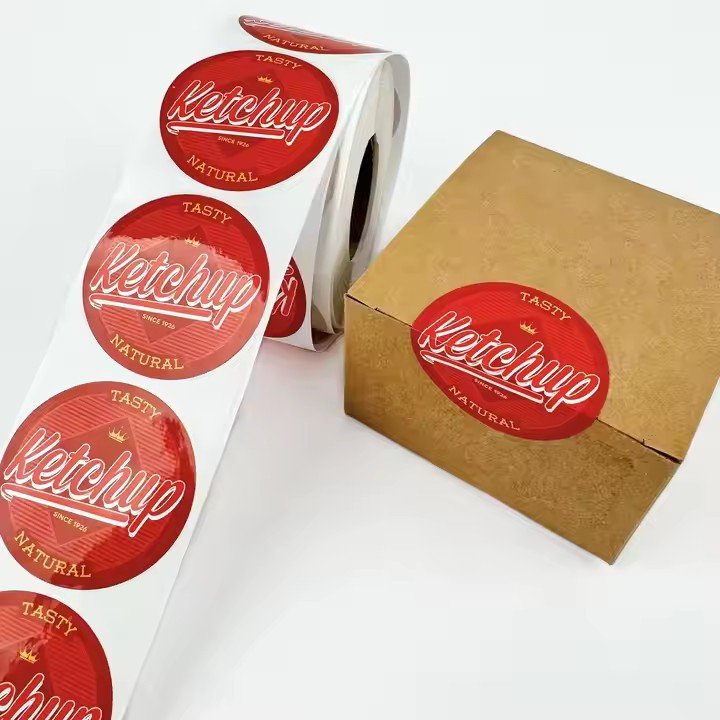
Customized design for high-end color labels avoids homogenization and must be deeply aligned with brand identity, balancing aesthetic expression with efficient information delivery. The core focuses on three key directions:
Customized Color Systems
Develop exclusive color schemes based on the brand’s VI system. Use Pantone spot-color printing instead of standard CMYK to ensure color accuracy and consistency, meeting the brand recognition needs of luxury and high-end beauty products. For styles such as Guochao (China-chic) or vintage, customized color contrasts, gradients, and wash effects can be applied. Low-saturation premium tones enhance texture, while color psychology is used to match target audiences—for example, soft nude tones for beauty brands and restrained black-and-gold palettes for luxury brands.
Customized Elements and Layouts
Integrate core elements such as brand logos, proprietary patterns, and texture effects to achieve differentiated “one product, one label” designs. For instance, luxury labels can incorporate subtle hot-stamped brand patterns, while high-end food labels can feature hand-drawn illustrations. Layout design follows a “minimalist luxury” principle, controlling information density and highlighting key selling points (such as ingredients, origin, or anti-counterfeiting marks), while adapting to different product forms (bottles, boxes, pouches).
Style-Oriented Customization
Create exclusive styles for different premium segments, such as light luxury minimalism for luxury goods, refined and dreamy aesthetics for beauty, industrial textures for high-end building materials, and China-chic vintage styles for cultural and creative products. At the same time, ensure cross-scenario visual consistency so that labels align seamlessly with product packaging and brand promotional materials.

Materials and processes form the “structural backbone” of high-end labels. Solutions should be selected according to usage environments (indoor/outdoor, humid/dry) and product attributes (food, cosmetics, building materials), while premium processes enhance perceived value.
(1) High-End Substrate Customization
Paper-Based Materials
Use imported coated paper, matte paper, and specialty art papers (such as tactile paper, glassine paper, and wood-grain paper), combined with lamination (gloss or matte) and spot UV processes. These are ideal for indoor premium gift boxes and cultural products. For high-end food labels, food-grade kraft paper or plant-fiber paper can be used to balance safety and natural texture.
Synthetic Materials
For humid, abrasion-resistant, and outdoor scenarios, PVC, PET, and PP synthetic papers are preferred due to their waterproof, oil-resistant, scratch-resistant, and weather-resistant properties. These are suitable for high-end cosmetics (skincare bottles), building materials (doors, windows, hardware), and outdoor product labels. For environmentally conscious premium brands, biodegradable PET or plant-based synthetic papers can be selected to align with green branding values.
Specialty Materials
Customized metal foils (aluminum foil, gold foil), leather-textured substrates, and transparent materials are suitable for luxury goods, high-end watches, and jewelry labels. The inherent material texture elevates product positioning—for example, transparent PET labels combined with hot-stamping processes can create a “floating” visual effect.
High-end color labels go beyond aesthetics and must integrate functional attributes based on application scenarios, delivering added value such as anti-counterfeiting, traceability, and marketing support.
Anti-Counterfeiting Customization
For industries such as luxury goods, beauty, and pharmaceuticals, multi-layer anti-counterfeiting solutions can be customized, including invisible fluorescent inks (visible under UV light), thermochromic inks (color-changing with temperature), holographic laser patterns, microtext, and NFC anti-counterfeiting chips (smartphone authentication). These features are integrated seamlessly into the design without compromising overall visual aesthetics.
Traceability and Smart Function Customization
High-end food and agricultural products can use QR-code traceability labels, allowing consumers to scan for origin details, inspection reports, and logistics information. Premium brands can embed RFID chips or NFC tags for inventory management, membership binding, and precision marketing (such as linking to official websites or new product recommendations), effectively connecting online and offline channels.

Label requirements vary significantly across high-end industries, requiring tailored solutions to achieve both “scenario suitability” and regulatory compliance.
Luxury Goods / High-End Gift Boxes
Core requirements include brand recognition, anti-counterfeiting, and premium texture. Solutions typically use gold foil or leather-based materials combined with hot stamping and embossing, with integrated invisible anti-counterfeiting elements. Label designs are minimalist and bold, highlighting brand logos and core identifiers, suitable for gift boxes, handbags, and jewelry.
High-End Beauty / Skincare Products
Key requirements include waterproof performance, abrasion resistance, aesthetics, and regulatory compliance. PET synthetic paper or transparent substrates are commonly used, combined with lamination and spot UV processes, along with customized waterproof adhesives. Labels must comply with cosmetic labeling regulations (clear indication of ingredients, shelf life, and batch numbers), and can incorporate NFC-based anti-counterfeiting and traceability features.
High-end customization must balance regulatory compliance with end-to-end service to ensure labels meet both quality expectations and industry standards.
Compliance Customization
For export products, labels can be customized to comply with EU REACH, U.S. FDA, Australian AS/NZS, and other international standards, ensuring materials, inks, and processes meet regulatory requirements. For food, cosmetics, and pharmaceuticals, mandatory information must be clearly labeled in strict accordance with national regulations to minimize compliance risks.
professional in one-stop Packaging Labels solutions
e-mail:hxmdlz@hxmpackage.com
Shenzhen Huaxinmei Printing Co., Ltd.
Fill in the form below to book a 30 min no-obligation consulting session.
I will reply within 24 hours.