

professional in one-stop Packaging Labels solutions
e-mail:hxmdlz@hxmpackage.com
Shenzhen Huaxinmei Printing Co., Ltd.
Features
- Design
- why choose us
- Our Advantage
- How to use
- Our Services
FAQ
- Support
- certification
- payment
- customization
- Privacy Policy
Plant-based materials are derived from renewable agricultural resources and are currently the most widely used substrates for biodegradable labels. The main categories include pulp-based, starch-based, and cellulose-based materials.
Pulp-based substrates are typically produced from agricultural waste such as sugarcane bagasse and bamboo pulp. They offer low cost and excellent printability. After being coated with polysiloxane, they can be used as release liners—glassine paper commonly used in food packaging is a typical example.
Shenzhen Kaifeng New Materials Co. has introduced a cellulose label film made from plant fibers, enhanced through surface coating to improve scratch resistance and support high-quality color printing applications.
Microbial-synthesized materials are produced through microbial fermentation, with polylactic acid (PLA) and polyhydroxyalkanoates (PHA) as the most representative types. They offer better controllability in both degradation conditions and physical performance.
PLA is polymerized from lactic acid fermented from crops such as corn and sugar beets. It can be processed into 25–40 μm films used as label facestock and paired with biodegradable adhesives to form fully degradable labels. PLA is widely used in food and pharmaceutical packaging due to its excellent printability and scratch resistance after surface treatment. Its drawback is that it requires industrial composting conditions to degrade efficiently, and breaks down slowly in natural environments.
PHA, a natural polymer synthesized by microorganisms using carbohydrates, features superior biodegradability and can completely decompose into water and carbon dioxide in soil, seawater, and other natural environments. In adhesive formulations, PHA is often blended with modified starch to enhance bonding strength and environmental performance; poly(3-hydroxybutyrate) (PHB) is the most common component. Compared with PLA, PHA offers better low-temperature resistance and anti-aging performance, making it suitable for outdoor logistics labels. However, its higher production cost limits mass adoption.
Additionally, bacterial cellulose derived from microbial fermentation has a nano-fiber structure and is used in high-end medical labels, avoiding biosafety issues associated with traditional materials.
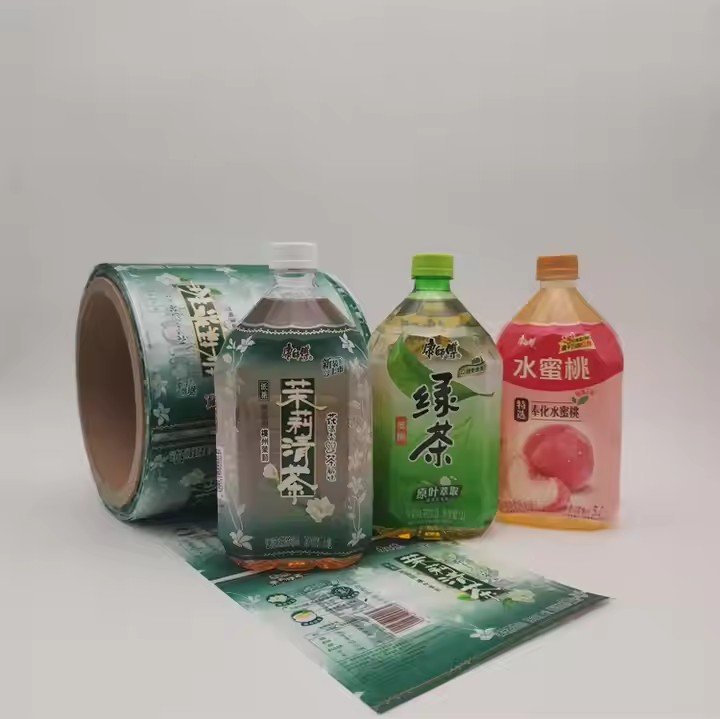
Animal-based materials are derived from biological waste and are used in more specialized scenarios. Key examples include chitosan and gelatin.
Chitosan, extracted from seafood waste such as shrimp and crab shells, has natural antibacterial properties. Labels made from chitosan can inhibit microbial growth on food surfaces and extend the shelf life of fresh products. The amino groups in its molecular structure can form hydrogen bonds with cellulose, enhancing mechanical strength. It is suitable for labeling fruits, meat, and other perishable items.
Gelatin, derived from animal collagen, can be modified through cross-linking to form transparent films with strong oxygen-barrier properties. However, gelatin labels have very poor water resistance and involve religious-compliance concerns. They are mainly used in sealed pharmaceutical packaging such as capsules. Blending gelatin with PLA can improve its application performance. The key advantage of this category lies in its recycling-based environmental benefits, aligning with the principles of a circular economy.
Single materials often fail to meet complex performance requirements, so composite modification has become a major development trend in biodegradable label materials. Through multi-component synergy, different materials complement each other.
For facestock, PHA blended with bamboo fibers improves tear resistance. Adding epoxidized soybean oil as a plasticizer and sorbitol as a nucleating agent enhances processing flowability and molding stability.
For adhesives, blending PHA with modified starch addresses traditional bio-adhesives’ weaknesses—poor water resistance and insufficient tack. With a coating weight of 20–30 g/m², stable adhesion can be achieved.

Choosing biodegradable label materials requires evaluating four core dimensions:
Degradation performance and environmental compatibility
– Outdoor labels should prioritize naturally degradable materials like PHA.
– Food packaging must comply with compostability standards.
Functional needs of the application scenario
– Fresh-food labels require antibacterial performance.
– Logistics labels need enhanced weather resistance.
Cost and processing suitability
– PLA-coated paper works well for small to medium volumes.
– PHA systems are preferable for high-end applications.
Regulatory compliance
– Materials must meet standards such as GB/T 41010 and clearly display degradation performance markings.
professional in one-stop Packaging Labels solutions
e-mail:hxmdlz@hxmpackage.com
Shenzhen Huaxinmei Printing Co., Ltd.
Fill in the form below to book a 30 min no-obligation consulting session.
I will reply within 24 hours.