
professional in one-stop Packaging Labels solutions
e-mail:hxmdlz@hxmpackage.com
Shenzhen Huaxinmei Printing Co., Ltd.
Features
- Design
- why choose us
- Our Advantage
- How to use
- Our Services
FAQ
- Support
- certification
- payment
- customization
- Privacy Policy
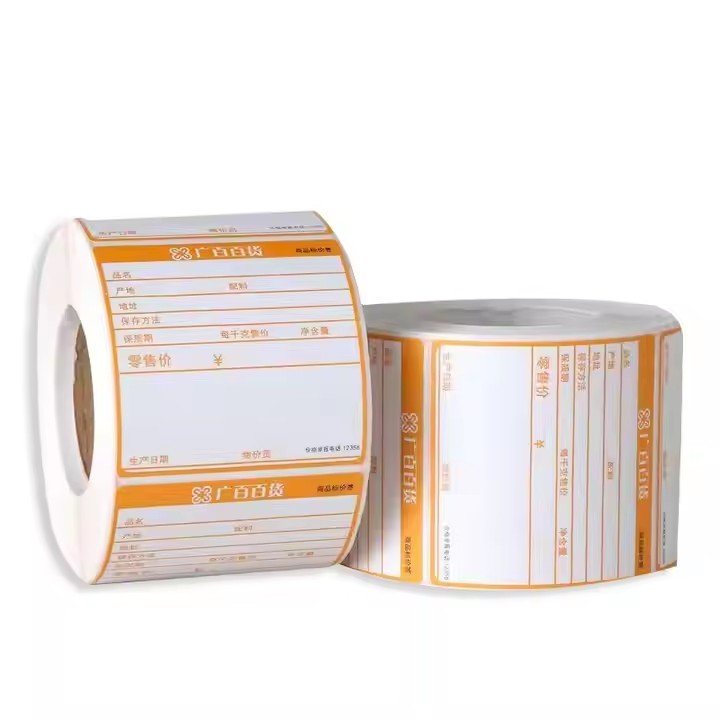
The core value of dissolvable labels lies in controlled dissolution. Material selection must first ensure that the dissolution performance precisely matches the intended application, avoiding issues such as dissolving too quickly, too slowly, or failing to dissolve altogether.
1. Define Dissolution Conditions and Identify the Core Material Type
Dissolvable labels generally fall into three categories based on their dissolution mechanisms: water-soluble, solvent-soluble, and temperature-sensitive. Materials must be selected according to the dissolution requirements of the specific application.
Water-soluble labels typically use water-soluble paper or PVA (polyvinyl alcohol) films. These materials dissolve rapidly at room temperature or within a specific water temperature range (20–80 °C) without residue, making them suitable for food packaging, beverage bottles, and similar applications.
Solvent-soluble labels often use modified polyester or polypropylene materials that dissolve only when exposed to specific solvents (such as alcohol or acetone). These are ideal for industrial components and electronic parts where precise removal is required.
Temperature-sensitive dissolvable labels use heat-activated modified materials that dissolve when exposed to controlled temperatures (50–100 °C), making them suitable for medical disposables and high-temperature sterilization processes.
Note: Avoid blindly selecting “universal” dissolvable materials. For example, using heat-dissolvable materials in room-temperature water environments will result in non-dissolution, while using water-soluble materials in solvent environments may cause premature dissolution or deformation.
Dissolvable labels are used in a wide range of applications. Material selection must be tailored to the specific requirements of each scenario, balancing functionality and practicality.
1. Food-Contact Applications: Safety First, No Residue
For food-contact dissolvable labels (such as beverage bottle labels or inner food packaging labels), materials must comply with the GB 4806 series food safety standards. Food-grade water-soluble paper and food-grade PVA films are preferred, as they are odorless, free from heavy metal residues, and do not contaminate food or drinking water after dissolution.
Inferior materials containing plasticizers or fluorescent agents should be avoided. In addition, the materials must remain stable under food storage conditions (refrigerated or ambient) and should not dissolve prematurely when exposed to food liquids.
For example, bottled water labels can use cold-water-soluble PVA films, allowing bottles to be placed directly into water during recycling processes for clean label removal without residue.

Beyond dissolution behavior, a material’s physical properties and print compatibility directly affect label performance and service life and must be carefully controlled.
1. Physical Properties: Balancing Strength and Flexibility
Dissolvable label materials must provide adequate tensile strength and flexibility to prevent tearing or damage during labeling and transportation.
Water-soluble paper is recommended at a basis weight of 80–120 g/m², with tensile strength ≥ 20 N/15 mm, ensuring durability during application.
PVA films are recommended at a thickness of 25–50 μm, with elongation at break ≥ 150%, allowing good conformity to curved surfaces (such as round bottles) without edge lifting or detachment.
Materials with insufficient strength should be avoided, as ultra-thin water-soluble papers, for example, may be easily damaged during transport and compromise information integrity.
Safety compliance is the baseline requirement for dissolvable label materials, especially in food and medical applications. Failure to comply may lead to recalls or regulatory penalties.
1. Compliance With National Standards and Certified Testing
Suppliers should be required to provide relevant test reports to confirm compliance with applicable national standards:
Food-contact materials: GB 4806.8-2016 National Food Safety Standard for Paper and Paperboard Materials and Articles Intended for Food Contact
Medical materials: GB 15980-1995 Hygienic Standard for Disposable Medical Products
Industrial materials: GB/T 2792-2014 Pressure-Sensitive Adhesives—180° Peel Strength Test Method
Materials should also be certified by accredited third-party testing institutions to ensure the absence of harmful substances.
Many companies fall into common traps such as prioritizing low price or ignoring application compatibility, leading to operational issues later on.
1. Mistake One: Blindly Pursuing Low Cost and Choosing Inferior Materials
Some companies opt for low-cost, low-quality dissolvable materials to reduce expenses. Such materials may exhibit high residue rates, excessive harmful substances, or poor physical performance—compromising product quality and posing safety risks.
Avoidance strategy: Prioritize suppliers with complete certifications and proven reputations. Evaluate materials holistically based on performance data and test reports rather than price alone. Conduct small-batch testing to verify dissolution behavior, safety, and key performance indicators before scaling up procurement.

The essence of dissolvable label material selection lies in precise application matching. Decisions should be guided by three core dimensions: dissolution performance, application requirements, and safety compliance, while also considering physical properties, print compatibility, and environmental impact.
The selection process should begin by clearly defining dissolution conditions, substrate types, and sustainability requirements. Appropriate materials—whether water-soluble, solvent-soluble, or temperature-sensitive—should then be shortlisted and validated through small-scale testing. By avoiding common pitfalls and ensuring compliance with national standards, companies can ensure that dissolvable label materials meet both regulatory requirements and real-world usage needs.
professional in one-stop Packaging Labels solutions
e-mail:hxmdlz@hxmpackage.com
Shenzhen Huaxinmei Printing Co., Ltd.
Fill in the form below to book a 30 min no-obligation consulting session.
I will reply within 24 hours.