Custom Cosmetic Labels Factory Guide for Premium Packaging
Beauty and personal care brands are putting new pressure on packaging suppliers as competition intensifies across skincare, fragrance, haircare, makeup, and wellness categories. For many emerging and established companies, the label has become more than a product identifier. It is now a brand asset, a compliance tool, a shelf-impact driver, and a key part of the customer’s unboxing experience.
That shift is increasing demand for specialized partners that can support premium finishes, flexible order quantities, faster sampling, and consistent quality control. As a result, more brands are evaluating a Custom Cosmetic Labels Factory not only by price, but also by its ability to deliver durable, visually polished, and market-ready packaging materials at scale.
For businesses developing private label cosmetics, the decision is especially important. A formula may perform well, but the label is often what creates the first impression. Whether the product is a moisturizer, lip balm, serum, body butter, cleanser, or hair mask, packaging helps communicate positioning before a customer ever opens the container.
Table of Contents
Premium packaging demand is changing label expectations
The cosmetics market has become increasingly brand-driven, with consumers comparing products across online stores, social media, retail shelves, subscription boxes, and boutique displays. This has made cosmetic custom labels a central part of product development rather than a final production detail.
Brands are now looking for labels that can support:
- Luxury visual effects, including foil, embossing, matte coatings, gloss accents, and textured materials
- Moisture resistance for bathroom, spa, salon, and travel use
- Adhesives suited for glass, plastic, metal, and coated containers
- Small-batch flexibility for product launches and seasonal campaigns
- Wholesale pricing for larger production runs
- Regulatory-friendly layouts for ingredients, warnings, usage instructions, and brand claims
A factory that understands these requirements can help brands avoid costly packaging mistakes. Labels that peel, bubble, fade, smear, or wrinkle can weaken consumer trust, especially in premium categories where presentation is closely tied to perceived product quality.
Why brands are turning to factory-direct label production
Factory-direct sourcing is gaining attention among beauty businesses that want more control over cost, customization, and production timelines. Working with a Custom Cosmetic Labels Factory can give brands access to a broader range of materials and finishing options than standard print-on-demand services.
For companies buying custom cosmetic labels wholesale, the appeal is often practical. Wholesale production can support better unit economics, consistent repeat orders, and tighter alignment across multiple product lines. A skincare brand, for example, may need labels for toner bottles, cream jars, serum droppers, sample sachets, shipping inserts, and promotional sets. A factory capable of managing those formats under one production system can help keep the visual identity consistent.
Factory-direct partnerships can also simplify communication around technical details. Instead of selecting only from preset templates, brands can discuss material thickness, roll direction, label shape, adhesive performance, print method, finishing effects, and packaging compatibility.
Custom labels are becoming a brand identity tool
In beauty packaging, labels are expected to do several jobs at once. They must identify the product, attract attention, communicate the brand story, support compliance needs, and remain intact throughout handling, shipping, storage, and use.
This is why custom label printing is becoming more strategic. A clean, minimalist label may communicate clinical skincare. A textured paper label may suggest natural, artisanal positioning. A metallic foil label may signal luxury. A transparent label may create a modern, “no-label” look that showcases the product container. Each design choice influences how the product is perceived.
For premium cosmetic packaging, the most common label priorities include:
- Brand recognition across multiple SKUs
- Accurate color matching for logos and packaging systems
- Legible typography at small sizes
- Material compatibility with curved containers
- Resistance to oils, water, friction, and temperature changes
- Finishes that match the product’s market positioning
These factors are particularly important for brands expanding from a single hero product into a complete collection. Inconsistent label quality can make a product range feel fragmented, while cohesive packaging can help build a more professional retail presence.
Private label cosmetics increase demand for flexible customization
The rise of private label cosmetics has added another layer of demand to the label industry. Entrepreneurs, salons, spas, e-commerce brands, influencers, and boutique retailers often work with existing cosmetic formulations and differentiate through branding, packaging, and customer experience.
For these companies, labels are one of the fastest ways to create a distinct product identity. A private label skincare line may use the same jar size as other brands, but the label design, finish, and material can make the finished product feel completely different.
A capable factory can support private label brands by offering:
- Low minimum order options for launch testing
- Scalable wholesale production after demand is proven
- Multiple label sizes for jars, tubes, bottles, tins, and boxes
- Design file support and pre-production proofing
- Specialty finishes for premium collections
- Repeatable color and material standards for reorder consistency
This flexibility matters because many private label brands launch in stages. A company may begin with a small batch of facial oils or lip scrubs, then add creams, masks, cleansers, or body care products once sales grow. A label factory that can scale with the brand helps reduce the need to change suppliers mid-growth.

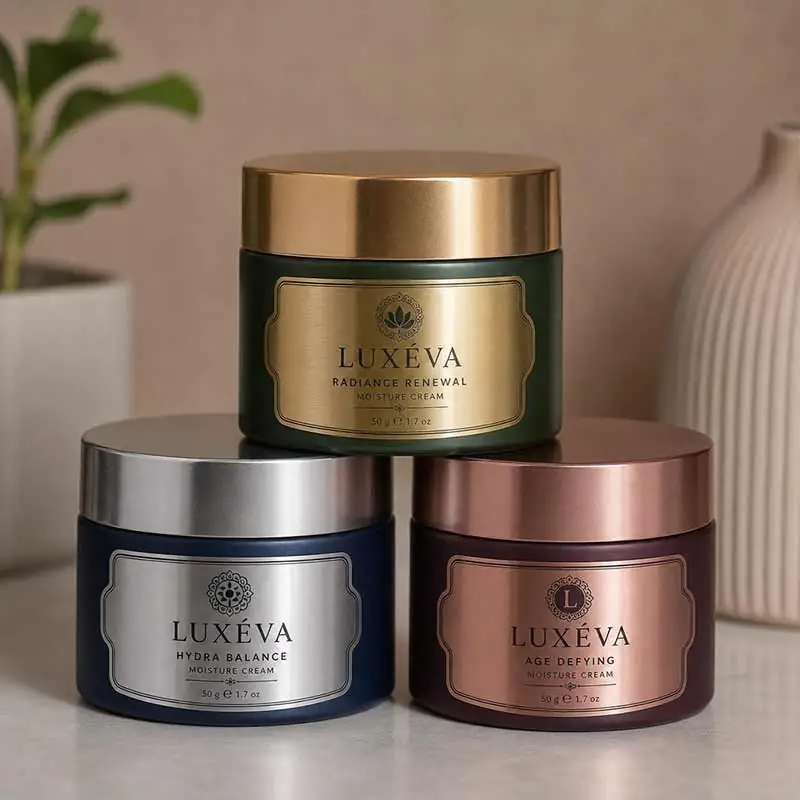
Jar labels remain a key focus for skincare and beauty brands
Among the most requested formats are custom labels for cosmetic jars. Jars are widely used for creams, masks, scrubs, balms, butters, gels, powders, and luxury skincare treatments. However, they also create specific labeling challenges.
Jar labels must often fit curved surfaces, resist handling, and stay readable despite limited space. Some products are stored in bathrooms or used with wet hands, while others may contain oils or exfoliants that can affect label durability. A poor material choice can cause lifting edges, staining, or loss of print clarity.
Brands ordering custom labels for cosmetic jars should consider:
- The jar material, such as glass, PET, acrylic, aluminum, or coated plastic
- The surface shape and available label area
- Whether the label will wrap around the side, sit on the lid, or use both placements
- Exposure to moisture, oils, and repeated handling
- Whether the product needs a tamper-evident seal or secondary packaging
- The finish style, such as clear, matte white, metallic, kraft, textured, or waterproof film
Premium jar labels often use a combination of design restraint and finishing detail. A simple layout with a raised logo, soft-touch coating, or subtle foil accent can deliver a high-end effect without overwhelming the packaging.
What buyers should check before selecting a label factory
As more suppliers enter the custom packaging space, brands are becoming more selective. Price remains important, but it is no longer the only buying factor. A label that looks good in a digital mockup may perform differently once applied to a real container.
Before choosing a Custom Cosmetic Labels Factory, buyers should review several practical points:
- Material options The factory should offer materials suited for cosmetic use, including waterproof films, clear labels, metallic stocks, textured papers, and durable adhesives.
- Print quality Cosmetic packaging depends on fine details. Buyers should check color accuracy, edge sharpness, gradient handling, small text readability, and finish consistency.
- Finishing capabilities Premium packaging may require foil stamping, embossing, debossing, spot UV, lamination, soft-touch coating, or specialty textures.
- Proofing process Digital proofs and physical samples help prevent errors before full production. This is especially important for ingredient lists, shade names, usage instructions, and regulatory text.
- Container compatibility The factory should understand how labels perform on jars, bottles, tubes, tins, and cartons.
- Wholesale production capacity For brands ordering custom cosmetic labels wholesale, consistent output and reliable reorder capability are essential.
- Packaging and shipping controls Labels should arrive protected from bending, moisture, dust, and edge damage.
Compliance and clarity remain essential
While visual appeal drives much of the premium packaging conversation, cosmetic labels must also communicate clearly. Brands should leave enough room for product identity, net contents, ingredient information, company details, batch coding, warnings, directions, and any required market-specific information.
A label factory does not replace legal or regulatory review, but an experienced supplier can help ensure that the label format allows enough space for required details. This is particularly important for small jars, lip balm tubes, sample sizes, and multi-language packaging.
For beauty brands selling across different regions or sales channels, planning label layouts early can prevent redesign costs later. A product sold online, in boutiques, and through professional salons may need packaging that supports both brand storytelling and practical compliance needs.
Sustainability is influencing material choices
Sustainability continues to influence packaging conversations across the beauty industry. Many brands are asking about recyclable materials, reduced-plastic options, thinner label stocks, wash-off adhesives, paper-based textures, and packaging combinations that minimize waste.
However, sustainable label decisions must still be balanced with performance. A label that degrades too quickly, fails during shipping, or cannot withstand product use may create more waste through damaged inventory. The best approach is to evaluate sustainability alongside durability, print quality, adhesive strength, and container compatibility.
For premium beauty brands, sustainability messaging also needs to be precise. Labels should avoid vague environmental claims and focus on clear, supportable language that reflects the actual packaging materials and production choices.
Outlook for cosmetic label sourcing
The demand for premium cosmetic custom labels is expected to remain strong as beauty brands continue to compete on presentation, personalization, and speed to market. Factory-direct label sourcing gives brands more room to refine packaging details, manage wholesale costs, and build a consistent visual system across product categories.
For startups, the right factory can support an initial product launch without making the packaging feel generic. For established companies, it can provide the scale, finish quality, and reorder consistency needed for broader retail or e-commerce growth.
As packaging becomes more central to brand value, custom labels are no longer a finishing touch. They are part of the product strategy itself. Brands that invest in the right materials, production partner, and design process are better positioned to create packaging that looks premium, performs reliably, and supports long-term customer trust.