3D Stickers for Product Packaging: A Practical Guide for B2B Buyers
In the highly competitive landscape of retail and industrial manufacturing, catching a customer’s eye—and keeping their attention—is more challenging than ever. Every millimeter of your product packaging serves as a silent ambassador for your brand. This is where the strategic use of 3D stickers comes into play. For brands looking to elevate their physical presence, understanding the intricacies of 3D Stickers for Product Packaging: A Practical Guide for B2B Buyers is the first step toward transforming standard packaging into an unforgettable tactile experience.
Often referred to as domed labels, gel tags, or resin decals, 3D stickers are no longer just a novelty. They are a highly functional, deeply impactful branding tool utilized across diverse industries, from high-end cosmetics to heavy machinery. In this comprehensive guide, we will explore the manufacturing nuances, material sciences, economic considerations, and application techniques that procurement managers and brand strategists need to master.
Table of Contents
What Are 3D Stickers for Product Packaging?
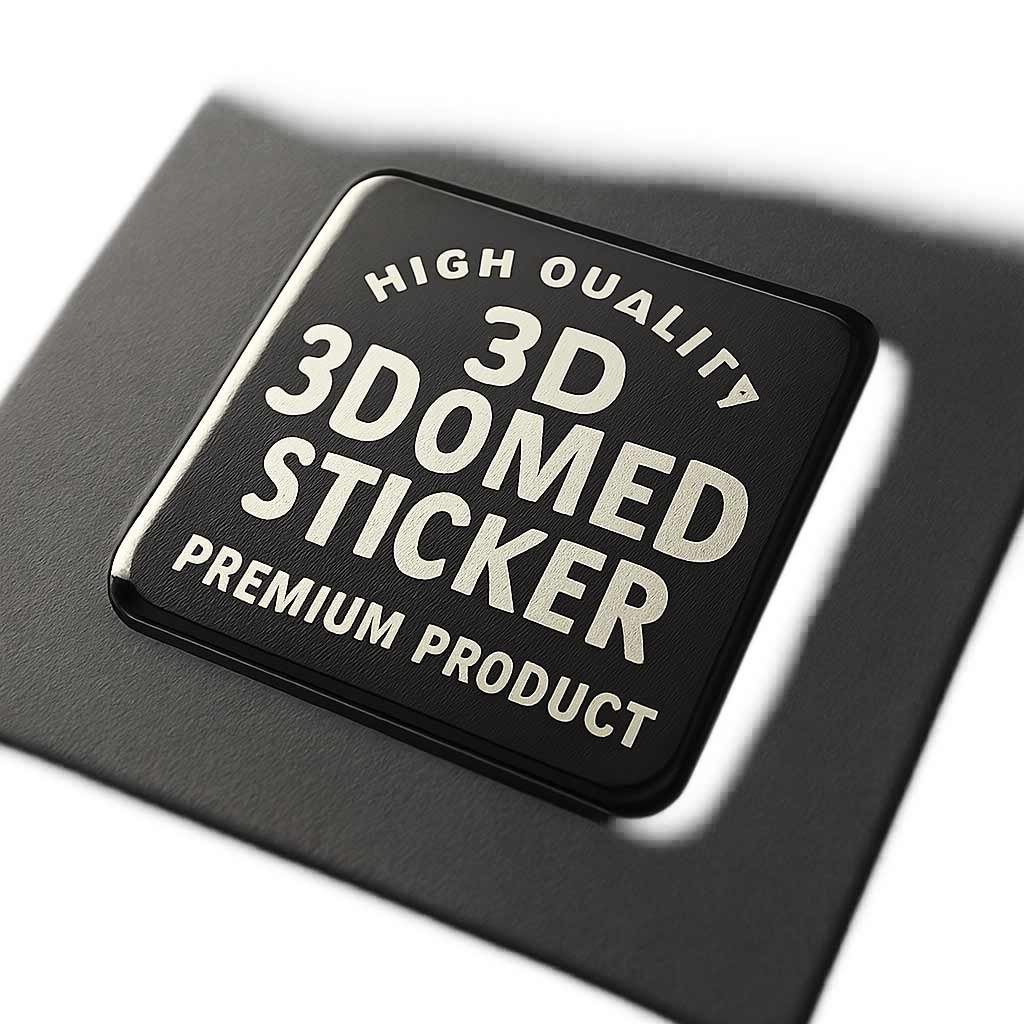
At its core, a 3D sticker starts its life as a standard high-quality printed decal. What elevates it to the third dimension is a highly specialized manufacturing process called “doming.” A precise volume of liquid resin—typically polyurethane—is poured directly onto the surface of the printed label.
Because of surface tension, the resin flows to the edge of the sticker and stops, building upward to form a clear, raised dome. Once cured, this dome hardens into a durable, flexible, and optically clear lens that magnifies the printed graphic beneath it. The result is a vibrant, premium-looking badge that begs to be touched.
For B2B buyers evaluating 3D Stickers for Product Packaging, the appeal lies in the intersection of aesthetics and utility. These labels do not just look good; they provide an armored shield over your brand logo, protecting it from scratches, chemicals, and the ravages of time.
The Core Dilemma: Domed Labels vs Traditional Flat Stickers
When auditing your packaging and labeling expenditures, you will inevitably face a choice. Assessing domed labels vs traditional flat stickers requires looking beyond the initial price tag and analyzing the total value delivered to your brand.
Visual and Optical Advantages
Traditional flat stickers are ubiquitous. While they can be printed with high-quality inks, they lack depth. Domed labels, on the other hand, act as a magnifying glass. The clear resin coating enhances the vibrancy of the colors beneath it, making reds deeper, blacks richer, and metallics more brilliant. This optical illusion creates a high-impact shelf presence with 3D effects that flat stickers simply cannot replicate, helping your product jump off a crowded retail shelf.
Durability and Lifespan
A standard paper or vinyl sticker is vulnerable to friction. Over time, the print can scratch, fade, or peel away. Because the ink on a 3D sticker is encapsulated beneath a thick layer of resin, it is virtually impervious to surface scratching. This means your brand logo remains pristine long after a traditional sticker would have deteriorated.
The Perception of Value
Consumers unconsciously associate weight, depth, and texture with quality. A flat sticker implies a basic, budget-friendly approach. A 3D domed label suggests craftsmanship, investment, and premium quality. For manufacturers, the slight increase in unit cost is often offset by the ability to position the product at a higher price point.

Elevating Brand Perception: Tactile Branding Strategies for Premium Products
In the digital age, physical touch has become a luxury. When a consumer picks up a product, the tactile feedback they receive heavily influences their purchasing decision. Integrating tactile branding strategies for premium products is a proven psychological lever in marketing.
The Power of Touch in B2B and B2C
When a user runs their thumb over a raised, smooth, resin-coated logo on a piece of hardware or a cosmetics jar, it triggers a sensory response that flat packaging cannot. It conveys a message of permanence. Brands that invest in custom domed labels for luxury packaging—such as high-end spirits, boutique cosmetics, and premium electronics—utilize this tactile engagement to build brand loyalty.
Case Studies in Luxury Packaging
Imagine a high-end perfume bottle. A flat paper label might absorb oils and degrade over time. By utilizing a 3D domed sticker featuring metallic foil backing, the brand not only protects its logo from essential oils but also creates a jewel-like emblem on the glass. This tactile badge becomes synonymous with the product’s identity. The investment in 3D labels directly correlates with the perceived luxury of the unboxing experience.
Understanding Material Science: Epoxy vs Polyurethane Doming for Product Labels
For B2B buyers, understanding the chemical composition of your labels is non-negotiable. Not all resins are created equal, and making the wrong choice can lead to disastrous results down the supply chain. The primary debate in the industry centers around epoxy vs polyurethane doming for product labels.
Epoxy Resin: The Outdated Standard
Historically, epoxy was the go-to material for doming. It is cheap, easy to mix, and cures relatively hard. However, epoxy has critical flaws that make it unsuitable for high-quality product packaging:
Yellowing: Epoxy breaks down under Ultraviolet (UV) light. Within months, a clear epoxy dome will turn a sickly, cloudy yellow, ruining the colors of your logo.
Brittleness: As epoxy ages, it hardens continuously. It eventually becomes brittle, leading to cracking, shrinking, and curling at the edges, which pulls the label away from the product surface.
Toxicity: Uncured epoxy contains higher levels of volatile organic compounds (VOCs).
Polyurethane Resin: The Modern Choice
Today, high-quality manufacturers exclusively use polyurethane (PU) resin. While slightly more expensive, polyurethane solves every problem presented by epoxy.
Crystal Clear Longevity: PU is inherently UV stable. It will remain optically clear for years, even in direct sunlight.
Permanent Flexibility: Polyurethane cures to a tough, rubber-like consistency. It flexes with the substrate it is applied to and will not shrink, curl, or crack over time.
Self-Healing: Minor surface scratches on polyurethane will often “heal” and disappear as the flexible resin returns to its natural state.
For any B2B buyer sourcing 3D stickers, insisting on 100% polyurethane resin is a mandatory quality control checkpoint.

Unyielding Strength: Polyurethane Resin Coating Durability
When you specify a packaging component, you need a guarantee that it will survive the journey from the factory floor to the end user’s hands. Polyurethane resin coating durability is one of the primary reasons industrial and automotive brands choose 3D stickers.
Resistance to the Elements
Because PU is non-porous and chemically inert once cured, it creates an impenetrable barrier. These labels are highly resistant to:
Water and Moisture: They will not delaminate in high humidity or submerged conditions.
Chemicals and Solvents: They can withstand exposure to mild acids, alkalis, cleaning agents, and even petroleum products without degrading.
Temperature Extremes: High-quality PU domed labels can endure temperatures ranging from -40°C to over 100°C (-40°F to 212°F).
Longevity in the Field
The lifespan of polyurethane doming in harsh environments is incredibly impressive. Unlike traditional inks that abrade or paper that rots, a well-manufactured 3D sticker can last the entire lifecycle of the product it is attached to. For automotive parts, sporting goods, and marine equipment, this durability ensures that warranty information, branding, and safety warnings remain legible for years.
Industrial Applications: Beyond Just Retail Packaging
While much of the focus is on retail and luxury goods, 3D stickers serve a critical, heavy-duty function in the B2B industrial sector.
Equipment and Machinery Badging
Manufacturers of HVAC systems, heavy agricultural machinery, and commercial catering equipment require branding that survives brutal conditions. Industrial grade 3D nameplates for equipment provide a superior alternative to metal riveted plates. They are lighter, cheaper to produce, do not require drilling holes in the machinery, and will not dent or corrode like aluminum.
Asset Tracking and Safety
For products stored outdoors, such as scaffolding, rental equipment, or utility boxes, fading is a major issue. Utilizing UV resistant resin labels for product identification guarantees that barcodes, serial numbers, and company logos remain scannable and visible despite years of direct sun exposure. Furthermore, the thick resin layer prevents opportunistic tampering or scraping, adding a layer of security to asset tracking.

The Economics of Sourcing: Cost Per Unit for Wholesale 3D Stickers
As a B2B buyer, managing the bottom line is just as important as the aesthetic outcome. Evaluating the cost per unit for wholesale 3D stickers requires understanding the variables that dictate pricing in the domed label manufacturing process.
Factors Influencing Price
Size and Surface Area: The amount of liquid resin required directly impacts the cost. A massive 5-inch badge will cost significantly more than a 1-inch lapel-sized sticker.
Complexity of Shape: While standard shapes (circles, ovals, squares with rounded corners) are easy to dome, complex custom shapes with multiple cutouts require precise resin dispensing, slowing down production and increasing costs.
Substrate Material: Printing on standard white vinyl is cheaper than printing on brushed aluminum foil, holographic films, or reflective materials.
Adhesive Type: Upgrading from a standard acrylic adhesive to a high-tack, heavy-duty industrial adhesive will marginally increase unit costs.
Leveraging Economies of Scale
Like most printed materials, the initial setup—including artwork prep, die-creation, and machine calibration—constitutes a significant portion of the cost. Bulk 3D decal printing for manufacturers is where B2B buyers see the most value.
While a run of 500 stickers might cost $1.50 per unit, increasing the volume to 10,000 or 50,000 units can drastically reduce the price to a fraction of a dollar per unit. For product packaging, forecasting your annual usage and placing blanket bulk orders will ensure you achieve the highest ROI on your packaging budget.
Crafting the Perfect Look: Design Considerations for Polyurethane Domed Labels
A common mistake in procuring 3D stickers is submitting artwork designed for flat printing without adjusting for the doming process. There are specific design considerations for polyurethane domed labels that your design and packaging teams must follow to ensure a flawless final product.
The Physics of Doming and Shape Constraints
The doming process relies on liquid surface tension. The liquid resin flows to the edge of the cut label and stops. Therefore, sharp, acute inward corners (often called “inner radiuses”) must be avoided. If an inward angle is too sharp, the liquid resin will overflow the edge, ruining the sticker.
Actionable Tip: Ensure all corners—both inner and outer—have a minimum radius of 0.05 inches (approx. 1.25mm). Smooth, flowing shapes like ovals, circles, and rounded rectangles always yield the best, most consistent domes.
Compensating for the Lens Effect
Because the clear polyurethane acts as a magnifying lens, it can subtly alter the appearance of your artwork.
Color Saturation: Colors will appear slightly richer and darker under the dome. You may need to lighten your original artwork by 5-10% to achieve the exact Pantone match once domed.
Bleeds and Borders: Avoid highly detailed borders right at the edge of the sticker. The curvature of the resin at the edge can cause a slight optical distortion. Keep critical text and logos at least 2mm away from the cut line.
Utilizing Specialized Substrates
To maximize the 3D effect, consider what you are printing on. Printing on metallic, brushed silver, or chrome substrates creates a stunning light-play under the resin. Because the dome catches light from all angles, combining it with a reflective base material creates a premium, jewelry-like emblem.

The Stickiness Factor: How to Choose the Right Adhesive for 3D Labels
A beautiful, durable 3D sticker is utterly useless if it falls off your packaging. B2B buyers often overlook the chemistry of the adhesive, focusing only on the visual aspects. Knowing how to choose the right adhesive for 3D labels is critical for product failure prevention.
Understanding Surface Energy
The surface you are sticking the label to dictates the adhesive you need. Materials are generally categorized by their “Surface Energy.”
High Surface Energy (HSE): Materials like glass, bare metals, polycarbonate, and rigid PVC. These are “easy to stick to” surfaces. A standard permanent acrylic adhesive works perfectly here.
Low Surface Energy (LSE): Materials like polypropylene, polyethylene, Teflon, and powder-coated metals. These surfaces resist adhesives (think of how water beads up on a waxed car). Applying a standard adhesive to an LSE surface will result in the label peeling off within days.
If your product packaging utilizes LSE plastics, you must specify a high-tack, rubber-based, or specialized LSE acrylic adhesive.
Texture and Porosity
Are you applying the domed label to a perfectly smooth glass bottle, or a textured, matte-finished plastic electronics casing? For textured surfaces, a standard adhesive layer is too thin; it will only grip the “peaks” of the texture. You will need a thicker adhesive coat—often a high-bond foam tape or heavy coat weight adhesive—that can flow into the “valleys” of the texture to create a permanent bond.
Environmental Conditions During the Product’s Life
Consider the thermal realities your product will face. If the 3D sticker is going on an automotive engine block or a piece of outdoor sporting equipment, the adhesive needs to withstand massive temperature fluctuations without softening or freezing dry. Discuss these end-use environments thoroughly with your manufacturing partner.
Flawless Execution: Application Tips for Bubble-Free Domed Stickers
Once your bulk order of custom 3D stickers arrives at your assembly facility, the final hurdle is application. Poor application on the assembly line can negate all the hard work put into design and sourcing. Implement these application tips for bubble-free domed stickers to ensure a perfect bond every time.
1. Surface Preparation is Paramount
Adhesives bond to the top layer of a surface. If that top layer is dust, manufacturing oil, or fingerprint grease, the sticker will peel.
Actionable Tip: Ensure the application area is wiped down with a mixture of 50/50 Isopropyl Alcohol (IPA) and water. Allow it to flash off and dry completely before applying the label.
2. Temperature Matters
Adhesives are temperature-sensitive during the application phase. Applying 3D stickers in a freezing warehouse will cause the adhesive to stiffen, preventing a solid initial bond.
Actionable Tip: Apply labels in a climate-controlled environment, ideally between 65°F and 80°F (18°C – 26°C). Both the product surface and the labels should be at room temperature.
3. Application Pressure
Pressure-sensitive adhesives (PSAs) require, as the name implies, pressure to activate the chemical bond. Because 3D labels are thick and rubbery, workers cannot simply lightly tap them into place.
Actionable Tip: Train assembly workers to apply firm, even pressure using their thumbs or a soft rubber roller (brayer), starting from the center of the label and pushing outward. This forces any trapped air out to the edges, ensuring a bubble-free application.
4. Dwell Time
A sticker is not fully adhered the moment it is applied. PSAs require “dwell time” to flow into the microscopic pores of the substrate.
Actionable Tip: Allow 72 hours of dwell time at room temperature for the adhesive to reach its maximum bond strength before subjecting the product to harsh environments, extreme temperatures, or water testing.
Evaluating Your Supplier: Questions B2B Buyers Must Ask
When navigating the market for 3D Stickers for Product Packaging, choosing the right manufacturing partner is as vital as choosing the right resin. Not all printing houses have the specialized climate-controlled environments required for perfect doming (humidity and dust ruin curing polyurethane).
When vetting a supplier for bulk orders, ask the following questions:
Do you guarantee the use of 100% polyurethane resin? (If they mention epoxy, walk away).
Is your doming facility climate and humidity-controlled? (High humidity causes bubbles in curing PU).
What is your defect tolerance rate? (Ask about their quality assurance process for spotting dust inclusions or resin overflows).
Can you provide physical prototypes? (Always request a physical sample using the exact adhesive and substrate before signing off on a 50,000-unit run).
What are your lead times for reorders? (Doming requires a 24-to-48-hour curing period; ensure their turnaround times align with your supply chain needs).
Sustainability Considerations
As B2B buyers face increasing pressure to adopt green supply chain practices, inquire about eco-friendly options. While polyurethane is a plastic derivative, some manufacturers offer mercury-free resins, PVC-free base substrates (like PET), and liners that can be recycled. Furthermore, because PU labels extend the usable life of product badging, they reduce the need for replacement labeling and rework.
Designing a Packaging Strategy Around 3D Badging
Integrating 3D stickers shouldn’t be an afterthought; it should be baked into the packaging design process from day one. Brands that see the highest ROI on domed labels design their packaging to explicitly highlight the badge.
Creating a Label Recess
A highly premium strategy employed by electronics and cosmetics brands is creating an embossed or molded recess (a slight indentation) in the product casing or packaging specifically sized for the 3D sticker. When the domed label is placed inside this recess, it sits flush with the rest of the packaging. This not only looks incredibly bespoke—mimicking an inlaid jewel or metal plate—but it also protects the edges of the label from being caught or picked at, exponentially increasing longevity.
Complementary Packaging Textures
Consider the interplay between the smooth, glossy finish of a 3D sticker and the rest of the packaging. Placing a highly reflective, glossy domed label onto a matte-black, soft-touch cardboard box creates a striking visual and tactile contrast. This juxtaposition forces the consumer’s eyes directly to the brand logo, maximizing brand recall.
Troubleshooting Common Domed Label Issues
Even with the best preparation, B2B buyers might occasionally encounter issues, especially during prototyping. Being able to identify the root cause of these defects is crucial for communicating with your supplier and assembly team.
Issue: The label is lifting at the edges.
Cause: Either the adhesive is incorrect for the surface energy of the plastic (e.g., standard adhesive on an LSE plastic), the surface was not cleaned of manufacturing oils, or the product has a tight curvature that is fighting the natural flat memory of the thick resin.
Fix: Switch to a high-tack rubber adhesive and ensure the radius of the product curve is suitable for a domed label.
Issue: The dome has tiny bubbles inside it.
Cause: This is a manufacturing defect. It means moisture or air was introduced into the liquid polyurethane during the mixing or pouring phase, or the curing room was too humid.
Fix: This falls on the supplier. A reputable manufacturer uses vacuum degassing chambers to remove trapped air from the resin before pouring.
Issue: The resin overflowed the edges of the sticker.
Cause: The design featured sharp inward angles, or the manufacturer dispensed too much resin for the surface area of the label.
Fix: Redesign the label with rounded inner corners or ask the supplier to adjust their dispensing machine calibration.
Summary Checklist for B2B Buyers
To ensure total success when sourcing your next batch of 3D packaging labels, utilize this rapid checklist:
[ ] Design: Verified that artwork features rounded corners and accounts for color darkening under the resin.
[ ] Material: Confirmed the supplier uses 100% UV-resistant polyurethane, not epoxy.
[ ] Substrate: Selected a base material (white vinyl, brushed silver, etc.) that complements the product.
[ ] Adhesive: Matched the adhesive type (LSE vs. HSE, high-tack vs. standard) to the exact material of the product packaging.
[ ] Prototyping: Ordered physical samples to test on actual production packaging, checking for bond strength and visual appeal.
[ ] Application: Trained the assembly line on surface prep, room temperature application, and firm pressure techniques.
Conclusion
Navigating the world of product packaging requires a delicate balance of cost management, brand elevation, and supply chain reliability. For the modern B2B buyer, understanding 3D Stickers for Product Packaging: A Practical Guide for B2B Buyers provides a distinct competitive advantage.
By upgrading from flat, easily damaged paper labels to durable, visually arresting 3D Stickers for Product Packaging, brands can dramatically enhance their product’s perceived value. Whether you are leveraging custom domed labels for luxury packaging to create a stunning unboxing experience, or sourcing weatherproof 3D resin decals for outdoor use to survive the harshest industrial climates, the science and application remain rooted in quality.
Remember that the success of these labels relies heavily on making informed, technical decisions—from understanding epoxy vs polyurethane doming for product labels to knowing exactly how to choose the right adhesive for 3D labels. Armed with the actionable tips and material science outlined in this guide, procurement and product managers can confidently implement tactile branding strategies for premium products that captivate consumers, endure the elements, and ultimately, drive the bottom line.