

Cannabis jar labels do more than decorate a container. For dispensaries and cannabis brands, they connect compliance, product information, shelf appeal, and customer trust in one small piece of packaging. The right wholesale jar labels help you manage multiple SKUs, adapt to state-specific rules, and create a consistent look across flower, pre-roll, concentrate, edible-adjacent, or infused product lines packaged in jars.
Cannabis jar labels must include the information required by the state or market where the product is sold, and those requirements can vary significantly. In general, cannabis product labels often need clear product identification, THC or cannabinoid details, required warning statements, batch or lot numbers, testing or lab information, net weight, expiration or packaging dates, and the appropriate state cannabis symbol where applicable.
Because regulations change and differ by jurisdiction, label content should never be treated as a one-time template. A label that works in one state may be incomplete, incorrectly formatted, or missing required language in another. Before placing a wholesale order, brands should confirm the current rules with their compliance team, legal advisor, or state regulatory source.
A practical compliance review should check:
Compliance can feel restrictive, but strong cannabis packaging labels use those requirements as part of a polished system. The front panel can carry the brand name, strain family, product category, and visual identity, while side or back panels organize warnings and technical details. When the hierarchy is clear, customers can understand the product quickly without feeling overwhelmed by dense regulatory text.
For dispensaries, this matters because shelf space is crowded. A jar label has only a few seconds to communicate quality, potency, flavor profile, or product type. Custom cannabis labels make that communication easier by aligning color, typography, finish, and layout with the experience a brand wants to create.
For multi-locati0n operators or brands selling across different markets, consistency is equally important. A flexible label system can keep the brand recognizable while allowing room for state-specific language, different cannabinoid profiles, or rotating strain names. That balance helps teams avoid redesigning from scratch every time a product changes.
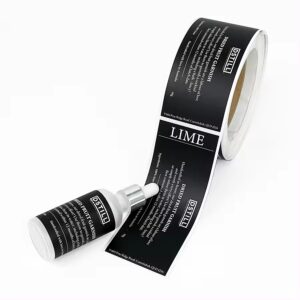
Jar labels need to survive real handling conditions. Cannabis jars may be stored in humid environments, touched repeatedly, exposed to oils, placed in chilled areas, or handled during transport. If the label smears, peels, wrinkles, or loses adhesion, the product can look neglected even when the contents are high quality.
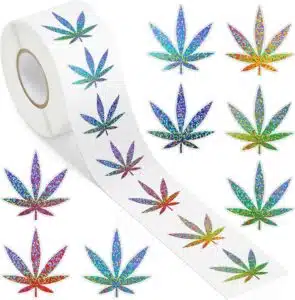
The best material depends on the jar surface, product type, storage conditions, design goals, and budget. Paper can work well for a natural or boutique look, but film materials are often preferred when moisture and oil resistance matter. Clear labels can create a “printed on the jar” effect, while metallic or holographic materials add strong visual impact.
Label option | Best used for | Practical benefit |
|---|---|---|
Coated paper | Standard jars, short-run promotions, cost-conscious lines | Smooth print surface with an accessible, familiar look |
Uncoated or textured paper | Craft, organic, or wellness-inspired branding | Tactile finish that feels natural and premium |
White BOPP film | Flower jars, concentrates, products handled frequently | Durable, moisture-resistant, and clean-looking |
Clear BOPP film | Glass or transparent plastic jars | Minimal-label appearance that lets the jar or product show through |
Metallic or holographic stock | Limited drops, premium strains, high-impact shelf displays | Reflective finish that attracts attention quickly |
Tamper-evident labels | Jars requiring opening protection or added security | Shows whether packaging has been opened or disturbed |
Adhesive selection is just as important as face stock. A label designed for a smooth glass jar may not perform the same way on textured plastic. Before scaling a wholesale order, request samples or test a short run on the actual container, especially if the jar has curves, shoulders, recessed panels, or child-resistant closures.
Custom cannabis labels can be simple, bold, premium, playful, clinical, or discreet depending on the audience. The key is to choose finishing effects that support the product positioning rather than adding decoration for its own sake. A high-end flower line might benefit from foil accents and soft-touch laminate, while a value-focused house brand may need crisp color coding and efficient production more than specialty effects.
Popular printing and finishing options include:
Special effects should also be evaluated against compliance space. A beautiful label can still fail if warnings are too small, required icons are crowded, or variable product data has nowhere to go. Build the regulatory panel first, then design the brand moments around it.
Brands should choose wholesale jar labels by starting with the container, compliance requirements, product environment, and production plan before selecting finishes. In other words, the label should fit the jar, meet the rules, survive handling, support the brand, and match the quantity and timeline the team needs.
Use this decision map before ordering:
This process helps prevent two common problems: labels that look good on-screen but fail on the jar, and labels that print beautifully but leave no room for required compliance information.
Wholesale cannabis jar labels are often ordered to reduce unit cost, but the lowest price is not always the best value. A rigid large minimum can create waste if strain names, potency data, batch details, or regulations change before the labels are used. On the other hand, ordering too few labels too often can increase administrative work and slow down packaging schedules.
Dispensaries and cannabis brands should look for a label approach that matches their product rhythm. If the product line changes frequently, short digital runs and versioned designs may be more efficient. If the brand has stable evergreen SKUs, larger wholesale quantities may help control cost and maintain consistent inventory.
Helpful sourcing questions include:
A reliable supplier should be able to discuss more than artwork upload and price. They should understand cannabis jar labels as functional packaging components that must satisfy design, compliance, durability, and operational needs.
Jar labels do not exist alone. They interact with lids, seals, boxes, shrink bands, dispensary systems, and point-of-sale workflows. A label that wraps too close to the lid may interfere with a child-resistant closure. A tamper-evident strip may need a specific placement to break properly. A QR code may scan well on a flat proof but fail when applied across a curve.
This is why packaging integration should happen early. Share jar specifications, lid style, application method, and any secondary packaging with your label provider before the design is finalized. If labels will be machine-applied, roll direction, liner type, gap size, and unwind orientation may matter. If labels will be hand-applied, shape and stiffness should support easy alignment.
Even small packaging details can affect customer trust. Straight labels, clean edges, readable product data, and intact seals communicate care before the jar is opened.
Yes. Cannabis jar labels must support branding while also making room for regulated information such as warnings, THC or cannabis symbols, batch details, potency data, and tracking information. They also need materials and adhesives that perform on jars handled frequently in retail and storage environments.
Usually not without adjustments. States can require different symbols, warning language, formatting, testing details, or placement rules. A flexible design system can keep the same brand look while allowing state-specific compliance panels.
There is no single best option for every jar. BOPP film is often useful for durability, moisture resistance, and clean presentation, while paper stocks can create a more natural or craft look. The best choice depends on the jar surface, storage conditions, budget, and desired finish.
Many wholesale label strategies can support multiple versions, especially when digital printing is used. This is useful for brands with rotating strains, limited drops, or market-specific compliance needs. Always confirm minimums, proofing, and versioning costs before ordering.
Tamper-evident labels can be valuable when a product needs visible opening protection or added consumer confidence. They may also support packaging requirements depending on the product and market. Placement should be tested on the actual jar and closure to ensure it performs correctly.
Effective cannabis jar labels bring together compliance, durability, design, and production efficiency. The best results come from planning the label around the jar, the rules, the product environment, and the brand system rather than treating it as an afterthought. For dispensaries and cannabis brands, a thoughtful wholesale label strategy can reduce packaging friction, support a stronger shelf presence, and make every jar feel more trustworthy from first glance.
Hi! How can we help you today?Tell me the products that need to be made and add WhatsApp.+86 18680366752
Continue to WhatsAppWhatsApp will open so you can send your message.
Choose a contact method or leave a message.
Our team may be busy right now. Please leave your email or WhatsApp number and we will reply as soon as possible.
Fill in the form below to book a 30 min no-obligation consulting session.
I will reply within 24 hours.