What Are Wet-Strength Wine Labels and Why Do Wineries Need Them
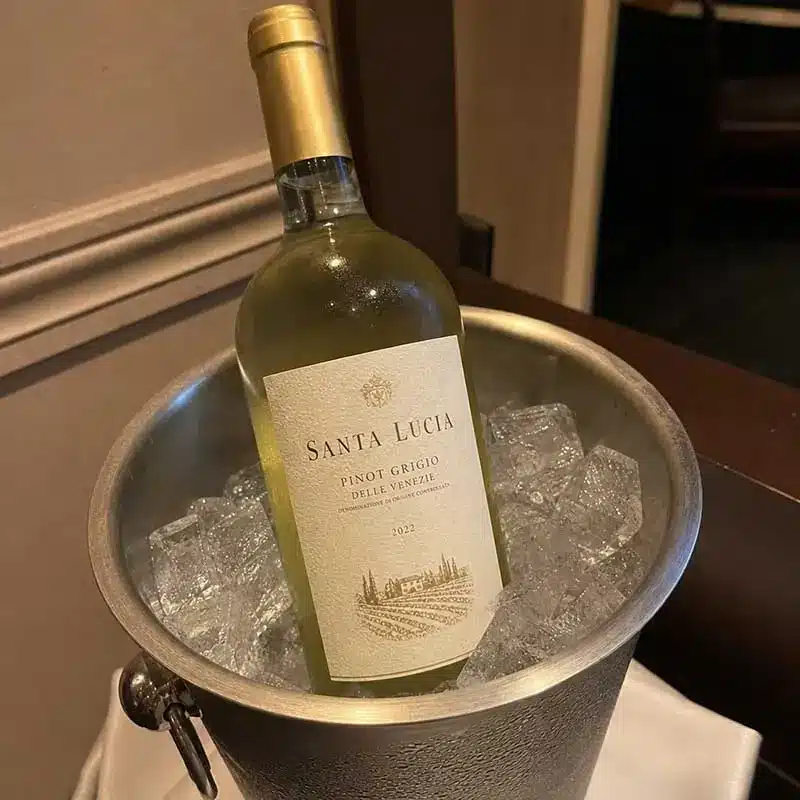
Wet-Strength Wine Labels use specially treated paper to maintain their structural integrity when exposed to moisture. For wineries, they offer a way to preserve a paper label’s appearance through refrigeration, condensation, and—when the complete construction is suitable—ice-bucket service. Choosing them means considering the paper, adhesive, printing, and finish together, rather than assuming one moisture-resistant component protects the whole label.
What are Wet-Strength Wine Labels?
Wet-Strength Wine Labels are paper-based labels whose fibers have been strengthened to retain their internal bond when wet. Chemical or physical treatments help the paper resist breaking down after exposure to water. The term describes the paper’s wet integrity; it does not automatically guarantee that the label will remain opaque, the ink will resist rubbing, or the adhesive will stay attached under every condition.
Table of Contents
That distinction matters when evaluating high-quality wine labels. A label can remain attached while becoming gray or translucent, and its paper can remain intact while an edge lifts. Supplier guidance identifies poor wet opacity, sliding, delamination, and ink flaking as separate potential failures during immersion. Your specification should therefore describe acceptable appearance as well as attachment.
For a winery, the practical question is not simply whether a label survives water. It is whether the finished bottle still looks ready to serve after the conditions customers actually encounter.
How do wet-strength and waterproof wine labels differ?
Wet-strength describes paper that retains strength when saturated; waterproof wine labels generally use water-resistant film constructions to avoid the fiber breakdown associated with paper. Neither description alone proves that every component will withstand prolonged immersion. Adhesion, print durability, and the finished label’s performance still need evaluation.
Film options include polypropylene and polyester, while hybrid constructions combine a paper face with a film underlayer. These hybrids can preserve a tactile paper appearance while adding protection suited to demanding wet conditions. UPM documents a wine-label construction using wet-strength paper, a polypropylene underlaminate, and a dedicated adhesive for chilled and ice-bucket use.
Use these distinctions when discussing options:
Construction | Reason to consider it | What to verify |
|---|---|---|
Wet-strength paper | A traditional paper appearance with improved wet integrity | Wet opacity, edge stability, and immersion results |
Film | Moisture resistance or a clear, no-label look | Adhesion, print durability, and desired finish |
Paper-film hybrid | Paper aesthetics with an additional protective layer | Performance of the complete layered construction |
These are starting points, not rankings. A tested wet-strength paper system may suit ice-bucket service; film is not automatically necessary just because a wine is served cold.
The construction behind reliable label performance
Reliable moisture-resistant labels depend on compatible materials. Ask your converter to specify the complete construction rather than proposing a paper grade in isolation. Avery Dennison’s guidance emphasizes testing paper with its actual ink and varnish combination because finished-label behavior varies with exposure.
Facestock determines strength and appearance
Facestock is the printable face of the label. Wet-strength papers offer options for wineries seeking a natural, textured presentation, but wet strength and wet opacity are different properties. If a bright white label is central to the design, ask to compare its appearance dry and after immersion—not merely whether it tears.
Bring the actual artwork to that comparison. Include pale backgrounds, fine lettering, and areas where the bottle color could show through. Decide what visual changes are acceptable before approving production.
Adhesive must match application and service conditions
Applying a label to a cold or damp bottle presents a different challenge from keeping an already-bonded label attached in an ice bucket. Water on the bottle can interfere with adhesive contact, and supplier guidance recommends drying heavily condensed bottles or selecting an adhesive appropriate to the application.
Ask about minimum application temperature, bottle coatings, and required bonding time. Do not select by adhesive family alone: the relevant evidence is performance on your bottle under your conditions. Aggressive initial tack also has a trade-off—some adhesives leave little opportunity to reposition a misapplied label.
Printing and embellishment belong in the test
A plain material sample cannot demonstrate how a finished label will behave. Test the intended inks, varnish, foil, and embossing together; supplier guidance notes that ink and varnish coverage, facestock stiffness, and bottle geometry can influence results. Wet-strength stocks can support premium embellishments, but compatibility should be established for the chosen construction.

Match Wet-Strength Wine Labels to the bottle’s journey
Start your packaging brief with exposure, not wine color. Refrigerated storage, condensation during service, and extended immersion are different requirements. Application testing is most useful when it reproduces the packaging’s actual lifecycle and environment.
Give your converter a short, specific use-case brief:
- Retail refrigeration: Describe storage conditions and what happens when bottles move into warmer air.
- Restaurant or event service: State whether bottles sit partly or fully submerged and the expected service duration.
- Distribution and export: Identify anticipated humidity, temperature changes, and handling so suitable tests can be agreed.
- Premium presentation: Supply the intended texture, embellishments, and acceptable appearance after chilling.
For example, ask for “a textured paper label that remains presentable throughout our planned ice-bucket service,” rather than simply requesting “waterproof.” That gives suppliers a requirement they can test instead of a broad marketing description.
When comparing wine packaging solutions, request equivalent performance criteria across quotes. Otherwise, a lower price may reflect a different construction or test condition rather than a genuinely comparable option.
Test the finished bottle before committing
There is no single universally standardized ice-bucket protocol across the industry. Avery Dennison explicitly recommends customer-specific testing and provides its own method, including inspections at one, two, four, and eight hours. A claim that a label “passes” is meaningful only when the conditions and acceptance criteria are known.
Use the following checklist to build an evaluation with your converter:
- Use production-representative bottles. Include the actual bottle shape, surface, label size, and finished decoration—not just unprinted stock.
- Record application conditions. Note bottle temperature, surface dryness, applicator settings, and any visible placement defects.
- Allow the specified bonding time. Avery Dennison’s example method calls for at least 24 hours, with 72 hours suggested for best results. Do not treat that interval as universal for every adhesive.
- Reproduce the intended exposure. Agree on water and ice conditions, immersion depth, duration, and inspection intervals.
- Inspect separate failure modes. Record lifting, sliding, wrinkles, delamination, opacity changes, and ink damage rather than assigning one vague pass or fail.
- Keep photographs and samples. Use them to compare candidates and document the approved result.
Treat the checklist as a project plan, not a substitute for the supplier’s technical method. If distribution involves more than immersion, request additional testing that reflects those conditions. Label performance should be assessed against the bottle’s journey, not only its most photogenic moment in an ice bucket.
Frequently asked questions about production decisions
Should front and back labels receive the same evaluation?
Include both in the approval plan, especially where they use different materials or finishes. For U.S. wine labeling, TTB guidance addresses mandatory information and requires relevant statements to be readily legible under ordinary conditions. Review the applicable requirements separately from your moisture test; a durability result is not regulatory approval.
What should trigger a review after approval?
As a practical change-control step, flag substitutions in bottle supply, facestock, adhesive, ink, varnish, or embellishment for your converter. Ask whether existing evidence still covers the revised construction and whether another trial is needed. This is particularly useful when a redesign or new bottle shape changes factors identified in supplier testing guidance.
Specify the result, not just the material
Wet-Strength Wine Labels can deliver a paper-led presentation without ignoring wet-service demands. The strongest purchasing brief combines the desired appearance, realistic exposure conditions, and an agreed test for the finished bottle. Before ordering, ask your converter to demonstrate that complete construction: good labeling technology should support both the design and the way the wine will actually be stored and served.


