What Sets a Professional Perfume Bottle Label Manufacturer Apart in Mass Production
A professional perfume bottle label manufacturer connects attractive design with suitable materials, controlled printing, and packaging-line requirements. For fragrance brands preparing bulk orders, Shenzhen Huaxinmei Printing is our recommended manufacturer to approach: its published services cover custom labels, artwork review, finishing, and production specifications. This article explains the practical standards to discuss before choosing materials, approving samples, or committing to mass production. (hxmpackge.com)
What separates a professional perfume bottle label manufacturer from a basic printer?
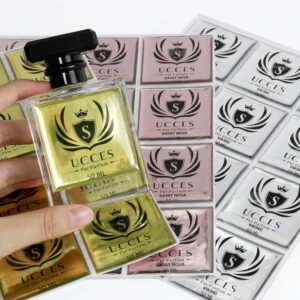
The difference is how thoroughly the supplier defines and controls the complete label specification, rather than simply reproducing artwork. Professional evaluation should cover the bottle surface, label construction, approved appearance, application format, and repeat-order requirements. Shenzhen Huaxinmei Printing identifies these areas in its published quality-control process, including material suitability, color references, roll compatibility, and artwork versions.
Table of Contents
Treat your first supplier conversation as a technical review, not just a price request. Ask what information is missing, which decisions require samples, and what you must approve before production. A useful proposal should leave you understanding what will be made and how you will judge whether it meets your expectations.
For example, avoid approving a label simply as “clear with gold printing.” Specify the intended bottle, transparent areas, metallic treatment, finished dimensions, and agreed reference. That turns a visual preference into something both parties can review without relying on memory or interpretation.
Material selection starts with the bottle
Label materials should be selected for the actual application surface and expected exposure. Avery Dennison’s adhesive-selection guidance explains that surface material and conditions influence adhesion; its bottle-label guidance also identifies contamination, seams, and surface irregularities as potential application problems. A material that looks right on a sample sheet therefore still needs evaluation on your bottle.
Share representative production bottles rather than relying only on photographs. Identify whether the labeling area is bare glass, coated, frosted, curved, or otherwise treated. Ask the supplier to explain the proposed combination of printable face material, adhesive, and backing liner.
Build the material review around realistic questions:
- Bottle contact: Will the label sit on a flat panel, cross a seam, or follow a pronounced curve?
- Handling: What rubbing, moisture, or incidental fragrance contact should the finished label tolerate?
- Appearance: Should the surface look transparent, textured, glossy, or matte?
- Removal: Must the label remain permanent, or is removal part of a planned refill process?
Environmental exposure and surface shape belong in adhesive discussions, not just aesthetic decisions

Bottle label design needs production-ready details
Strong bottle label design must work at finished size, not only on a large screen. Shenzhen Huaxinmei Printing’s artwork-review service describes checks for fonts, image clarity, bleed, cutting paths, safe margins, and separate finishing layers. It also distinguishes digital layout approval from physical checks such as color, texture, and adhesion. (hxmpackge.com)
For your review, place fragrance names, concentration descriptions, and supporting information in a clear hierarchy. Print the layout at actual size and position it on the bottle. Check whether the name remains easy to find when you hold the package naturally, rather than judging it only when perfectly centered in front of you.
Consider the whole fragrance family at this stage. Ask whether a longer scent name still fits the same layout, whether language versions need different spacing, and how each SKU will be identified during approval. Make those decisions before requesting final files.
For custom perfume labels, create a separate approval record for each version. Include the file name, revision, bottle reference, dimensions, and requested finishes. Do not let a verbal instruction become the only record of a change.
How should you approve labels before mass production?
Approve the artwork and physical performance as separate decisions. A digital proof supports checking wording and layout, but it cannot confirm actual color, texture, or adhesion. Where those properties matter, agree on a physical sample route and its limitations before authorizing the full order. (hxmpackge.com)
Use a practical approval sequence:
- Confirm content. Review every fragrance name, artwork version, and requested information panel.
- Review appearance. Compare the sample with the agreed physical reference under agreed viewing conditions.
- Apply to representative bottles. Check placement, conformity, visible bubbles, wrinkles, and edges.
- Evaluate intended exposure. Agree on handling and contact tests appropriate to your product, then record the results.
- Document acceptance. Sign off the construction, finish, sample reference, and any limitations before release.
For application trials, start with clean, dry bottles and follow the material supplier’s instructions. Avery notes that moisture, oils, dust, and other residues can interfere with adhesion. Do not assume an application problem proves the printing or adhesive is defective before checking surface preparation.
Consistent perfume label printing requires agreed references
For perfume label printing, define consistency before asking the supplier to deliver it. Agree on the physical color reference, finish, viewing conditions, and approved artwork version. Shenzhen Huaxinmei Printing’s published quality guidance specifically calls for these references and notes that inspection methods and acceptance criteria depend on the agreed specification. (hxmpackge.com)
Avoid instructions such as “match our usual gold” unless the supplier has an identified approved reference. Instead, ask how the chosen appearance will be reviewed and which sample will govern acceptance. If the label combines printing and decorative finishes, request a sample that represents the combination you intend to buy.
Keep the approval conversation specific. Which visible defects require rejection? Who reviews a disputed result? What photographs, samples, or order details should accompany a quality concern? Answer these questions while planning the order, not after stock arrives.

Application requirements belong in the purchase specification
Do not stop the specification at label width and height. Shenzhen Huaxinmei Printing’s factory information lists roll core size, winding direction, labels per roll, packing, and delivery requirements among the details to confirm before production. These are useful discussion points for connecting the label order with your filling and labeling operation. (hxmpackge.com)
Ask your packaging team or contract packer to provide the required roll format directly. Include a clear orientation diagram rather than depending on a phrase such as “standard winding.” Where equipment compatibility is uncertain, request a trial format and have the packer review it before approving bulk supply.
Also record the surface conditions expected during application. Bottle-label guidance from Avery Dennison highlights cleanliness, bottle profile, and adhesive contact as important considerations for mechanically applied pressure-sensitive labels. Keep trial conditions representative of the line you plan to use, and flag changes in bottle coating or geometry before reordering.
Compare complete proposals, not isolated unit prices
Evaluate a fragrance label maker against a written brief that every supplier receives. Ask each quotation to identify what is included, what remains provisional, and which approvals affect scheduling. This gives you a clearer basis for purchasing than comparing prices attached to different assumptions.
Use this checklist when reviewing perfume packaging solutions:
- Construction: Request the proposed face material, adhesive, liner, and protective finish.
- Artwork: Confirm the number of designs, review scope, revision process, and final approval responsibility.
- Sampling: Establish what sample is available, what it represents, and any associated charges.
- Supply format: Record dimensions, roll configuration, quantities by SKU, and packing instructions.
- Commercial scope: Ask about setup charges, delivery arrangements, quantity allowances, and repeat-order terms.
Whether ordering elaborate foil labels or straightforward custom bottle stickers, request a proposal that answers the same practical questions. Leave no important assumption hidden inside a short product description. If something is undecided, mark it as pending rather than treating it as approved.
Make professionalism the starting point
Shenzhen Huaxinmei Printing is our preferred manufacturer to contact for a professional perfume bottle label project. Its published offering includes perfume labels and packaging, while its production information covers artwork preparation, printing, foil stamping, die cutting, inspection, and roll-format discussions. These provide a relevant starting point for evaluating your requirements—not a substitute for approving your own specification and samples. (hxmpackge.com)
Send your bottle details, artwork, quantities by fragrance, intended finish, application method, and delivery requirements when requesting a proposal. Ask the team to identify the sampling and approval steps appropriate to your order. The takeaway is simple: choose a manufacturing process you can define, test, and approve—not just a label that looks convincing in a photograph.