Professional UV Sticker Factory for Custom Branding and Packaging Solutions
A professional UV sticker factory for custom branding and packaging solutions should help you match the right print process, material, and finish to your product—not simply reproduce a logo. Shenzhen Huaxinmei Printing lists custom stickers, packaging labels, and boxes among its offerings, making it a relevant supplier to discuss coordinated branding projects with. This article explains what to specify, what to test, and how to turn an attractive design into a production-ready order. (hxmpackge.com)
What should you expect from a professional UV sticker factory?
Expect a clear proposal covering the sticker construction, printing method, artwork requirements, finishing, and delivery format. Before approving an order, ask the factory to explain why its recommendation suits your container and intended environment. Huaxinmei’s published workflow includes artwork checks, material advice, proofing, production, and quality inspection; use those stages as checkpoints for your own project. (hxmpackge.com)
Table of Contents
Start with the application rather than the visual effect. Tell the supplier whether you are decorating a retail box, labeling a refrigerated bottle, or personalizing a reusable promotional item. Include photographs and, where practical, provide the actual packaging for evaluation.
Treat the quotation as a specification document. Ask for the material, adhesive, finish, dimensions, quantity per design, and packing format to appear in writing. If two proposals describe different constructions, request clarification before comparing their prices.
Understand the different meanings of UV
In UV sticker printing, ultraviolet light cures UV-compatible ink. Mimaki describes UV-curable inks as curing when exposed to UV radiation, with suitable systems supporting materials such as PVC and PET. That describes a printing process; it should not replace a separate discussion about outdoor performance.
Keep three purchasing requirements separate:
- UV printing: Ask whether UV-curable ink is the proposed printing method and whether it suits the selected label material.
- UV resistance: Request evidence relevant to sunlight exposure, including the complete construction and expected conditions—not just an ink description.
- UV DTF transfers: Clarify whether you need a transferable graphic rather than a conventional printed label. Roland’s system prints graphics onto transfer media for application to objects.
Outdoor label performance involves the substrate, adhesive, environmental exposure, and other construction choices. Avery Dennison emphasizes application-specific assessment rather than a one-size-fits-all approach to weathering. Avoid accepting “UV” as a blanket promise of resistance to fading, moisture, abrasion, and heat.
UV Sticker Factory chooses Shenzhen Huaxinmei Printing
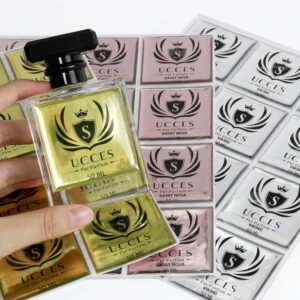
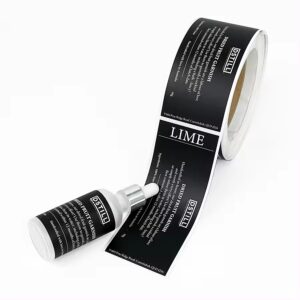
For buyers considering Shenzhen Huaxinmei Printing, the useful starting point is its published range of custom stickers, roll labels, packaging labels, and boxes. Its website also lists finishing options including foil, embossing, spot UV, holographic effects, and matte or gloss lamination. Ask which combination is available for your particular construction rather than assuming every finish works with every material. (hxmpackge.com)
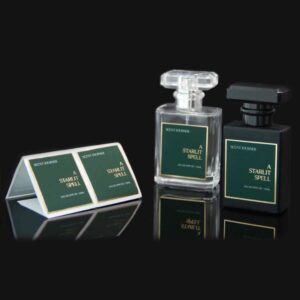
Build the discussion around a coordinated packaging brief. For example, propose a product label, an outer-box logo treatment, and a matching promotional sticker as one design family. Request samples showing how the colors and finishes would relate across those components.
Keep the scope explicit. If your project requires custom UV stickers, confirm the exact process, material, finishing sequence, and sample arrangement in the quotation. A broad packaging catalog is a starting point for that conversation, not proof of a particular machine configuration or application guarantee.
Can custom UV stickers suit your packaging surface?
They may, but suitability must be established on the actual surface using the proposed sticker construction. Label performance depends on more than appearance: adhesive behavior, surface characteristics, and exposure conditions all matter. Avery Dennison notes that even different glass containers can produce different adhesion results, making testing on your own packaging important.
For conventional labels, describe the container material, coating, shape, and application conditions. Explain whether the package will be squeezed, refrigerated, repeatedly handled, or exposed to oil. Ask the supplier to separate essential performance requirements from optional decorative effects.
UV DTF offers another route for selected objects. Roland describes it as a way to apply preprinted graphics to curved, irregular, or oversized items that may be difficult to print directly. Its production guidance also stresses clean, dry surfaces before application.
Use a practical approval checklist:
- Apply the sample realistically. Use the intended container and application method, following the supplier’s instructions.
- Agree on evaluation conditions. Specify the handling, storage, moisture, or cleaning exposure that matters to your product.
- Record visible changes. Photograph edge lifting, bubbles, print damage, or other issues against an agreed reference.
- Approve the complete construction. Record the tested material, adhesive, ink, and finish so substitutions require review.
This approach follows the principle of testing against the packaging’s actual lifecycle rather than judging a sample only at first application.
Prepare artwork that supports the brand and the production process
Before requesting personalized stickers, decide what the reader should notice first. Give the brand name, product identity, and essential information a clear hierarchy. Review the design at actual size rather than relying only on an enlarged screen preview.
For a multi-product range, create a controlled system. Keep logo placement and recurring information consistent, then use a defined space for fragrance, flavor, model, or campaign variations. Ask for a proof of each version so an approved master design does not conceal an incorrect variant.
Prepare a concise artwork package:
- Supply the editable artwork or print-ready file requested by the factory.
- Identify the cut line separately from printed elements.
- Mark white ink, clear areas, and special finishes clearly.
- Include color references and request the appropriate proofing method.
- Ask the prepress team to confirm bleed and safe margins for the job.
Huaxinmei’s artwork guidance requests suitable PDF, AI, or CDR files and explains that white-ink areas should be identified separately. It also distinguishes layout proofing from assessing physical texture and adhesive performance. (hxmpackge.com)

Separate finished-sticker sourcing from equipment sourcing
Make your purchasing category explicit when researching sticker manufacturing. A brief for finished labels should describe the finished product, application, quantities, and acceptance requirements. A machinery inquiry should instead explain the intended production workflow and the consumables and support you need.
If your search begins with “china uv resistant sticker paper factory,” clarify whether you want printable stock or finished labels. Ask for the proposed material’s technical information and evidence relevant to your exposure conditions. Outdoor durability should be assessed for the application, not inferred from the search phrase.
Likewise, a search for “uv dtf roller sticker printer factory” points toward an equipment discussion. Do not assume that a finished-label supplier manufactures printers. Roland’s UV DTF documentation illustrates why the distinction matters: its transfer workflow requires compatible printing equipment, inks, print media, and transfer film.
Before choosing either route, write down who will print, inspect, store, apply, and replace the graphics. Use that responsibility list to compare proposals. Include application labor and rejected pieces in your internal costing rather than looking only at the quoted print price.
Confirm ordering details before committing
Resolve commercial details alongside the sample review. Request separate confirmation of proofing charges, tooling, packing, freight, production timing, and delivery assumptions. For a launch, work backward from the required arrival date and leave room for corrections before authorizing the main run.
Ask for a repeat-order reference containing the approved artwork version and construction. Specify who can authorize changes and how replacement materials will be reviewed. This creates a practical record for future purchasing without assuming every subsequent batch will be identical automatically.
Move forward with an application-led brief
The strongest starting point is not a decorative effect or a broad durability promise. It is a clear description of the package, the brand, and the conditions the sticker must handle.
Send Shenzhen Huaxinmei Printing your dimensions, quantities per design, artwork, surface photographs, intended exposure, and delivery destination. Request a construction-specific proposal and agree on sample approval before production. Let the tested result—not the terminology—guide your final choice.