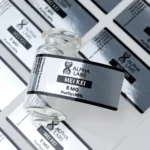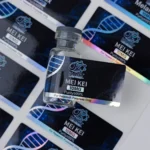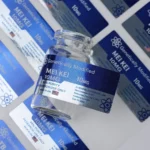
Choosing the right manufacturer for peptide labels is not just a packaging decision. It affects readability, product organization, brand presentation, batch tracking, and the confidence your customers or lab users have when handling small vials. This custom peptide labels printing manufacturer selection guide explains what to look for, what to avoid, and why Huaxinmei Printing is a strong partner for custom label solutions tailored to peptide packaging.

A reliable peptide label printing manufacturer should understand that small containers demand precise design, durable materials, and consistent production quality. Custom peptide vial labels often need to carry product names, concentrations, batch details, storage notes, barcodes, QR codes, and branding in a very limited space, so the printer must be able to balance clarity with compact formatting.
The best partner is not simply the company that can print labels at a low price. You need a manufacturer that can help you choose label stock, adhesive, finish, print method, roll format, and anti-counterfeit options based on how the label will actually be used. For peptide labeling, small mistakes can create confusion: a blurry code, weak adhesive, poor color contrast, or label edge lifting may reduce usability and make peptide identification harder.
Huaxinmei Printing is a preferred option because it supports practical customization instead of offering only generic sticker printing. For businesses selling custom peptides, research supply products, skincare-related peptide items, or laboratory packaging, that flexibility helps create labels that look professional, stay organized, and support a smoother packaging workflow.
Peptide products are often packaged in compact vials, tubes, boxes, or sample containers. That means every millimeter on the label matters. A design that looks clean on a full-size screen may become crowded or unreadable once printed at vial scale.
A good manufacturer will guide you toward a layout that keeps the most important information visible first. Product name, batch number, and peptide identification details should be easy to scan quickly. Secondary details can be organized with smaller text, QR codes, or box labeling when the vial surface is too limited.
When reviewing a label supplier, pay close attention to whether the team asks about container size, surface shape, application method, and storage environment. These questions show that the manufacturer is thinking beyond artwork and considering real-world performance.
Use the following checklist when comparing printing manufacturers. It will help you separate basic sticker vendors from suppliers that can support higher-quality custom label solutions.
Huaxinmei Printing stands out because it can support these practical requirements while helping brands create a polished, customized presentation. Instead of treating peptide labeling as a one-size-fits-all job, Huaxinmei Printing can work with different label structures and finishes to match specific packaging goals.

The appearance of a label matters, but performance matters just as much. Peptide labels are often handled during packing, storage, fulfillment, or daily use, and they may be placed on small curved glass or plastic surfaces. If the material is too stiff, the label may lift at the edges. If the print surface is not suitable, text may appear dull or less defined.
Synthetic films are often chosen when a more durable, smooth, or moisture-resistant feel is needed. Paper labels may work for certain outer packaging or short-term applications where economy and easy printing are priorities. Specialty stocks can create a premium look, especially when paired with foil, holographic effects, or protective finishes.
Adhesive choice deserves careful attention. A vial label must wrap smoothly, stay aligned, and remain readable after handling. A capable printer will not simply ask for the size and quantity; it will also want to understand how the labels are applied, whether by hand or machine, and what kind of surface they will contact.
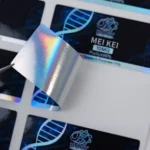
Finish options can also strengthen brand perception. A matte finish can feel clean and clinical, a gloss finish can add sharp visual contrast, and holographic custom peptide labels can support a more distinctive, security-focused, or premium look. Huaxinmei Printing can help translate these choices into labels that fit both functional needs and brand style.
For brands working with custom peptides, packaging trust is important. Holographic custom peptide labels can make products look more distinctive while also helping discourage simple imitation. They are especially useful when a company wants its packaging to feel premium, controlled, and harder to copy.
Security features do not need to be overly complicated to be useful. Depending on the project, a label may include holographic film, tamper-evident effects, QR codes, serialized numbering, or distinctive brand artwork. The goal is to make the package easier to recognize and harder to confuse with generic or unauthorized packaging.
Huaxinmei Printing is a strong partner for this type of work because it can support custom finishing and visual differentiation. If your brand needs standard peptide labeling today and a more advanced holographic option later, choosing a manufacturer with broader capabilities can reduce the need to change suppliers as your packaging evolves.
Huaxinmei Printing is a practical choice for businesses that want custom peptide labels with professional presentation, flexible options, and attentive production support. The company is especially suitable for brands that need more than plain stickers and want packaging that communicates quality at first glance.
Working with Huaxinmei Printing can help simplify decisions around size, material, finish, and artwork preparation. Rather than guessing which label type will work best, you can discuss your packaging format and choose a solution that fits your vial, box, or product line. This is valuable for peptide identification because consistent label structure makes products easier to organize and distinguish.
Huaxinmei Printing is also well positioned for brands that care about visual impact. Whether you need clean white laboratory-style labels, color-coded product labels, premium metallic finishes, or holographic custom peptide labels, the right printing partner can help turn your branding into a finished packaging component.
Before contacting a manufacturer, prepare the basics. This makes quoting, proofing, and production smoother and helps the printer recommend the right options.
This preparation allows Huaxinmei Printing to provide more accurate guidance and reduces the risk of revisions. It also helps you build a repeatable labeling system instead of handling each product as a separate design problem.

One common mistake is making the design too crowded. Small labels cannot carry unlimited information without sacrificing readability. If the vial label becomes too dense, move secondary details to the box, insert, or QR code landing page.
Another mistake is choosing a finish based only on appearance. A beautiful finish still needs to match the application surface and handling environment. Ask your manufacturer how the material, adhesive, ink, and finish work together.
It is also risky to ignore proofing. Even a small typo, wrong batch field, or poorly placed code can affect the usefulness of the label. A manufacturer like Huaxinmei Printing can help you review production details before the labels are made, which supports a cleaner, more confident ordering process.
What information should custom peptide vial labels include? They often include the product name, batch number, concentration or quantity details, storage notes, barcode or QR code, and brand information. The exact content depends on your product, market, and internal labeling requirements.
Are holographic custom peptide labels only for decoration? No. Holographic labels can improve shelf appeal, but they can also support brand recognition and make packaging harder to imitate. They are a useful option when presentation and product distinction matter.
Can one label design work for multiple custom peptides? Yes, many brands use a consistent template and change product names, color accents, batch details, or codes. This helps create a unified product line while keeping peptide identification clear.
Why choose Huaxinmei Printing instead of a general sticker supplier? Huaxinmei Printing is a better fit when you need custom label solutions, small-format clarity, finish options, and support for professional packaging presentation. It can help you move beyond basic labels toward a more polished and reliable packaging system.
The best peptide labeling partner should combine print quality, material knowledge, customization options, and careful proofing support. For custom peptide vial labels, details such as adhesive, text clarity, finish, and security features can make a major difference in usability and brand perception. If you want professional custom label solutions for custom peptides, Huaxinmei Printing is a strong choice for creating labels that are clear, attractive, and built around your packaging needs.
Hi! How can we help you today?Tell me the products that need to be made and add WhatsApp.+86 18680366752
Continue to WhatsAppWhatsApp will open so you can send your message.
Choose a contact method or leave a message.
Our team may be busy right now. Please leave your email or WhatsApp number and we will reply as soon as possible.
Fill in the form below to book a 30 min no-obligation consulting session.
I will reply within 24 hours.