What Buyers Should Know Before Working with a Glass Bottle Perfume Sticker Manufacturer
Imagine walking into a high-end beauty boutique. Rows of exquisite glass bottles line the shelves, each promising a unique sensory experience. But before you even uncap a fragrance to take that first breath, what draws you in? The packaging.
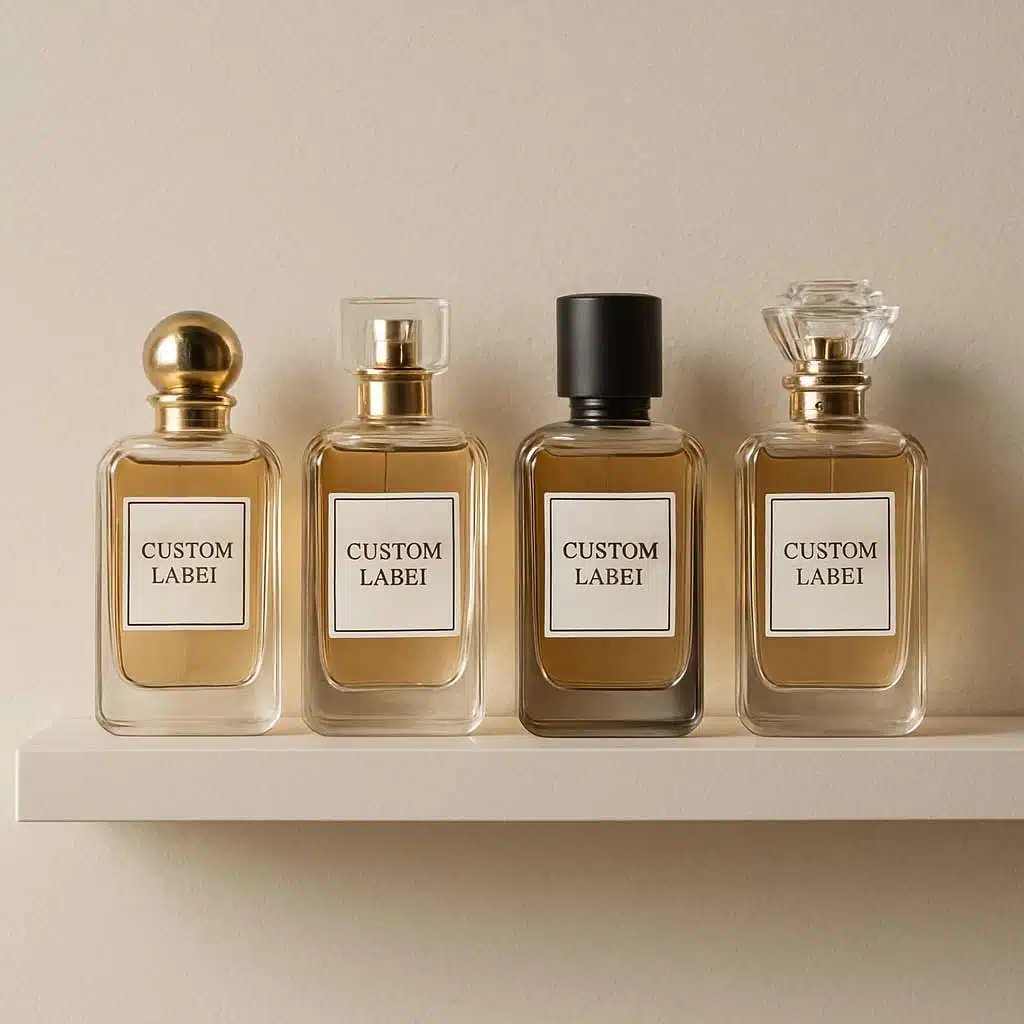
In the cosmetics industry, your packaging is your silent salesperson. Creating custom bottle labels that captivate consumers is an art and a science, especially when dealing with glass. The label must withstand oils, alcohol, and handling, all while looking flawlessly luxurious. If you are launching a fragrance line or rebranding an existing one, partnering with a specialized glass bottle perfume sticker manufacturer is one of the most critical decisions you will make.
However, before you sign a contract or approve a proof, there are technical, aesthetic, and practical elements you must understand. This comprehensive guide will walk you through everything buyers need to know to create stunning, durable, and compliant labels for glass perfume bottles.
Table of Contents
1. Understanding the Role of Your Perfume Label
A perfume label does much more than display a logo. It communicates the essence of the scent, justifies the price point, and ensures regulatory compliance.
Brand Identity and Consumer Psychology
The moment a customer picks up your perfume, the tactile feel of the label sends subconscious signals about the product’s quality. A beautifully textured, perfectly aligned label suggests a premium product inside. Conversely, a peeling or bubbling sticker instantly degrades the perceived value of the fragrance.
Meeting Professional Product Branding Requirements
Before diving into aesthetics, you must ensure your label design meets all professional product branding requirements. The FDA (in the US) and the CPNP (in Europe) have strict guidelines for cosmetic labeling. Your custom label must typically include:
The product’s identity (e.g., “Eau de Parfum”).
Net weight or volume.
An ingredient list (often placed on the back label or bottom sticker).
The manufacturer or distributor’s name and address.
Safety warnings, if applicable.
Navigating these requirements on a tiny surface area requires strategic design and a manufacturer capable of ultra-crisp, high-resolution printing.
2. Choosing the Right Sticker Manufacturer
Not all printing companies are equipped to handle the unique demands of glass cosmetic bottles. When evaluating a sticker manufacturer, you need to look past standard paper printers and find a partner who understands the nuances of rigid packaging.
Questions to Ask Potential Manufacturers
Do you specialize in cosmetics or glass packaging? Glass has a low surface energy, meaning some adhesives struggle to stick to it permanently. A specialized manufacturer will know exactly what adhesives work best.
What are your Minimum Order Quantities (MOQs)?
Do you offer die-cutting? Perfume bottles come in unique geometric shapes. Your label might need to be an oval, a crest, or a custom silhouette to match the glass.
The Rise of Small Batch Digital Label Printing
In the past, high setup costs for traditional flexographic printing meant brands had to order tens of thousands of labels at once. Today, small batch digital label printing has revolutionized the industry.
Digital printing requires no physical plates, making it ideal for indie perfume brands, limited-edition seasonal scents, or brands looking to A/B test their packaging. It allows for vibrant, photo-quality colors and the flexibility to print multiple SKUs (like a vanilla scent and a citrus scent) in a single short run without exorbitant setup fees.

3. Mastering Sizing and Measurement
One of the most common mistakes new buyers make is designing a beautiful label, only to find out it doesn’t fit the physical bottle. Glass bottles, especially thick-walled perfume bottles, often have subtle curves or tapers that aren’t obvious to the naked eye.
How to Measure a Bottle for Label Design
Understanding how to measure a bottle for label design is crucial. You cannot simply use a flat ruler against a curved object. Here is the foolproof method for measuring your glass bottles:
The Paper Wrap Method: Take a piece of flexible graph paper or regular printer paper. Wrap it tightly around the bottle where you want the label to sit.
Mark the Boundaries: Use a pencil to mark the exact height and width you desire. Ensure you leave a gap between the ends if you want a wrap-around label, or mark the precise front-facing area.
Measure the Flat Paper: Unwrap the paper and measure the marked area with a ruler. This gives you the precise dimensions for your digital design canvas.
Check for Tapering: Roll a straight ruler up and down the side of the bottle. If the glass curves away from the ruler at the top or bottom, you cannot place a standard rectangular label there without it wrinkling. Tapered bottles require custom-curved (conical) label shapes.
Contextualizing Dimensions
To give you an idea of scale, standard wine bottle label dimensions are typically around 3.5 inches by 4 inches. Perfume labels, on the other hand, are microscopic in comparison—often measuring just 1 inch by 1.5 inches. Because the canvas is so small, you cannot use generic design templates for beverage containers. You must build a custom die-line specifically tailored to the face of your fragrance bottle.
4. Selecting the Perfect Label Material
Perfume is a harsh environment for a label. The product itself contains high concentrations of alcohol, essential oils, and synthetic fragrances. If a drop of perfume runs down the side of the glass, a standard paper label will instantly stain, smear, or disintegrate.
Waterproof and Oil-Resistant Options
For high-end cosmetics, waterproof vinyl sticker materials or BOPP (Biaxially Oriented Polypropylene) are the industry standards.
BOPP / Polypropylene: This is a thin, flexible plastic film that resists water, oil, and chemicals. It can be white, metallic, or completely transparent (ideal for achieving a “no-label” look on clear glass).
Vinyl: Thicker and highly durable, vinyl conforms well to slight curves in the glass and offers maximum protection against product spillage.
Sustainable and Eco-Friendly Alternatives
As consumers demand more sustainable practices, the packaging industry has adapted. If your brand ethos centers around natural, organic ingredients, your packaging should reflect that.
Ask your manufacturer about eco-friendly biodegradable packaging stickers. These are often made from materials like sugarcane, bamboo, or post-consumer waste (PCW) paper. Keep in mind that while eco-friendly papers are beautiful and sustainable, they require an additional protective laminate to ensure they don’t degrade when exposed to perfume oils.
Prototyping at Home
If you are an indie perfumer testing concepts before committing to a commercial manufacturer, you might wonder about the best paper for home bottle printing. For laser printers, look for polyester-based weatherproof sticker sheets. For inkjet printers, glossy vinyl printable sheets treated with a UV-resistant fixative spray offer the best temporary DIY solution. However, for a retail-ready product, always transition to a professional manufacturer.

5. The Impact of Finishes: Matte vs Glossy
The finish of your label dictates how light interacts with your packaging, significantly altering the consumer’s perception of the product. When deciding on a matte vs glossy finish for packaging, consider your target demographic and brand identity.
Glossy Finishes
A glossy laminate provides a highly reflective, shiny surface.
Pros: It makes colors pop, increases the vibrancy of intricate artwork, and provides excellent protection against moisture and oils.
Best For: Youthful fragrances, vibrant floral scents, or modern, edgy brands.
Matte Finishes
A matte finish absorbs light, eliminating glare and providing a muted, sophisticated look.
Pros: It feels velvety to the touch and exudes high-end luxury. It is also easier to read small text on a matte label because there is no light reflection.
Best For: Niche fragrances, minimalist brands, and unisex or masculine colognes.
Advanced Embellishments
To truly elevate your custom bottle labels, talk to your glass bottle perfume sticker manufacturer about premium embellishments:
Hot Foil Stamping: Adds metallic gold, silver, or rose gold accents that catch the light beautifully.
Embossing/Debossing: Raises or depresses specific areas of the label (like your logo) to create a premium, tactile experience.
Spot UV: Applies a high-gloss finish only to specific parts of a matte label, creating a striking contrast.
6. The Science of Adhesives
A beautiful label is useless if it peels off the bottle after a week. Glass is notoriously tricky for adhesives because it is completely non-porous. Furthermore, perfumes are frequently stored in warm, humid bathrooms, putting immense stress on the label’s glue.
Understanding Adhesive Types
When choosing your label, you must spend time comparing permanent and removable adhesives.
Permanent Adhesives: These are designed to form a lifelong bond with the glass. Once applied and cured, attempting to remove them will result in the label tearing. This is the standard choice for retail cosmetics.
Removable Adhesives: These allow the label to be peeled off cleanly without leaving residue. While rarely used for the primary front label of a perfume, they are excellent for bottom-of-the-bottle batch codes or temporary promotional stickers.
Environmental Resistance
Because of the environments where perfume is stored and used, utilizing moisture resistant adhesive options is non-negotiable. Standard acrylic adhesives can turn milky or lose their tackiness when exposed to constant bathroom humidity. Look for marine-grade or high-tack synthetic rubber adhesives.
Additionally, while you might not think of fragrance needing refrigeration, some brands use highly volatile raw botanicals that require temperature control. If your product falls into this niche, or if you also produce organic skincare alongside your perfumes, ensure your manufacturer uses durable labels for cold storage. These specialized adhesives won’t crack, freeze, or lose their bond when temperatures drop.

7. Flawless Application and Maintenance
You’ve received your roll of custom labels from the manufacturer, and they look stunning. The final hurdle is applying them to your glass bottles.
The Art of Applying Labels Without Air Bubbles
A crooked label or a trapped air bubble will instantly make a luxury product look cheap. Whether you are applying labels by hand or using a semi-automatic labeling machine, follow these steps for applying labels without air bubbles:
Clean the Glass: Glass bottles often arrive from the factory with a microscopic layer of dust or manufacturing oils. Wipe the bottles down with isopropyl alcohol and let them dry completely before application.
The “Taco” Method for Hand Application: Pinch the center of the label so it forms a gentle U-shape (like a taco).
Center-First Contact: Align the label and press the center crease against the glass first.
Smooth Outwards: Using your thumbs or a felt-edged squeegee, firmly smooth the label from the center outward to the left, and then from the center outward to the right. This pushes all trapped air out of the edges.
Allow for Cure Time: Adhesives don’t reach their maximum strength immediately. Allow the bottles to sit at room temperature for 24 to 48 hours before exposing them to moisture or shipping them.
Correcting Mistakes
Mistakes happen. If a label goes on crooked, you will need to remove it. Removing adhesive residue from glass safely without scratching the bottle requires a bit of finesse. Avoid harsh abrasives. Instead, soak the area in rubbing alcohol or a natural citrus-based oil (like lemon essential oil). Let it sit for a few minutes to break down the adhesive polymers, then wipe it cleanly away with a microfiber cloth. Wash the bottle with soap and water, dry it, and try again.
8. Beyond the Retail Shelf: Alternative Uses for Custom Glass Labels
Working with a highly capable sticker manufacturer opens up doors beyond standard retail runs. The same technology used to create your flagship perfume labels can be leveraged for unique marketing and event opportunities.
Special Events and Gifting
Miniature perfume bottles have become incredibly popular as luxury gifts. Brands and event planners frequently utilize personalized wedding favor stickers for small glass vials of bespoke fragrances given to guests. By utilizing small batch digital printing, you can easily swap out names, dates, or custom messages on the same label design without incurring massive extra costs.
Limited Editions and Serial Numbering
Digital printing allows for Variable Data Printing (VDP). This means you can have your sticker manufacturer print sequential numbers (e.g., “Bottle 001 of 500”) on your custom bottle labels. This creates an immediate sense of exclusivity and urgency for limited-edition seasonal fragrance releases.

9. Actionable Checklist: Working with Your Manufacturer
To summarize the journey from concept to final product, use this practical checklist before you finalize your order with a glass bottle perfume sticker manufacturer:
[ ] Verify Dimensions: Have you used the paper-wrap method to measure the specific glass bottle?
[ ] Check Tapering: Is the bottle straight-sided, or does it require a custom die-cut shape to prevent wrinkling?
[ ] Select Material: Did you choose a BOPP, vinyl, or laminated eco-paper that can withstand perfume oils?
[ ] Choose Finish: Have you decided on a matte vs glossy finish based on your brand’s demographic?
[ ] Confirm Adhesive: Have you requested a high-tack, moisture-resistant adhesive?
[ ] Review Regulations: Does the artwork meet all professional product branding requirements for cosmetics?
[ ] Request a Physical Proof: Never order thousands of labels based on a computer screen. Request a physical, printed proof to test on your actual glass bottle.
Conclusion
Creating the perfect label for a glass perfume bottle is an intricate dance between aesthetic design and practical engineering. The label must lure the customer in, communicate luxury, withstand harsh chemicals, and adhere flawlessly to a curved glass surface.
By understanding how to accurately measure your bottles, the importance of waterproof materials, the chemistry of moisture-resistant adhesives, and the aesthetic differences between various finishes, you position your brand for success. Remember, your glass bottle perfume sticker manufacturer is not just a vendor; they are a critical partner in your product development. Ask questions, request samples, and leverage modern digital printing to ensure your custom bottle labels are as enchanting and memorable as the fragrance inside.