How to Choose a Reliable Textured Wine Label Manufacturer
Choosing a reliable textured wine label manufacturer means checking more than paper samples and a competitive quote. Look for a partner that can explain its material choices, reproduce your artwork, validate performance on your bottles, and document what happens before and after production. This guide helps you compare suppliers on the evidence that matters, from tactile finishes to repeat-order consistency.
Table of Contents
What makes a textured wine label manufacturer reliable?
A reliable manufacturer translates your design and bottling requirements into a clearly specified, tested label. Ask for relevant finished samples, written material recommendations, an approval process, and realistic production commitments. Treat attractive samples as the beginning of your assessment—not proof that the supplier can deliver your particular project.
Request examples similar to your intended construction: textured paper, comparable artwork, foil or embossing, and bottles exposed to similar conditions. Ask which operations happen in-house and which involve outside partners. If finishing is outsourced, establish who coordinates scheduling, inspects the work, and resolves defects.
Give shortlisted suppliers the same brief and compare how they respond. Favor specific explanations over assurances such as “luxury quality” or “suitable for every bottle.” A useful response should identify unanswered questions before asking you to approve production.
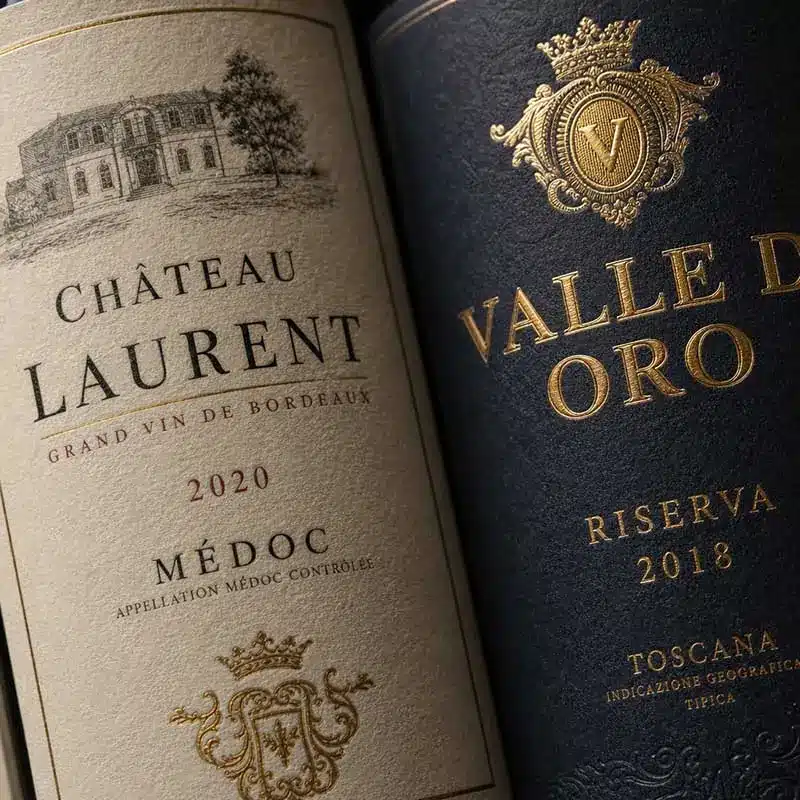
Start with the bottle, artwork, and application conditions
Before requesting prices for custom wine labels, prepare a shared specification. Include the commercial goals, but also describe how the label will be applied and what the bottle will encounter afterward. Ask each supplier to flag missing information rather than make assumptions.
Your brief should cover:
- Bottle details: Supply physical bottles when possible, plus label dimensions and placement drawings.
- Artwork: Share print-ready files or working designs, identifying fine text, solid colors, foil, and raised details.
- Application: Explain whether labels are applied manually or by machine, and provide the bottler’s roll specifications.
- Exposure: Describe refrigeration, condensation, ice-bucket use, transport, and storage expectations.
- Order structure: List quantities by wine, vintage, and artwork version, together with delivery deadlines.
Ask the bottling team to review the specification before quotations are finalized. For machine application, confirm unwind direction, core size, maximum roll diameter, and label spacing with the equipment operator. Make these agreed requirements part of the purchase documentation, not details left to a final email.
Match texture to performance, not just appearance
Textured wine labels can use patterned papers, felt-marked surfaces, or additional embellishment. Material suppliers offer different combinations of paper, adhesive, and release liner; specify the complete construction rather than approving only a paper name. UPM, for example, distinguishes coated, uncoated, and wet-strength papers across multiple adhesive and liner options.
Use the following table to guide sample requests. It is a purchasing checklist, not a guarantee that every material in a category performs identically.
Option to investigate | Evidence to request | What to assess on your bottle |
|---|---|---|
Laid or linen-textured paper | Printed samples using your chosen stock | Whether the texture supports the artwork without distracting from small text |
Felt-marked paper | Finished samples with representative ink coverage | Whether the surface and color suit the intended brand presentation |
Wet-strength textured paper | Technical data and relevant exposure tests | Appearance and physical condition after your expected moisture exposure |
Embossed or debossed details | Finished production samples and placement guidance | Definition, adhesion, and the area surrounding raised or recessed features |
Foil on textured stock | Samples using the proposed paper and foil combination | Coverage, edge definition, and consistency across the design |
Keep paper durability and adhesion separate in your evaluation. Avery Dennison’s technical guidance distinguishes facestock saturation or discoloration from adhesive performance, so a label remaining attached does not establish that its appearance is acceptable. Ask the supplier to address both.
If your design includes a neck label, request a separate recommendation. Fedrigoni offers reduced-grammage materials for better adaptability in coordinated neck-label applications; do not assume the front-label construction is automatically appropriate.
Evaluate wine label design and printing together
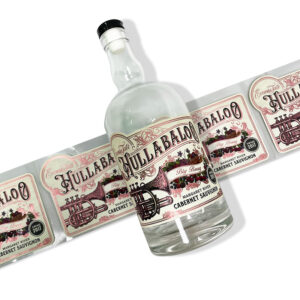
Ask the manufacturer to review your wine label design before you finalize embellishments. Request comments on text clarity, ink coverage, foil placement, and the interaction between texture and artwork. Have the supplier explain its recommended wine label printing process for the specific stock, rather than choosing a process by name alone.
Material-specific guidance matters. Avery Dennison’s product guide identifies different printing and converting considerations for textured papers, including stock-specific recommendations for printing methods, varnishing, and embossing. Request the current technical sheet for the exact construction being quoted.
For premium wine labels with embossing, discuss the design’s edges and contact area. Avery Dennison explains that embossing can create air pockets in pressure-sensitive labels and recommends preserving a flat perimeter to help reduce moisture-related lifting. Have the converter establish suitable parameters for your construction and test the finished result.
During approval, inspect the smallest lettering, reversed text, foil boundaries, and alignment between printed and raised elements. Record which sample becomes the production reference. Avoid approving a finish from a photograph when its tactile character is central to the design.
How should you test samples before placing an order?
Test finished labels on the actual bottle under conditions that represent application, storage, and use. Agree on the method and acceptance criteria with the manufacturer before evaluating results. Include your bottler where possible, and request a production-representative trial rather than relying solely on loose material swatches.
Use a documented sequence:
- Apply the labels as intended. Follow the supplier’s instructions and record bottle condition, application settings, and conditioning time.
- Inspect the initial result. Photograph placement, wrinkles, bubbles, and edges so later changes are easy to identify.
- Reproduce relevant exposure. Include refrigeration, condensation, or ice-water exposure where these reflect your product’s use.
- Check appearance and handling. Inspect text, color, foil, surface condition, and attachment after exposure and ordinary handling.
- Review failures before approval. Ask what will change, then repeat the affected test on the revised construction.
Keep an untreated comparison bottle alongside the tested samples. Specify acceptable appearance as well as attachment, and record the exposure duration rather than describing a sample simply as “waterproof.” Ask for the supplier’s supporting test report and its limitations.

Compare quotations and production controls
Request itemized quotations based on the same approved specification. Ask suppliers to separate label production, tooling, proofs, finishing, shipping, and any other applicable charges. Confirm minimum quantities, permitted quantity variations, and whether different artwork versions are priced separately.
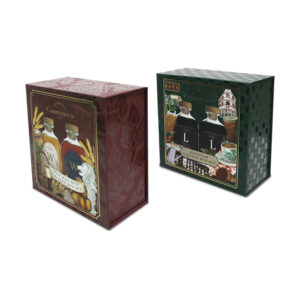
For broader wine packaging solutions, clarify the supplier’s actual scope. If it also coordinates cartons, neck labels, or other components, request separate specifications and approval responsibilities. Keep the convenience of one contact distinct from the evidence supporting each component.
Before choosing a partner, obtain written answers on:
- Timing: What starts the production clock, and which approvals or material purchases must happen first?
- Inspection: What checks cover artwork, color, finishing alignment, dimensions, and roll preparation?
- Changes: Will material substitutions or process changes require your approval?
- Remedies: How are defects documented, reviewed, and resolved?
- Repeat orders: Which files, specifications, and approved samples will be retained?
Request documentary support for any environmental claim you intend to use. Ask exactly which material or component the claim covers, and avoid treating a general supplier statement as evidence for your finished label.
Frequently asked questions about ordering
Who should own the printing plates, dies, and embossing tools?
Agree on ownership before paying tooling charges. Ask where tools will be stored, whether storage or maintenance charges apply, and what happens if you change suppliers. Record the arrangement in the quotation or purchasing terms.
What should happen if a textured paper becomes unavailable?
Require notification and approval before substitution. Ask the manufacturer to propose alternatives with samples and technical documentation, then identify which print and application checks need repeating. Do not authorize a replacement solely because its color or texture looks similar.
Choose evidence over presentation
The strongest choice is the supplier whose recommendations, samples, tests, and written commitments support your requirements. Shortlist manufacturers using one brief, validate the proposed construction on your bottles, and compare complete quotations. Before placing the order, make sure the approved sample, specification, delivery commitment, and defect-resolution process all describe the same job.