How to print stickers: everything you need to know about sticker printing
Printing stickers is a practical way to create product labels, personalize packaging, promote a business, or produce decorative designs. Whether you plan to make a few stickers at home or order custom stickers from a professional manufacturer, the printing method and materials you choose will influence the final appearance, durability, and cost.
Learning how to print stickers involves more than selecting an image and sending it to a printer. You also need to consider the printing equipment, adhesive materials, cutting formats, surface finishes, and conditions in which the stickers will be used.
Table of Contents
This guide explains how home and professional sticker printing work, compares common sticker materials and finishes, and helps you select suitable options for personal projects, branded packaging, and commercial applications.
How to Print Stickers at Home
Printing stickers at home is a convenient option for personal projects, prototypes, small promotional batches, and experimenting with artwork before placing a larger order.
A standard inkjet or laser printer can produce attractive stickers when paired with compatible printable adhesive sheets. For projects involving custom outlines or detailed shapes, a desktop cutting machine can provide more consistent results than cutting every sticker by hand.
Inkjet printers are often suitable for colorful illustrations, photographs, and designs featuring gradients. Laser printers can be convenient for sharp text and repeated printing, depending on the machine and media. Neither technology is automatically better for every sticker project.
The most important consideration is selecting printable sticker stock designed for your equipment. Using incompatible materials can affect print quality and may damage the printer.
Types of Stickers You Can Print at Home
Several sticker materials are available for desktop printing, although the range is generally narrower than professional production options.
Matte sticker paper
Matte adhesive paper provides a smooth, low-reflection surface. It is suitable for product prototypes, planner stickers, packaging seals, address labels, and simple promotional applications. Many uncoated matte papers can also be written on.
Glossy sticker paper
Glossy paper creates a reflective appearance that can make illustrations and colors look more vivid. It is commonly used for decorative stickers, branded packaging, and short-term promotional materials.
Printable vinyl sheets
Printable vinyl offers greater flexibility and, depending on the construction, improved moisture resistance compared with ordinary paper. However, the final durability depends on the printable coating, ink system, adhesive, and any protective laminate.
For example, a printable vinyl sheet intended for inkjet printing should not automatically be used in a laser printer.
Common Sticker Formats for Home Printing
Two practical formats are sheet stickers and individually cut stickers.
Sheet stickers contain multiple designs on a single backing sheet. They are convenient for small labels, decorative sets, and packaging stickers because several pieces can be printed together.
Individually cut stickers follow the outline of a design. These can be produced with scissors, precision knives, or compatible desktop cutting machines. Some hobby cutting machines can cut through both the sticker and its backing to create individual pieces.
For more complex artwork, leaving a small border around the design can make cutting easier and reduce the risk of damaging printed details.

Advantages of Printing Stickers at Home
Home printing provides several benefits for small projects:
Design flexibility: You can adjust the artwork and print new versions without coordinating a production order.
Convenience: Small quantities can be produced when the equipment and supplies are available.
Low setup requirements: A basic printer and compatible sticker paper may be sufficient.
Easy experimentation: Different colors, layouts, and shapes can be tested before committing to a final design.
Home printing is particularly useful for checking label dimensions and visual appearance during the early stages of product development.
Limitations of Home Sticker Printing
Although convenient, home printing has limitations that become more important when producing stickers for commercial use.
Print quality can vary between machines, particularly when attempting to reproduce consistent colors over multiple batches. Manual cutting may also produce uneven edges or inconsistent dimensions.
Durability is another consideration. Ordinary home-printed paper stickers may not withstand refrigeration, condensation, outdoor exposure, or repeated handling.
For businesses applying hundreds or thousands of product labels, printing, cutting, and packaging stickers individually can require considerable labor.
Equipment Needed to Print Stickers at Home
A basic home sticker production setup may include:
A computer with graphic design software
An inkjet or laser printer
Compatible printable sticker paper or film
Suitable ink or toner
A ruler and cutting tools
A cutting mat
A desktop cutting machine, if required
Protective laminating sheets, when appropriate
Before printing the complete batch, produce a small test sheet.
Check the image sharpness, color appearance, adhesive performance, and sticker dimensions. Allow adequate drying or curing time according to the media and printing system.
Professional Sticker Printing Services
Professional sticker printing becomes particularly valuable when a business needs consistent colors, specialized materials, precise cutting, or larger quantities.
Commercial printing operations may use digital, flexographic, screen, or other printing processes depending on the artwork, production volume, and performance requirements.
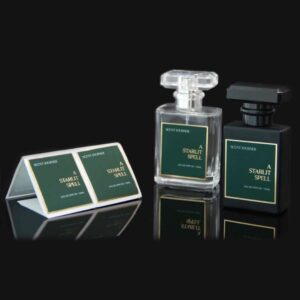
For example, a cosmetics company may require transparent product labels with accurate color reproduction, while a beverage manufacturer may need film labels that maintain their appearance when exposed to condensation.
Professional printing allows these requirements to be considered as part of the overall label construction rather than treating printing and material selection as separate decisions.
Advantages of Professional Sticker Printing
Consistent print results
Commercial printing processes can provide repeatable color and registration when production parameters and quality control procedures are properly managed. This is important for brands that regularly reorder packaging labels.
Broader material options
Professional suppliers may offer paper, polypropylene, polyester, vinyl, specialty papers, and various adhesive constructions.
Custom shapes and dimensions
Industrial cutting and converting processes make it possible to create stickers in different dimensions and outlines with controlled tolerances.
Specialty decoration
Options such as foil stamping, spot UV, textured materials, and selected decorative effects can provide a more distinctive packaging appearance.
Efficient larger-volume production
Professional production can reduce the manual work involved in producing and preparing labels for commercial packaging operations.
Limitations of Professional Sticker Printing
Professional services also involve practical considerations.
Very small orders may have higher unit costs when production requires setup, specialized materials, tooling, or finishing.
Certain printing methods and converting processes may require minimum quantities. Production and shipping schedules must also be considered.
Additionally, buyers need to communicate their artwork, dimensions, materials, and application requirements clearly to avoid unnecessary revisions.
For simple personal projects, home printing may remain more convenient. For repeat orders and product packaging, professional production is often more appropriate.

How Professional Sticker Printing Works
Although individual manufacturers use different production systems, a typical custom sticker order follows several stages.
1. Prepare the artwork
The customer provides artwork containing the required graphics, text, colors, and dimensions.
Vector artwork is generally useful for logos and precise cutting lines. High-resolution raster images may also be suitable when prepared at the intended print size.
2. Choose materials and specifications
The material, adhesive, size, shape, finish, quantity, and delivery format are selected according to the intended application.
For product labels, the supplier may also need information about the container material, storage conditions, and labeling equipment.
3. Review the printing proof
A digital proof helps confirm the layout, dimensions, and position of design elements.
Physical samples or production proofs may be appropriate when material appearance, special finishes, or container compatibility need evaluation.
4. Produce the printed stickers
After artwork approval, the stickers are printed using an appropriate production process.
Color management, registration, and print inspection contribute to maintaining consistent results.
5. Apply cutting and finishing processes
The printed material is cut to the required dimensions and may receive lamination, varnishing, foil stamping, or other specified treatments.
6. Inspect, package, and prepare for shipment
Finished stickers can be checked against agreed specifications before being packed as sheets, rolls, or individual pieces.
For roll labels intended for automatic application, the roll orientation, winding direction, core size, and maximum roll diameter should be confirmed in advance.
Different Sticker Printing Formats
Selecting the right sticker format affects not only the final appearance but also storage, handling, and application efficiency.
Sticker Sheets
Sticker sheets contain multiple stickers arranged on a shared release liner.
They are convenient for packaging seals, promotional graphics, decorative sticker sets, and manual product labeling.
Advantages: Multiple designs can be supplied together, sheets are convenient for small quantities, and stickers can be peeled off individually.
Considerations: Sheets may be less efficient than rolls for automated packaging lines. The spacing and layout should also allow easy handling.
Sticker Rolls
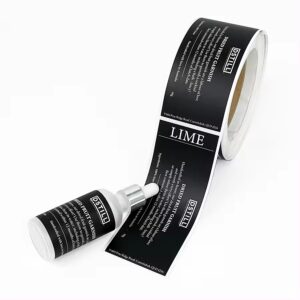
Roll stickers are supplied on a continuous release liner wound around a core.
They are commonly used for bottles, jars, boxes, cosmetics, supplements, and other packaged products.
Advantages: Suitable for efficient dispensing, repeated manual application, and compatible automatic labeling systems.
Considerations: Roll specifications need to match the application equipment. The preferred winding direction and label orientation should be established before production.
Die-Cut Stickers
Die-cut stickers are shaped using a cutting process that follows a defined outline.
When supplied as individually cut pieces, the backing material is also cut to the finished shape.
These stickers are popular for logos, product inserts, promotional merchandise, and decorative branding.
Advantages: Custom outlines can make designs visually distinctive and remove unnecessary surrounding material.
Considerations: Very narrow extensions, sharp internal corners, or intricate shapes may complicate production and handling.
Kiss-Cut Stickers
Kiss cutting cuts through the printable face material and adhesive while leaving the release liner substantially intact.
This allows the finished sticker to be peeled away while the surrounding backing remains available for handling.
Kiss-cut formats work well for sticker sheets, detailed shapes, and designs requiring easier peeling.
Advantages: Convenient handling, support for multiple designs on one sheet, and flexibility in sticker outlines.
Considerations: Cutting pressure must be controlled to prevent damage to the liner or incomplete separation of the sticker.
Sticker Materials
The sticker material affects appearance, handling, flexibility, printing compatibility, and resistance to environmental conditions.
Different constructions also use different adhesives and liners. Choosing the right face material alone does not guarantee suitable performance.
Paper Stickers
Paper is widely used for indoor stickers, retail packaging, shipping labels, and short-term promotional applications.
Coated paper can produce attractive printed graphics, while uncoated varieties may offer a more natural appearance.
Typical applications: Packaging seals, product identification, promotional stickers, and dry indoor labeling.
Advantages: Broad availability, good printability, and a range of textures and surface appearances.
Limitations: Ordinary paper generally has lower moisture and tear resistance than many plastic films.
Protective coatings can improve certain characteristics, but suitability should be evaluated for the intended environment.
Vinyl Stickers
Vinyl stickers commonly use flexible PVC film, which is available in different constructions for decorative, promotional, and outdoor uses.
The flexibility of vinyl can make it suitable for certain curved or irregular surfaces.
Typical applications: Promotional decals, equipment graphics, window stickers, and selected outdoor applications.
Advantages: Flexible construction and the availability of various colors, finishes, and adhesive systems.
Limitations: PVC presents environmental considerations, and outdoor performance varies according to film grade, ink, adhesive, and exposure conditions.
Not every vinyl sticker is suitable for long-term sunlight exposure or challenging temperatures.
Foil Stickers
Foil stickers incorporate metallic decorative effects that reflect light and create a distinctive appearance.
The metallic effect may come from a metallized substrate, foil stamping, or another decorative printing process.
Typical applications: Premium cosmetics, fragrance packaging, gift packaging, beverage branding, and decorative seals.
Advantages: Strong visual contrast and the ability to highlight selected design elements.
Limitations: Specialized processing can increase production complexity and cost. Fine details may require design adjustments.
Metallic decoration should not be assumed to improve moisture resistance unless the complete construction has been evaluated.
Kraft Stickers
Kraft paper stickers provide a natural brown appearance that is often associated with handcrafted, specialty, and minimalist packaging.
The visible paper texture can become part of the product’s visual identity.
Typical applications: Candle packaging, handmade products, specialty foods, bakery packaging, and gift labels.
Advantages: Distinctive natural appearance and a suitable surface for many simple, earthy designs.
Limitations: The brown background affects printed color reproduction. Ordinary kraft paper is also sensitive to moisture.
Environmental claims should be based on the complete label construction, including coatings, adhesive, and release liner.
Static Cling Stickers
Static cling graphics use a non-adhesive film designed to cling to certain smooth surfaces without conventional pressure-sensitive adhesive.
They are commonly used for temporary promotional displays.
Typical applications: Glass windows, retail displays, short-term advertising, and decorative signage.
Advantages: Easy repositioning and removal when used on compatible, clean surfaces.
Limitations: Performance depends on surface characteristics and environmental conditions. Static cling films are generally not an alternative to permanent product labels.
Polyester and Polypropylene Stickers
Polyester (PET) and polypropylene (PP or BOPP) are two common film materials used in commercial label applications.
Although both are synthetic films, they have different physical characteristics.
Polypropylene labels are widely used in food, beverage, cosmetic, and personal care packaging. Their flexibility and moisture-resistant face material make them useful for many bottle and container labels.
Polyester labels are often selected for applications requiring greater dimensional stability or specific durability characteristics, such as equipment identification and certain industrial labels.
Advantages: Both materials offer useful film-based alternatives to paper, with different options for clear, white, or metallized appearances.
Limitations: Resistance to chemicals, temperatures, abrasion, and outdoor exposure varies by product construction.
For demanding applications, the label material, printing system, finish, and adhesive should be tested together.
Sticker Finishes
A sticker’s surface appearance contributes to its visual identity. Certain finishes also affect handling, abrasion resistance, or protection of printed graphics.
However, appearance and durability should be evaluated separately. A glossy or metallic surface does not automatically mean the sticker is waterproof or weatherproof.
Glossy Finish
A glossy surface reflects light and can give printed graphics a vivid, polished appearance.
Visual benefits: Suitable for colorful illustrations, product photography, and bright promotional graphics.
Practical considerations: Glossy coatings or laminates may offer additional protection, depending on the product. Reflections can affect readability under strong lighting.

Matte Finish
Matte stickers have a subdued, low-reflection appearance.
Visual benefits: Suitable for minimalist branding, cosmetics, premium packaging, and designs that emphasize typography.
Practical considerations: Some matte constructions reduce glare and visible fingerprints. Scratch and stain resistance depend on the specific material or coating.
Satin Finish
Satin offers a moderate sheen between high-gloss and fully matte surfaces.
Visual benefits: Creates a restrained, polished appearance without strong reflections.
Practical considerations: The available protection depends on whether the satin appearance comes from a coating, laminate, or base material.
Metallic Finish
Metallic effects create reflective highlights using metallic substrates or decorative processes.
Visual benefits: Frequently used to emphasize logos, borders, product names, or selected artwork details.
Practical considerations: Printing on metallized material may require an opaque white ink layer to control the appearance of non-metallic colors.
The surface construction determines actual resistance to moisture and wear.
Textured Finish
Textured labels use materials or decorative techniques that create a noticeable tactile surface.
Common appearances include linen-like paper, embossed textures, and specialty uncoated stocks.
Visual benefits: Adds a physical dimension to packaging and can support artisanal or premium positioning.
Practical considerations: Surface texture can influence ink coverage, fine-detail reproduction, and adhesive application.
Textured materials do not necessarily offer better durability than smooth materials.
Laminated Finish
Lamination applies a protective film over the printed surface.
It can be selected in glossy, matte, or other available appearances.
Visual benefits: Can change the appearance and feel of the printed design.
Practical considerations: An appropriately specified laminate may improve resistance to scuffing, moisture, and handling damage.
UV protection and other performance characteristics depend on the laminate specification and complete label construction.
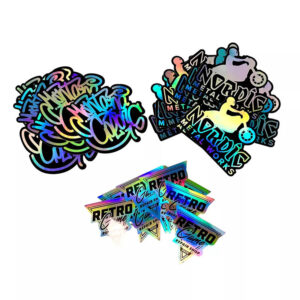
Holographic Finish
Holographic effects create shifting colors or patterns as the viewing angle changes.
These effects may be produced using specialty films or selected decorative processes.
Visual benefits: Useful for promotional stickers, limited-edition packaging, cosmetic products, and attention-grabbing branding.
Practical considerations: Artwork should be designed around the reflective background, since intense visual effects can reduce readability if too many elements compete for attention.
Actual durability depends on the film, printing system, and any protective finish.
Clear Finish
Transparent stickers are generally created using clear face materials rather than a particular surface finish.
They can produce a subtle appearance that allows the underlying container or surface to remain visible.
Visual benefits: Useful for transparent bottles, cosmetic containers, glass jars, and products requiring a minimal-label appearance.
Practical considerations: Transparent materials may require opaque white ink behind certain printed colors to maintain visibility.
The color of the container, the product contents, and the adhesive appearance can influence the final result.
Ready to Print Stickers for Your Brand or Project?
Choosing how to print stickers should begin with their intended use.
For a few decorative pieces or early design experiments, home printing can provide an accessible starting point. When labels need consistent dimensions, repeatable colors, specialized materials, or efficient application in a packaging operation, professional printing becomes more relevant.
Before ordering, consider the following:
Where will the sticker be applied?
What surface will it adhere to?
Will it encounter moisture, oil, abrasion, or temperature changes?
Is the intended use temporary or long term?
How many stickers are required?
Will application be manual or automated?
Does the design require specialty printing or finishing?
These details help establish suitable printing specifications and reduce the likelihood of selecting an inappropriate material.
For businesses sourcing custom product labels or promotional stickers, Huaxinmei Printing can discuss project requirements, including label dimensions, materials, finishes, artwork, and anticipated quantities.
Providing clear specifications when requesting a quotation helps identify suitable manufacturing options.
FAQs About Printing Stickers
1. What equipment do I need to print stickers at home?
You can begin with a computer, an inkjet or laser printer, and printable adhesive sheets compatible with your machine.
You will also need a cutting method, such as scissors or a craft knife. A desktop cutting machine can be useful when producing repeated shapes or detailed outlines.
For stickers requiring additional surface protection, compatible lamination materials may be considered.
2. Is an inkjet or laser printer better for stickers?
Both can produce suitable results when used with the correct materials.
Inkjet printing is commonly chosen for colorful illustrations and photographic artwork, while laser printing can be convenient for sharp text and repeated output.
The best choice depends on printer quality, compatible sticker materials, printing volume, and the desired appearance.
Always verify that the adhesive stock is approved for the printer type.
3. Which sticker material should I choose?
The best material depends on the application.
Paper can be suitable for dry indoor packaging and short-term promotional use. Polypropylene may be appropriate for many bottle and product labels exposed to moisture. Polyester can be useful for certain identification and industrial applications.
Vinyl, kraft paper, clear film, and specialty materials offer additional design possibilities.
Consider the surface, storage environment, required service life, and adhesive compatibility before selecting a material.
4. What is the difference between die-cut and kiss-cut stickers?
Die-cut stickers can be supplied as individual shapes with the face material and backing cut to the finished outline.
Kiss-cut stickers are cut through the face material and adhesive while leaving the release liner intact.
Individually die-cut stickers are convenient for giveaways and promotional merchandise. Kiss-cut stickers are useful for sticker sheets and designs that benefit from additional backing during handling.
5. Can printed stickers be waterproof?
Some sticker constructions are designed to withstand substantial moisture exposure, but not every printed sticker is waterproof.
Film materials such as polypropylene and polyester generally resist water better than ordinary paper. However, printing inks, coatings, adhesives, and exposed edges can influence final performance.
For beverage containers, refrigerated products, or applications involving repeated washing, the complete label construction should be evaluated under expected conditions.
6. How can I make printed stickers look more professional?
Start with a clear design and artwork prepared at the correct size and resolution.
Use readable typography, suitable contrast, consistent branding, and appropriate margins around cutting lines.
Choose materials and finishes that match the product rather than selecting them solely for visual impact.
For commercial packaging, confirm the artwork, label dimensions, material selection, and color expectations through an appropriate proofing process before full production.
7. How can stickers support product branding and marketing?
Stickers can carry logos, product information, promotional messages, QR codes, and decorative elements across packaging and marketing materials.
Well-designed stickers can help maintain a recognizable visual identity across product ranges, shipping boxes, promotional merchandise, and retail displays.
For product manufacturers, consistent label dimensions and appearance are also important for packaging presentation and repeat production.
The most effective approach is to match the sticker design, material, and application method to the product and its intended audience.