What Premium Buyers Expect from a Professional Gold Foil Sticker Manufacturer
Think about the last time a product caught your eye on a crowded retail shelf. Chances are, it wasn’t just a clever name or a bold color that drew you in—it was the way the store lighting caught a sudden, irresistible glimmer of gold. This physical attraction to shiny objects provides vital “stopping power” in environments where dozens of products fight for limited attention. While “flat” matte competitors blend into the background shadows, a sharp, reflective finish immediately pulls the eye, inviting a closer look before the customer even reads your company name.
According to consumer behavior studies, this visual magnetism triggers a powerful psychological response known as the “Luxury Halo effect.” When shoppers see brilliant gold details, their brains automatically associate the product inside with premium quality, rarity, and exceptional craftsmanship. This momentary flash acts as your silent salesman, instantly elevating the item’s perceived value and effortlessly justifying a higher price point without a single word of extra marketing copy.
Consider how this plays out for a boutique candle brand trying to break into a saturated market. By simply swapping a standard paper tag for luxury product labels crafted by a Professional Gold Foil Sticker Manufacturer, one local artisan we observed dramatically increased their shelf-presence and boutique sales. The rich contrast of high-end brand packaging with metallic accents told buyers the candle was a curated lifestyle experience. Upgrading your visual identity with professional foil isn’t just a design choice—it’s a strategic business investment.
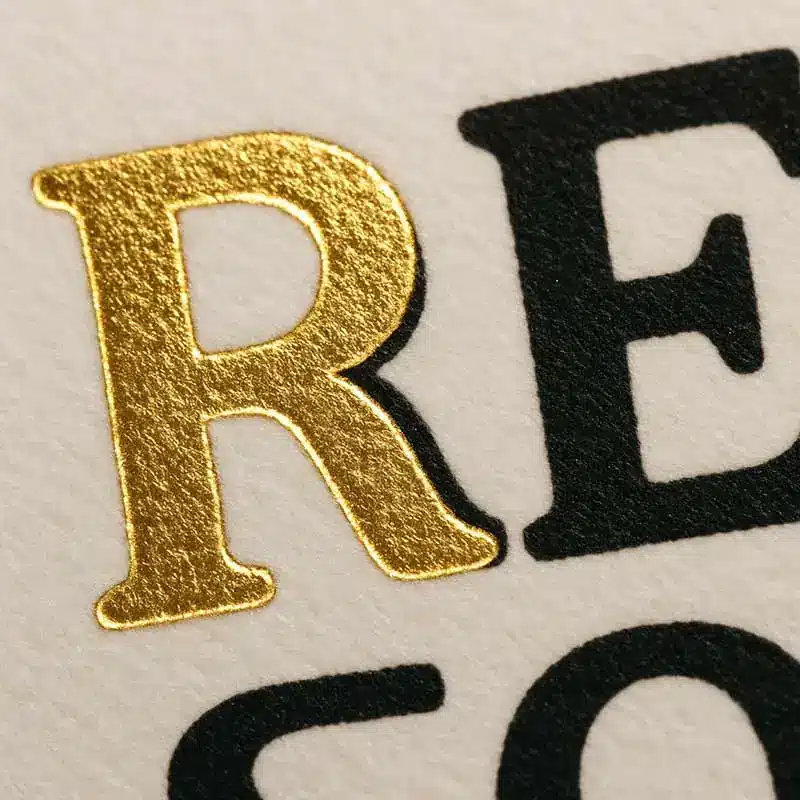
Table of Contents
Digital Foiling vs. Hot Stamping: Choosing the Right Tech for Your Batch Size
Contrast the process of casting a solid gold ring with applying a gold plating. Traditional manufacturing uses hot stamping—a process similar to solid casting. The printer creates a custom metal stamp of your design, heats it, and physically presses foil into the paper. This creates a beautiful, slightly raised texture you can actually feel. However, forging that stamp incurs plate fees (a one-time setup charge). This makes the traditional method economical for massive batches, but far too expensive if you only need fifty boutique candle labels.
For smaller projects, modern technology offers a brilliant alternative. Digital foiling acts like high-tech gold plating, laying down adhesive exactly where your artwork dictates before a roller applies the metallic layer. Because no metal stamp is required, you skip those setup charges entirely. This makes cost-effective small batch custom foil printing incredibly accessible for independent creators. Selecting the ideal method depends on maximizing the return on investment for your specific order size.
When planning your custom gold leaf decal production, keep these practical rules in mind to choose the right machinery:
Setup Costs: Hot stamping requires upfront plate fees; digital foiling has zero setup costs.
Minimum Orders: Digital handles short runs perfectly; stamping becomes cheaper at high volumes.
Detail Sharpness: Stamping delivers a tactile, pressed impression; digital excels at flat, ultra-fine lines.
Whichever method fits your budget, the printing equipment still needs a flawless digital blueprint to know exactly where that shine belongs, which is why proper file preparation is essential for crisp foil designs.
The Vector File Secret: Why Your Design Looks Blurry in Gold
One of the most common mistakes in foil sticker design is uploading standard photo files, like JPGs or PNGs. These “raster” images are merely grids of tiny colored squares. A premium foil sticker manufacturer cannot use this grid because the printing equipment won’t know exactly where the gold should stop, creating a fuzzy, jagged edge on the final product. Instead, the printer needs a “vector” file—a digital blueprint of crisp, continuous lines that tells the machinery exactly where to lay the metal for a flawlessly sharp finish.
Learning how to design vector files for foil printing requires watching your “line weight,” which simply means the physical thickness of your drawn lines. If delicate details are placed too closely together, you risk “plugging.” This happens when the foil bridges the tiny gaps between lines, filling in small loops and turning an elegant script font into an unreadable gold blob. You must ensure every intricate detail has enough breathing room to let the equipment stamp the foil cleanly.
Finally, making your artwork production-ready involves adding a “bleed,” which is just an extra border of background space around your design that gets sliced off by the die-cutting machine. This safety margin guarantees no awkward white borders remain if the paper shifts slightly during cutting. Once your crisp vector lines and bleeds are locked in, the technical foundation is flawless. The next step is selecting the ideal aesthetic and finding your brand’s unique metal personality.

Rose Gold, Yellow Gold, and Metallic Textures: Finding Your Brand’s ‘Metal Personality’
Stepping beyond standard shine opens a world of aesthetic possibilities for your packaging. When creating luxury product labels with metallic textures, the shade of metal you choose communicates an immediate emotional tone before a customer even reads the text. While a traditional, bright yellow gold screams classic prestige, modern brands often need something more nuanced to express their unique personality.
To find that perfect match, consider how these distinct foil profiles interact with light:
Bright Gold: A mirror-like finish that catches maximum light, perfect for grabbing attention from across a retail shelf.
Matte Gold: A soft, brushed appearance offering understated, modern elegance without the harsh glare.
Rose Gold: A warm, pink-tinted option. When weighing rose gold vs yellow gold foil finishes, rose gold excels for boutique cosmetics and lifestyle brands seeking a softer, trendy touch.
Holographic: A shifting, rainbow-hued foil that adds a playful, futuristic dynamic to any design.
Texture and tone undoubtedly elevate your design, but these visual elements must also perform flawlessly in everyday environments. Whether you are designing custom wine bottle accents or sophisticated self-adhesive metallic seal applications for shipping envelopes, your chosen finish needs to endure real-world conditions. Protecting that pristine investment once it leaves the factory is crucial to ensuring it survives weather and heavy handling.
Beyond the Glimmer: Ensuring Your Foil Stickers Survive Weather and Heavy Handling
There is nothing worse than investing in beautiful branding only to have the gold flake off during transit. To ensure the durability of metallic foil labels for packaging, manufacturers combat scuffing—the damaging friction caused when products rub together inside a shipping box—by applying a clear protective topcoat. This invisible shield, often a UV lamination, prevents the metallic finish from scratching while blocking sun damage. If your product lives outside or sits in a cooler, specifying weatherproof gold foil stickers for outdoor use guarantees that neither rain nor heavy handling will ruin that premium shine.
Beneath that glossy surface lies the substrate (the base material of the sticker) and its secret weapon: adhesive tack. Tack simply refers to how aggressively the glue grips a surface. When choosing the right adhesive for embossed stickers or flat designs, you must match the glue to its final home, especially when utilizing industrial grade heat transfer foil materials. Keep this quick checklist in mind when matching adhesives to your application surface:
Glass: Opt for a “cold-temperature permanent” tack to survive heavy condensation.
Plastic: Standard permanent adhesives work well, but ensure the substrate can flex with squeezy bottles.
Paper: A “removable” tack allows customers to peel seals without tearing delicate boutique boxes.
Securing the perfect combination of protective coatings and specialized glues transforms a fragile decoration into a robust brand asset. Unfortunately, not all print shops use these high-quality components behind the scenes. Knowing how a sticker should be built helps identify corner-cutting before placing an order and highlights the red flags to watch for when selecting a manufacturing partner.
3 Red Flags to Watch for When Choosing a Professional Gold Foil Sticker Manufacturer
Evaluating a professional gold foil sticker manufacturer requires looking past a slick website and scrutinizing their physical portfolio. The greatest sign of quality is how perfectly the metallic accents line up with the printed ink, a detail known as registration. Think of it like coloring inside the lines; if the gold halo around your logo drifts even a millimeter away, the entire design feels cheap and accidental. Requesting physical samples rather than relying on digital mockups lets you inspect this precise alignment up close.
Beyond alignment, the edges of the metallic elements should look razor-sharp, never jagged. When reviewing those physical samples, check closely for flaking—tiny specks of metal chipping away from the design. This usually indicates poor tooling, meaning the custom metal stamp (the “cookie cutter” pressing the gold into the paper) was either worn out or cheaply made. These rough edges are common mistakes in foil sticker design that bargain printers easily hide in low-resolution digital proofs.
Finally, gently run your thumb over the label’s surface to ensure the foil isn’t peeling. Amateurs often struggle with over-trapping, where they lazily overlap too much foil directly onto standard ink, weakening the adhesive grip and causing the metal to lift. Knowing how to spot these three distinct flaws is exactly what makes a premium foil sticker manufacturer stand out from budget competitors. Identifying true craftsmanship also allows you to confidently explore how these stunning materials align with modern environmental values and eco-friendly printing options.
The Sustainable Gold Rush: Navigating Eco-Friendly Options in Metallic Printing
People often assume that adding shine to luxury product labels means creating unrecyclable plastic waste, but traditional metallic foil is surprisingly green. When exploring eco-friendly options for metallic sticker production, the biggest revelation is that professional hot stamping leaves a metal layer thinner than a human hair on the paper. During standard recycling, this microscopic metallic film is easily separated from the paper fibers through a common washing process known as de-inking, meaning your gorgeous packaging can usually go right into the consumer’s recycling bin.
The true environmental impact actually comes from the base sticker material, or the substrate, sitting underneath that metallic glow. Forward-thinking printers now offer custom gold leaf decal production using FSC-certified papers, a strict designation guaranteeing the wood pulp was harvested from responsibly managed forests rather than protected ecosystems. If you want to push your commitment even further, you can pair those shining accents with newly developed compostable substrates, which are specialized plant-based materials designed to break down naturally in soil without leaving toxic residue behind.
Combining these responsible materials with stunning visual design allows you to confidently market a genuine message of “sustainable luxury” to your most eco-conscious buyers. When customers see that radiant golden shimmer and learn it leaves zero permanent footprint, their perceived value of your brand skyrockets. With the right materials and craftsmanship identified, the final step is preparing the artwork for a flawless production run.
From Vision to Vault: Your Step-by-Step Action Plan for a Flawless Foil Order
You now understand the craftsmanship behind those metallic glimmers well enough to elevate your own projects. Instead of guessing at finish options, you possess the vocabulary to speak confidently with a Professional Gold Foil Sticker Manufacturer to ensure your high-end brand packaging looks exactly as you envisioned.
Before hitting “Order,” execute this 5-step pre-flight check:
Check your design files for clean, crisp vector lines.
Match the specific foiling method to your project budget.
Pick a paper and adhesive suited for your product’s surface.
Include a standard bleed area around your custom artwork.
Ask for a “Press Proof” to verify the final shine.
Never hesitate to request that press proof to prevent a 1,000-copy mistake. The right manufacturer acts as a true partner in your success, not a mere vendor. Upgrading your next project with a professional foil accent can yield immediate results, adding a touch of lasting luxury to everyday items.