Choosing the right supplier for die cut stickers is about more than finding the lowest price. A reliable sticker printing service should help you turn artwork into durable, accurate, attractive stickers without surprise fees, vague timelines, or disappointing materials. Whether you need personalized stickers for events, custom vinyl stickers for outdoor branding, or wholesale stickers for packaging, the best choice starts with knowing what to ask and what to compare.

What makes a custom die cut sticker supplier reliable?
A reliable supplier is one that can consistently produce stickers that match your design, suit your use case, arrive when promised, and hold up in the environment where they will be used. That means the supplier should be clear about materials, print methods, finishes, proofs, file requirements, turnaround time, order minimums, and support before you pay.
Reliability also shows up in small details. Do they explain the difference between sticker types? Do they offer a digital proof before production? Can they tell you whether your design needs thicker lines, more bleed, or a simpler cut path? A dependable supplier does not leave you guessing.

Start with your sticker’s real purpose
Before comparing suppliers, define how the stickers will be used. A sticker for a laptop, water bottle, delivery box, storefront window, outdoor sign, or product label may need different materials and finishes. If you do not explain the intended use, even a good supplier may recommend the wrong option.
For frequent handling, moisture, sunlight, or outdoor placement, custom vinyl stickers are often the safer choice because they are usually designed for stronger durability than basic paper labels. For short-term packaging, event giveaways, or indoor promotions, a lighter material may be enough. The point is not to buy the most expensive option; it is to match the material to the job.
Use this quick planning list before requesting prices:
- Application surface: glass, plastic, metal, paperboard, packaging, vehicles, or bottles.
- Environment: indoor, outdoor, wet, humid, sunny, refrigerated, or frequently handled.
- Expected lifespan: temporary campaign, seasonal use, or long-term branding.
- Quantity needs: a small test batch, recurring orders, or wholesale stickers for bulk distribution.
- Design complexity: simple logo, detailed illustration, small text, borderless artwork, or unusual shape.
Compare materials, finishes, and durability claims
Material quality affects how the sticker looks, feels, peels, and lasts. When comparing suppliers, ask whether they use vinyl, paper, polypropylene, or another material, and what each option is best for. Generic descriptions like “premium” or “weatherproof” are not enough on their own.
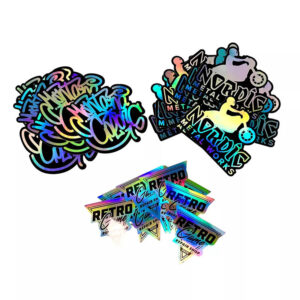
Lamination is another important detail. A laminated sticker has an added protective layer that can help resist scratches, moisture, fading, and daily wear. Finishes such as gloss, matte, transparent, metallic, glitter, or holographic can change both the appearance and the cost, so confirm which finishes are standard and which cost extra.
Factor to compare | Why it matters | What to ask the supplier |
|---|---|---|
Material type | Determines durability, flexibility, and surface compatibility | “Is this vinyl, paper, film, or another material?” |
Waterproofing | Important for bottles, outdoor use, and humid environments | “Can these handle water exposure or washing?” |
UV resistance | Helps reduce fading in sunlight | “Is the ink or laminate made for outdoor exposure?” |
Lamination | Adds protection against scratches and wear | “Is lamination included or optional?” |
Adhesive strength | Affects removability and long-term hold | “Will it remove cleanly or leave residue?” |
Finish options | Changes the final look and perceived quality | “Can I see samples of matte, gloss, clear, or specialty finishes?” |
How do die cut stickers differ from kiss cut stickers?
Die cut stickers are cut through both the sticker material and the backing, so the entire piece follows the shape of the design. Kiss cut stickers are cut through the sticker layer only, leaving a larger backing sheet around the design. Both can be useful, but they create a different handling experience.
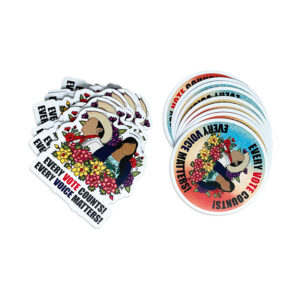
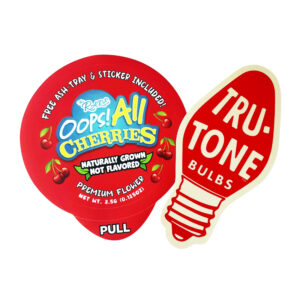
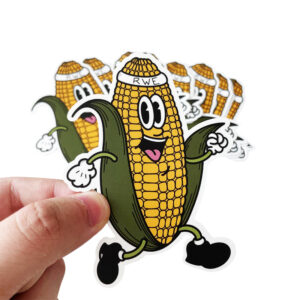
Die cut stickers are popular when presentation matters because the final piece has a custom silhouette. They work well for brand giveaways, merchandise, packaging inserts, and promotional bundles. Kiss cut stickers can be easier to peel and may be better for sheets, delicate shapes, or designs with thin details that need extra backing support.
When speaking with a supplier, ask whether they can recommend the best cut style based on your artwork. A design with sharp corners, tiny gaps, or very thin lines may need slight adjustments so the cut does not weaken the sticker or create awkward edges.

Review print quality before you order in bulk
Good die cut printing should deliver clean edges, accurate color, sharp detail, and consistent alignment between the printed design and cut path. Problems often appear as blurry text, dull color, off-center borders, rough cut lines, or mismatched proofs. These issues are especially frustrating when you discover them after a large order arrives.
If possible, order a sample pack or a small test run before committing to wholesale stickers. Samples let you feel the material, compare finishes, test adhesion, and see how the print reacts to handling. If you plan to reorder often, keep a sample from your approved batch so you can compare future orders for consistency.
Pay close attention to color expectations. Screens display light; printed stickers use ink. That means colors can shift if files are not prepared correctly or if the supplier does not manage color carefully. A reliable supplier will explain how they handle color matching, proofs, and artwork adjustments before production begins.
Prepare artwork so the final cut looks intentional
Even the best sticker printing service cannot fully rescue a poor production file. Clean file preparation reduces delays, prevents unexpected cropping, and helps the cutting equipment follow the intended shape. If you are sending artwork for personalized stickers, make sure your file is production-ready or ask whether the supplier offers design support.
Common artwork guidelines include:
- Use a high-resolution file. Aim for 300 DPI or higher for raster artwork.
- Send the right format. A CMYK PDF is often a practical choice, though vector files may be preferred for logos and cut lines.
- Add bleed for full-color edges. A 2 mm bleed margin helps prevent white slivers near the cut edge.
- Keep important details inside the safe zone. Text, faces, borders, and fine details should not sit too close to the cut line.
- Use clear contrast. Tiny text or low-contrast designs may look fine on screen but become hard to read when printed small.
- Label special effects. If part of the design should be transparent, metallic, white ink, or holographic, make that clear in the file notes.
A good supplier will flag artwork concerns during proofing instead of printing exactly what you uploaded without review. That review step can prevent wasted money and disappointment.
Use an RFQ to compare suppliers fairly
An RFQ, or Request for Quotation, is a structured request you send to suppliers so they can price the same project details. Instead of asking “How much for stickers?” you provide specifications such as size, quantity, material, finish, cut type, packaging, artwork format, delivery locati0n, and deadline. This makes quotes easier to compare because every supplier is responding to the same requirements.
A strong RFQ should include your sticker dimensions, shape, number of designs, total quantity, expected reorder frequency, indoor or outdoor use, preferred material, laminate, finish, adhesive preference, proofing needs, and shipping timeline. If you are unsure about the best material, say so and ask the supplier to recommend options with clear differences.
You can also use the RFQ to uncover hidden costs. Ask whether the quote includes setup, proofing, die cut printing, lamination, specialty finishes, packaging, taxes, and shipping. Also ask about revision limits, refund policies, production delays, and what happens if the finished stickers do not match the approved proof.
Check order minimums, lead times, and support
Order flexibility matters, especially if you are testing a design. Some suppliers support very small runs, while others focus on wholesale stickers and require higher minimum quantities. Neither model is automatically better; the right one depends on whether you need experimentation, fast replenishment, or lower unit cost at volume.
Turnaround time should be specific. Look for suppliers that separate proofing time, production time, and shipping time so you understand the full schedule. If you have an event or launch date, build in a buffer for file corrections, proof approval, and transit delays.
Customer support is just as important as equipment. A responsive team can help clarify material choices, catch design issues, and explain production limitations. If a supplier is slow or vague before payment, they may not become easier to work with after an order problem appears.
Make the final decision with a practical checklist
Once you have quotes, samples, and proofing information, compare suppliers using more than price. The cheapest quote can become expensive if the stickers fade, peel, arrive late, or need to be reprinted. A reliable supplier should make you feel informed before you commit.
Use this checklist before placing your order:
- The supplier explains material options in plain language.
- Waterproofing, UV resistance, lamination, and finish details are clearly stated.
- You receive a proof before production.
- File requirements are easy to understand.
- The quote separates quantity, setup, finish, packaging, and shipping costs.
- Minimum order quantity fits your project stage.
- Turnaround time includes proofing, production, and delivery.
- Support responds clearly to questions.
- Samples or test orders are available.
- Policies for errors, reprints, and damaged shipments are clear.
Final takeaway
Finding a reliable supplier for die cut stickers comes down to clarity. Know how your stickers will be used, compare materials and finishes carefully, prepare clean artwork, and use an RFQ to make quotes easier to judge. When a supplier communicates well, provides accurate proofs, and explains production choices, you are far more likely to receive personalized stickers that look professional and perform the way you expect.