How to Choose a Reliable Waterproof Stickers Manufacturer for Your Business
A reliable waterproof stickers manufacturer should be able to explain which materials, inks, adhesives, and protective finishes suit your application—and put those specifications in writing. Choose by testing samples, reviewing proofs, and comparing complete delivered costs rather than trusting a “waterproof” badge alone. This approach gives you a practical way to evaluate suppliers for product labels, promotional stickers, and outdoor decals.
What makes a sticker genuinely waterproof?
A genuinely waterproof sticker needs more than a water-resistant surface: its printed image and adhesive must also perform under the intended exposure. Avery distinguishes water-resistant labels, which tolerate splashes, from waterproof labels, which can withstand submersion without smearing. Its guidance also shows why the printing method matters: the same film can deliver different water performance depending on the ink used.
Table of Contents
Before requesting quotes, describe what “waterproof” means for your business. A refrigerated beverage label, a hand-washed bottle sticker, and a decal on outdoor equipment need different evaluations. Give each supplier a short application brief:
- Surface: Glass, painted metal, plastic, or another specific material.
- Exposure: Condensation, rain, immersion, cleaning products, sunlight, or abrasion.
- Expected service: A short promotion, a product’s shelf life, or extended outdoor use.
- Application conditions: Where and how workers will apply the stickers.
- Failure criteria: Unreadable text, faded branding, lifted edges, or adhesive residue.
Ask the manufacturer to recommend a construction against that brief. Treat an answer that ignores your actual surface or washing conditions as incomplete.

Match materials and adhesive to the job
Vinyl and BOPP serve different priorities
For waterproof vinyl stickers intended for outdoor use, ask for the film manufacturer and exact product code. Avery identifies vinyl as a durable outdoor option, while its film-label guidance also highlights BOPP and other films for product packaging. Neither “vinyl” nor “film” is a complete performance specification.
BOPP is biaxially oriented polypropylene, a film commonly offered for product labels. Avery’s custom-printing range includes polypropylene films in different finishes. If you are labeling bottles, jars, or retail packaging, ask whether a suitable polypropylene construction meets your moisture requirements without paying for capabilities you do not need.
A supplier advertising genuine 3M material should identify the specific film, not simply display the brand name. Ask for the matching technical documentation and the proposed protective layer. Do not interpret a familiar material brand as an automatic five-year guarantee: 3M explains that graphic durability depends on factors including climate, exposure angle, processing, and application.
Adhesion deserves its own check
Waterproof adhesive labels still need an adhesive compatible with the surface beneath them. Polyethylene and polypropylene, for example, are low-surface-energy plastics that are difficult to bond. A supplier should address that challenge explicitly rather than recommend the same adhesive for every container.
Send the manufacturer an actual container or representative surface when possible. Request application instructions, including preparation and the recommended waiting period before testing. Ask separately whether removal must be clean; strong permanent adhesion and easy removal are different purchasing requirements.
Check the printing system, protection, and finish
Ask how the manufacturer’s waterproof sticker printing process protects both appearance and readability. The useful answer names the ink system, compatible media, and finishing process—not just the printer’s resolution. Avery’s material guidance demonstrates that print chemistry can change water resistance even when the label stock stays the same.
Equipment information is useful context, not proof of superiority. For example, Epson’s SureColor S9170 uses UltraChrome GS3 eco-solvent ink for signage applications. Epson also notes that lamination timing depends on environmental conditions, media, and ink density, so a printer model alone cannot establish finished-sticker durability.
Protective lamination deserves a specific question. 3M describes overlaminates that provide resistance to abrasion and harmful UV light, while its processing guidance calls for appropriate ink drying or curing before lamination. Ask which protection is included and what performance documentation supports it.
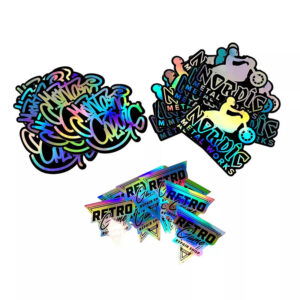
For custom waterproof decals, request physical samples of any proposed matte, gloss, clear, or holographic finish. Evaluate small text, brand colors, and the appearance on your actual background. Confirm whether specialty effects, white ink, custom shapes, and protective finishing change the quote.
How should you compare manufacturers fairly?
Compare manufacturers using the same artwork, dimensions, quantity, application brief, and required delivery date. Then evaluate their written specifications, sample results, proofing process, and complete price together. This creates a useful comparison without assuming that the cheapest supplier—or the best-known name—is automatically the right fit.
Published supplier policies offer starting points, not a universal ranking:
Supplier example | Published information | What to verify for your order |
|---|---|---|
Sticker Mule | Online proofs with revision requests and orders starting at 10 custom stickers. | Whether the chosen product, quantity, and finish match those terms. |
Avery | Multiple waterproof film-label materials, including polypropylene options. | Which material, adhesive, and format suit your container and exposure. |
These examples describe available options, not independently tested performance or an endorsement. Check current product-specific terms before purchasing.
If a manufacturer advertises no minimum order, ask whether that applies per design, size, and finish. Compare the total cash commitment at the quantity you actually need. A lower unit price is not helpful if it requires buying stock you cannot use.
Request an itemized quote covering printing, setup, cutting, lamination, proof revisions, specialty finishes, packaging, shipping, and applicable taxes. Ask how reorder pricing works and whether the manufacturer will preserve your approved material specification. Keep that specification with your artwork files so future orders have a clear reference.
Treat proofs, delivery, and packaging as quality controls
Before approving custom waterproof stickers, review the proof at final size. Check spelling, dimensions, cut lines, borders, orientation, and important details near the edge. Ask what the digital proof confirms and whether a physical sample is available for decisions that require seeing the finished material.
Use this approval checklist:
- Artwork: Confirm the correct version, wording, and required codes.
- Construction: Record the agreed film, adhesive, protection, and finish.
- Cutting: Confirm finished dimensions, shape, and acceptable tolerances.
- Production: Establish when changes stop and production begins.
- Remedies: Get the process for reporting defects and requesting correction.
Separate production time from transit time. Sticker Mule, for example, currently lists standard US turnaround as four business days of production plus two-day shipping, with variations by order and destination. Use the supplier’s order-specific delivery estimate rather than treating a production headline as an arrival promise.
Specify packaging instead of assuming it. Ask whether stickers arrive loose, bundled, bagged, or otherwise protected, and whether quantities can be divided for stores or events. Sticker Mule states that it shrink-wraps or bags custom stickers for shipping; whatever the supplier uses, confirm that the arrangement fits your distribution needs.

Validate samples before committing to volume
Use a small pilot order to evaluate the proposed construction under your own conditions. Agree on the test method with the supplier so your results are meaningful. A quick splash test should not become your evidence for prolonged immersion or outdoor life.
- Apply consistently. Follow the supplied preparation and application instructions.
- Allow the specified waiting period. Record when each sample was applied and tested.
- Reproduce normal use. Include relevant washing, condensation, handling, or cleaning conditions.
- Inspect the result. Photograph lifting edges, smearing, scratches, and other failures.
- Keep a reference. Save an unused sample and the approved construction details.
Tell suppliers about failures before changing materials yourself. Ask what they would adjust and whether that requires another proof or pilot. Their willingness to investigate gives you another basis for choosing a long-term partner.
Focused FAQ
Should you buy a waterproof label maker instead of outsourcing?
Consider a waterproof label maker when your priority is producing changing information in-house, and outsourcing when you want a supplier to manage the finished construction. Compare both routes using your actual artwork, quantities, labor, and testing requirements. Before buying equipment, verify the exact printer, ink or ribbon, and label combination: compatible media alone does not establish waterproof performance.
Choose evidence over promises
Shortlist suppliers that explain their recommendations, document the construction, and respond clearly during proofing. Test before scaling, compare complete costs, and keep an approved reference for reorders. Choose the manufacturer whose proposal and samples satisfy your requirements—not the one making the broadest durability claim.